Príncipe Island: A Volcanic Gem in the Gulf of Guinea
Located off the west coast of Africa, Príncipe is the smaller of the two primary islands that make up the nation of São Tomé and Príncipe. This lush, volcanic outpost in the Gulf of Guinea is a place where dramatic geography meets a complex colonial history and world-renowned biodiversity.
Geologically, Príncipe is a heavily eroded volcano estimated to be over three million years old. It is part of the Cameroon Line, a chain of volcanoes that extends through Africa. The island's terrain is characterized by its ruggedness, rising to its highest point at Pico de Príncipe, which reaches an elevation of 947 metres (3,107 ft). The main island is surrounded by several smaller islets, including Ilheu Bom Bom, Ilhéu Caroço, Tinhosa Grande, and Tinhosa Pequena.
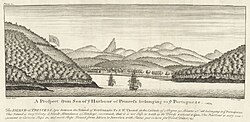
Key Facts
- Location: Gulf of Guinea, west coast of Africa.
- Highest Point: Pico de Príncipe (947 m).
- Capital: Santo António.
- Status: Main constituent of the Autonomous Region of Príncipe (est. 1995).
- UNESCO Status: Entire island designated as a Biosphere Reserve.
- Population: 8,420 (2018 estimate).
History and Colonial Legacy
Príncipe was uninhabited when Portuguese explorers discovered it on January 17, 1471. Originally named "Ilha de Santo Antão," it was later renamed Príncipe ("Prince") by King John II of Portugal to honor his son, Afonso. The first permanent settlement, Santo António, was established in 1502.
For centuries, the island's economy was driven by colonial plantations. Initially, Portuguese colonists used slave labor to produce sugar. After 1822, the focus shifted to cocoa, and Príncipe eventually became the world's leading producer of the crop. Following independence, many of these plantations reverted to natural forest.
The island also played a role in global military and political history. The Fortaleza de Santo António da Ponta da Mina was built in 1695, though it was destroyed by the French in 1706. Between 1753 and 1852, Santo António served as the colonial capital of Portuguese São Tomé and Príncipe.
A Milestone for Modern Physics
Príncipe holds a unique place in scientific history. On May 29, 1919, Arthur Stanley Eddington and his team used the island as a site to observe a total solar eclipse. Their photographs provided the first experimental corroboration of Albert Einstein's theory of relativity by demonstrating the bending of starlight.
Nature and Biodiversity
The southern part of the island is home to the Parque Natural Obô do Príncipe, established in 2006. This region is characterized by uninhabited, densely forested mountains that support a vast array of endemic species—animals found nowhere else on Earth.
The island's fauna includes a diverse range of birds, such as the Príncipe scops owl, kingfisher, seedeater, starling, sunbird, and weaver. Other unique residents include the Príncipe gecko, the palm forest tree frog, and the Príncipe puddle frog. In the surrounding waters, the West African mud turtle and the mollusc Muricopsis principensis can be found.
Recognizing its ecological importance, UNESCO established the Island of Príncipe Biosphere Reserve in 2012. By 2025, this designation was extended to include São Tomé, making São Tomé and Príncipe the first country in the world to be designated as a biosphere reserve in its entirety.
Demographics and Administration
Administratively, the island comprises the Pagué District and the Autonomous Region of Príncipe. The primary town is Santo António, supported by smaller settlements like Sundy and Porto Real. The island is served by an airport with the IATA code PCP.
Portuguese is the official language, though several creoles are spoken, including Principense (Lunguyê) and Forro. The population has fluctuated significantly over the centuries; while it stood at 5,850 in 1771 (largely composed of enslaved people), it dropped to 1,946 by the time slavery was abolished in 1875, before growing to 8,420 by 2018.
| Category | Detail |
|---|---|
| Area | 136–142 km² |
| Highest Peak | Pico de Príncipe (947 m) |
| Official Language | Portuguese |
| Main Town | Santo António |
| Key Exports (Historic) | Sugar, Cocoa |
Frequently Asked Questions
Who discovered Príncipe island?
The island was discovered by the Portuguese on January 17, 1471, and was initially uninhabited.
What is the significance of the 1919 solar eclipse on Príncipe?
It was the site where Arthur Stanley Eddington experimentally proved Albert Einstein's theory of relativity by photographing the bending of starlight.
What are some of the endemic animals found on the island?
Príncipe is home to several unique species, including the Príncipe scops owl, the Príncipe kingfisher, the Príncipe gecko, and the Príncipe puddle frog.
What is the status of the island's environment?
The island is highly protected, featuring the Parque Natural Obô do Príncipe and a UNESCO Biosphere Reserve designation that covers the entire emerged area of the island and its islets.
What was the primary economic activity of the island in the 19th century?
After 1822, the island focused heavily on cocoa production, eventually becoming the world's greatest producer of cocoa using plantation systems.