Prime Time Television: Global Scheduling Patterns and Cultural Trends
In the world of broadcasting, prime time—also referred to as peak time—represents the most valuable block of programming in a television station's daily schedule. Typically occurring during the middle of the evening, these hours are specifically targeted toward adults and families. Because viewership is at its highest, major networks utilize this window to broadcast their most significant nightly programming and seasonal premieres.
While the concept of prime time is universal, the specific hours vary significantly depending on geography, local culture, and even religious observances. From the early evening slots in Asia to the much later schedules in Southern Europe, the timing of television content is a reflection of how different societies structure their daily lives.
Key Facts
- Target Audience: Prime time is primarily designed for adults and families.
- Content Variety: Common programming includes news, dramas, soap operas (sinetrons), and reality shows.
- Cultural Influence: Religious periods like Ramadan can shift prime time to "midnight prime time" slots.
- Economic Value: Higher viewership during these hours often leads to longer commercial breaks.
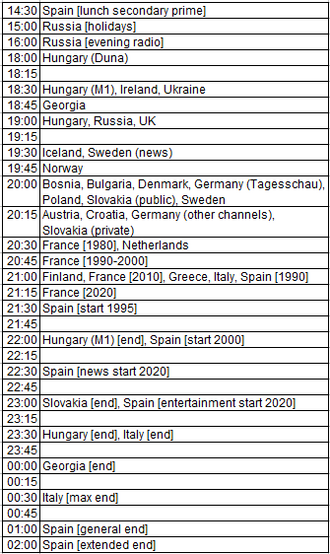
- Regional Variation: Scheduling can range from early evening (e.g., 17:00 in Indonesia) to very late (e.g., 22:30 in Spain).
Regional Prime Time Variations
Asia and the Middle East
In many Asian nations, prime time is closely tied to local customs and religious calendars. In Bangladesh, the 19:00 to 22:00 slot is standard, though during Ramadan, broadcasters shift focus to religious and cooking shows between 14:00 and 20:00. Similarly, in Pakistan and Indonesia, the month of Ramadan introduces a "midnight prime time" during suhur, typically running from 02:00 until the Fajr prayer call.
Japan offers a unique terminology; the 19:00 to 22:00 slot is known as Golden Time. In Taiwan, the term bādiǎn dàng (eight o'clock slot) is used to describe the high-rated drama series that begin at 20:00.

Europe: From Early Starts to Late Nights
European scheduling shows a wide spectrum of timing. In Germany, prime time traditionally begins at 20:15, following the conclusion of the highly-watched Tagesschau news broadcast. In contrast, Spain features some of the latest prime time slots in the world, often starting as late as 22:30 or even 23:00 to accommodate local work schedules and avoid competition with sporting events.
Other notable European patterns include:
- Finland: Starts at 21:00, preceded by news at 20:30.
- France: Generally begins around 21:10.
- Italy: Known as prima serata, it typically runs between 21:00 and midnight.
- Slovenia: Generally falls between 20:00 and 23:00.
North America and Latin America
In the United States, prime time is traditionally defined as 8:00 p.m. to 11:00 p.m. Eastern and Pacific Time. In Canada, while major networks follow the U.S. model, some broadcasters limit their prime time to a "common prime" period. Historically, the 1970s saw the "rural purge," a shift in programming away from older, rural audiences toward younger, urban viewers following regulatory changes.
In Latin America, prime time is often called horario central or horario estelar. In countries like Brazil and Mexico, this period is dominated by highly popular telenovelas and reality television shows.
Summary of Global Prime Time Hours
| Region/Country | Typical Start Time | Common Content |
|---|---|---|
| United States | 20:00 (8:00 p.m.) | Seasonal programming, dramas |
| Japan | 19:00 | Golden Time entertainment |
| Spain | 22:30 | Movies, series, news follow-ups |
| Indonesia | 17:00 | Sinetrons (soap operas) |
| Germany | 20:15 | Post-news entertainment |
| Brazil | 18:00 - 19:00 | Telenovelas, reality shows |
Frequently Asked Questions
What is the difference between prime time and golden time?
While both terms refer to high-viewership periods, "Golden Time" is a specific term used in Japan to describe the 19:00 to 22:00 television slot.
Why does prime time start so late in Spain?
The late start is largely due to Spanish culture, where traditional working hours often extend later into the evening compared to other nations.
How does Ramadan affect television scheduling?
During Ramadan, many Muslim-majority nations shift their schedules to include special religious and cooking shows during the day, and may implement a "midnight prime time" during the suhur period.
What is "common prime" in North American broadcasting?
Common prime refers to a specific time period, such as 7:00–10:00 p.m., used by certain networks to align their programming schedules.
Why are commercials longer during prime time?
Because prime time attracts the highest number of viewers, networks often include longer commercial breaks to maximize advertising revenue during these peak hours.