Prepared Foods: A Comprehensive Overview of Culinary Categories
The world of prepared foods encompasses a vast array of culinary creations, ranging from simple snacks to complex, culturally significant dishes. Whether they are designed for immediate consumption, long-term preservation, or adherence to specific dietary laws, these foods define how we eat across different cultures and contexts.
Key Facts
- Hors d'oeuvre are small appetizers served before a main meal, often eaten by hand.
- Convenience foods are commercially prepared for ease of preparation and consumption.
- Fermentation is the anaerobic conversion of carbohydrates into alcohols or organic acids using microorganisms.
- Food drying is one of the oldest preservation methods, dating back to 12,000 BCE.
- Halal and Kosher refer to dietary laws based on Islamic and Jewish jurisprudence, respectively.
Appetizers and Small Bites
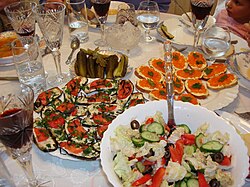
Appetizers, also known as hors d'oeuvre, are items served before the main courses of a meal. These are typically smaller than main dishes and are often designed to be eaten by hand with minimal silverware. Depending on the service style, they may be "table hors d'oeuvre" (stationary) or "butler-style" (passed by servers).
Snack Foods
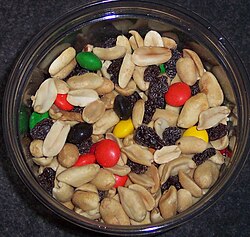
While appetizers precede a meal, snack foods are portions smaller than a regular meal generally eaten between them. These can range from fresh, homemade items to packaged and processed foods.
Flavor Enhancers: Condiments, Sauces, and Dips
Condiments are substances, such as sauces, added to food to impart, enhance, or complement a specific flavor. While the term originally referred to pickled or preserved foods, its meaning has evolved over time.
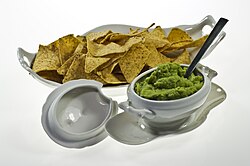
Sauces, Dips, and Spreads
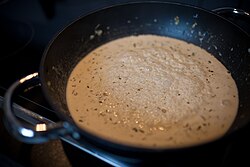
A sauce is a liquid, cream, or semi-solid food used in preparation or served on other foods to add moisture and visual appeal. The word derives from the Latin salsa, meaning salted. One of the oldest recorded sauces is garum, a fish sauce used by Ancient Greeks.
Related categories include dips (condiments used to add flavor and texture), pastes (semi-liquid colloidal suspensions or emulsions that are often aromatic or spicy), and spreads (foods applied with a knife to bread or crackers).
Sweets and Confections
Confectionery refers to food items rich in sugar. This field is divided into two overlapping categories: bakers' confections, which include cakes and sweet pastries, and sugar confections, which include chocolates, candied nuts, chewing gum, and pastillage.
Desserts are typically sweet courses that conclude a meal, ranging from simple fruits to elaborate creations like petit fours.
Processed and Preserved Foods
Convenience foods, or processed foods, are commercially prepared to ensure ease of consumption and preparation. A subset of this is fast food, a term popularized in the 1950s in the United States to describe food prepared quickly, often using precooked ingredients and served in packaged forms for take-out.
Dried and Fermented Foods
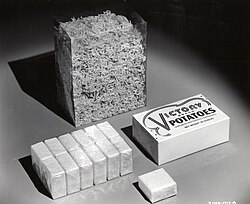
Drying is an ancient preservation method that removes water to inhibit bacterial growth, with evidence of its use dating back to 12,000 BCE in Asia and the Middle East.
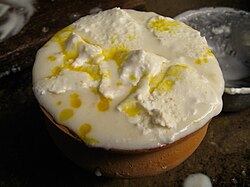
Fermentation (studied as zymology or zymurgy) is the process of converting carbohydrates to alcohols and carbon dioxide or organic acids under anaerobic conditions using yeasts or bacteria.
Staples and Main Course Components
Various prepared foods serve as the foundation of meals across the globe:
- Dumplings: Cooked balls of dough made from flour, potatoes, or bread, which may be stuffed and cooked via boiling, steaming, frying, or baking.
- Noodles: Staple foods made from unleavened dough rolled flat and cut into various shapes (strips, tubes, shells), usually cooked in boiling water.
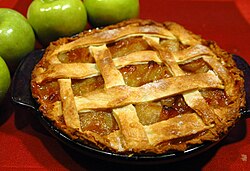
- Pies: Baked dishes featuring a pastry dough casing containing sweet or savory fillings.
- Sandwiches: Food placed between slices of bread, originally developed as a portable finger food in the Western World.
- Salads: Ready-to-eat dishes often featuring leafy vegetables, served chilled or at moderate temperatures.
Liquid-Based Dishes
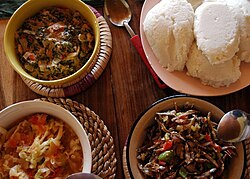
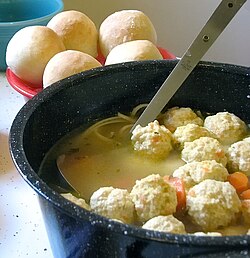
Soups are primarily liquid foods made by combining ingredients with stock, juice, or water. When solid ingredients are boiled to extract flavors, they form a broth. Stews differ by combining solid ingredients cooked in liquid and served in the resulting gravy, often utilizing tougher meats suitable for slow-cooking.
Dietary and Religious Food Laws
Certain prepared foods are governed by religious jurisprudence to determine if they are permissible for consumption.
Halal Food
Halal ("lawful") foods are specified by Islamic dietary laws derived from the Qur'an, Hadith, and Sunnah.
Kosher Food
Kosher foods conform to kashrut (Jewish dietary law). Food that is fit for consumption according to halakha is termed kosher, while non-compliant food is called treif. Key restrictions include the prohibition of pork, the prohibition of mixing meat with dairy, and restrictions on certain seafood.
Summary of Food Categories
| Category | Primary Characteristic | Examples |
|---|---|---|
| Appetizers | Small, pre-meal portions | Hors d'oeuvre, Zakuski |
| Confectionery | High sugar content | Chocolate, Pastries |
| Preserved | Water removal or fermentation | Dried fruit, Lassi |
| Staples | Dough-based foundations | Noodles, Dumplings |
| Liquid Dishes | Water or stock based | Soups, Stews |
Frequently Asked Questions
What is the difference between a dip, a paste, and a spread?
A dip is a condiment used to add flavor or texture to another food. A paste is a semi-liquid colloidal suspension or emulsion, often highly aromatic. A spread is a food specifically designed to be applied with a knife onto bread or crackers.
How does fermentation work in food processing?
Fermentation is the conversion of carbohydrates into alcohols, carbon dioxide, or organic acids. This process occurs under anaerobic conditions using bacteria, yeasts, or a combination of both.
What defines a food as "fast food"?
Fast food is prepared and served very quickly, typically using preheated or precooked ingredients in a restaurant or store, and is often served in packaged form for take-away.
What are the primary differences between Halal and Kosher laws?
Halal food follows Islamic jurisprudence based on the Qur'an and Sunnah. Kosher food follows kashrut (Jewish dietary law), which specifically prohibits pork, the mixing of meat and dairy, and certain types of seafood.
What is the historical origin of food drying?
While the exact invention date is unknown, the earliest known practice of food drying dates back to 12,000 BCE by inhabitants of the modern Asia and Middle East regions.