Pregnancy Fetishism: Understanding Maiesiophilia and Its Cultural Context
Pregnancy fetishism, scientifically referred to as maiesiophilia or maieusophoria, describes a context in which pregnancy is viewed as an erotic phenomenon. This attraction can manifest in various ways, ranging from a sexual interest in women who are pregnant or appear to be pregnant, to an attraction toward lactation or specific stages of the reproductive process, such as impregnation and childbirth.
Key Facts
- Maiesiophilia is the clinical term for pregnancy fetishism.
- Attractions can include physical traits like an enlarged abdomen or psychological aspects like signs of fertility.
- The term impregnation fantasies refers to arousal derived from the possibility or risk of conception through unprotected sex.
- Search data from 2017 indicated a 20% increase in pregnancy-related keyword searches on PornHub since 2014.
- In 2017, female users were 27% more likely than men to search for pregnancy-related content on PornHub.
Characteristics and Variations
There is no single set of preferred elements that define maiesiophilia; the experience is highly individual. For some, the attraction is centered on the physical changes of the body, such as an enlarged abdomen. For others, the interest may be more psychological, focusing on perceived signs of fertility.
The specific focus of an individual's interest can vary widely. Some may find eroticism in the circumstances surrounding childbirth, while others may be drawn to the lifestyle changes associated with pregnancy. This can include how a pregnant person moves, sleeps, or dresses, and even physiological experiences like morning sickness.
Cultural Shifts and Media Influence
The cultural perception of pregnancy has undergone significant shifts in recent decades. A pivotal moment occurred in 1991 when actress Demi Moore appeared on the cover of Vanity Fair, showcasing her advanced pregnancy. This imagery helped usher in an era where pregnancy is often presented by celebrities as a glamorous state of being.
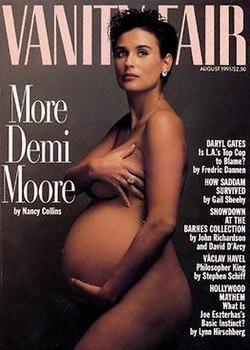
This shift in media representation has had tangible economic effects, creating new professional niches. It has fostered a market for photographers specializing in maternity imagery and has led fashion stylists to incorporate "pregnancy styling" into their professional services.
Impregnation Fantasies and Related Concepts
A specific subset of this interest involves impregnation fantasies. These are characterized by arousal or gratification stemming from the potential consequences or the inherent risk of impregnation through unprotected vaginal intercourse. These fantasies are frequently explored through role-playing with partners or through the consumption of erotic literature.
Related Terminology
Several other concepts intersect with the study of pregnancy-related attractions:
- Erotic lactation: Attraction to the process of breastfeeding or milk production.
- Impregnation fetishism: A specific focus on the act of conception.
- Unbirthing: A subtype of vore that involves a fantasy of an individual entering the womb through the vagina.
- Mpreg: A term often used in specific subcultures regarding male pregnancy fantasies.
Summary of Maiesiophilia Data
| Category | Description/Statistic |
|---|---|
| Scientific Names | Maiesiophilia, Maieusophoria |
| Search Trend (2014-2017) | 20% increase in pregnancy-related searches |
| Gender Search Ratio (2017) | Females 27% more likely than males to search pregnancy content |
| Common Triggers | Enlarged abdomen, lactation, fertility signs, childbirth |
Frequently Asked Questions
What is the scientific name for pregnancy fetishism?
The scientific terms used to describe pregnancy fetishism are maiesiophilia or maieusophoria.
What are impregnation fantasies?
Impregnation fantasies involve arousal derived from the possibility, risk, or consequences of becoming pregnant through unprotected vaginal sex. These are often explored via role-play or erotic literature.
How has celebrity culture affected the perception of pregnancy?
Since the early 1990s, celebrity depictions of pregnancy have contributed to it being viewed as a glamorous state, which has subsequently created markets for maternity photography and specialized pregnancy fashion styling.
Is maiesiophilia the same for everyone?
No. There are no universal elements common to all individuals. Interests can range from physical attributes like an enlarged abdomen to specific behaviors related to mobility, sleeping, or even morning sickness.
What does the term "unbirthing" refer to in this context?
Unbirthing is a subtype of vore that involves a fantasy of an individual entering the womb through the vagina.