Pre-Kindergarten Programs: Structure, Impact, and Accessibility in Early Education
Pre-kindergarten (commonly referred to as pre-K or PK) is a voluntary, classroom-based preschool program designed for children under the age of five. While most prominent in the United States, these programs are also utilized in Canada, Turkey, and Greece. Pre-K serves as a critical bridge in early childhood education, delivered either through standalone preschools or as a reception year within an elementary school setting.
In the United States, pre-K has existed since 1922, originally managed by private organizations. A major shift occurred in 1967 with the establishment of the Head Start program, the first federally funded initiative aimed at preparing children—particularly those from disadvantaged backgrounds—for academic success.
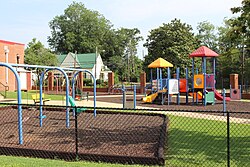
Key Facts
- Global Presence: Utilized in the US, Canada, Turkey, and Greece.
- US History: Private programs began in 1922; federal Head Start launched in 1967.
- Funding Variance: As of 2016–17, 44 US states and D.C. provide some state funding, while six states provide none.
- Florida's Scale: Florida operates the largest state-level preschool program in the US.
- Mixed Outcomes: Research shows varying results, from significant long-term benefits for disadvantaged youth to null results in some lottery-based studies.
Pre-K Structure and Funding in the United States
The landscape of pre-K funding varies significantly by state. By the 2016–17 period, 44 states and the District of Columbia provided some level of state funding. A smaller group—including Colorado, Iowa, Kentucky, Maine, Oklahoma, Texas, Vermont, West Virginia, Wisconsin, and D.C.—integrated pre-K into their general school funding formulas. Conversely, Idaho, Montana, New Hampshire, South Dakota, North Dakota, and Wyoming provided no state funding.
Funding Strategies and Expansion
Expanding access to pre-K often faces financial hurdles, leading governments to experiment with diverse funding models. While some mayors and governors reallocated existing budgets, others sought new revenue streams. For example, San Antonio increased sales taxes, while Maine and Virginia explored gambling revenue. In Oregon, efforts have been made to fully fund education from pre-K through 12th grade to ensure all parents have the option.
State Performance and Enrollment
A 2012 review by the National Institute for Early Education Research at Rutgers University highlighted Oklahoma, Georgia, and West Virginia as leaders in program quality and enrollment rates. Florida reported the highest overall enrollment in 2012, with nearly 80% of four-year-olds participating, though many of these were in private or religion-based centers that scored lower on quality measures.
The Florida VPK Model
Florida's Voluntary Pre-Kindergarten (VPK) program, established via a 2002 constitutional amendment, is the largest universal state-level program in the US. It is open to all children who meet age and residency requirements. In the 2013-14 school year, the distribution of VPK programs was as follows:
- Private centers: 80%
- Public schools: 18%
- Family daycares: 1%
- Private schools: 1%
Measuring the Impact of Pre-K
The effectiveness of pre-K is a subject of ongoing scientific debate. A 2024 review in Science noted mixed results, suggesting that positive findings often stem from non-random-assignment methods, whereas lottery-based studies frequently show null results.
Contrasting Research Findings
Different study designs have yielded vastly different conclusions:
- Positive Short-term Gains: One randomized control study found that children in full-day pre-K showed substantially better outcomes in math, literacy, cognition, and physical development by the end of the program compared to half-day students.
- Long-term Challenges: A longitudinal study of 2,990 low-income children in Tennessee found that pre-K attendees actually had lower state achievement test scores in third through sixth grades than the control group, alongside higher rates of disciplinary infractions.
- The Perry Preschool Project: This study focused on disadvantaged youth and found a statistically significant link between high-quality pre-K and higher high school graduation rates, better adult economic outcomes, and lower rates of crime and teen pregnancy.
Pre-K and Immigrant Families
With the US Census Bureau forecasting that the foreign-born population will reach 19% by 2060, understanding the intersection of immigration and early education is vital. Children of immigrants often face unique challenges and exhibit different patterns of enrollment.
Cultural Influences on Childcare
Cultural values significantly shape how immigrant parents choose childcare. Asian immigrant parents are more likely to enroll children in pre-K due to a strong emphasis on early academic development and school readiness. In contrast, Latino immigrant parents often prefer informal, in-home care provided by parents or relatives, viewing formal academic instruction as something that should begin in primary school.
Barriers to Access
Low-income immigrant families are less likely to use center-based pre-K than non-immigrants. While many Latino families express a desire for pre-K to support maternal employment and English language acquisition, they face several obstacles:
- High costs and long wait-lists.
- Documentation requirements, particularly for those with limited English proficiency or undocumented status.
- Lack of information regarding subsidized program eligibility.
Potential Benefits
Immigrant children, especially those from low socio-economic backgrounds, may benefit most from pre-K. Research indicates that first and second-generation immigrants often lag in language and cognitive skills. Pre-K can reduce these inequalities by focusing on social, emotional, and physical development while helping children acquire English fluency, which is essential for success in the US school system.
| Funding Status | Examples of States/Regions | Key Characteristics |
|---|---|---|
| Integrated Funding | Colorado, Texas, Wisconsin, D.C. | Pre-K included in school funding formulas. |
| Partial State Funding | 44 states total | Some level of state financial support provided. |
| No State Funding | Idaho, Montana, Wyoming, North Dakota | No state-level funding for pre-K programs. |
| Universal Model | Florida (VPK) | Largest state program; open to all eligible residents. |
Frequently Asked Questions
What is the difference between pre-K and kindergarten?
Pre-kindergarten is a voluntary program for children under age five that serves as a preparatory stage, whereas kindergarten is typically the first formal year of elementary school.
Is pre-K funding the same across all US states?
No. Funding varies wildly; while 44 states provide some funding, six states provide none, and only a few integrate pre-K directly into their primary school funding formulas.
Does pre-K always lead to better academic results?
The evidence is mixed. While some studies show improvements in literacy and math, other longitudinal studies, such as one in Tennessee, found lower test scores in later elementary grades for pre-K attendees.
Why do some immigrant families avoid pre-K programs?
Barriers include high costs, long wait-lists, and documentation requirements. Additionally, some cultures, such as some Latino families, prefer in-home care to prioritize traditional family dynamics and linguistic values over early formal academics.
What was the Perry Preschool Project?
It was a study on disadvantaged youth that found high-quality pre-K was associated with significant long-term life improvements, including higher graduation rates and better economic outcomes in adulthood.