Powdery Mildews: Biology, Ecology, and Management of Erysiphaceae
In the world of plant pathology, few signs are as instantly recognizable as the white, dusty coating that can suddenly appear on garden leaves and commercial crops. These are the powdery mildews, a group of fungi belonging to the family Erysiphaceae. As obligate parasites—meaning they require a living host to survive—these fungi have developed highly specialized ways of interacting with the plant kingdom.
Belonging to the division Ascomycota and the class Leotiomycetes, the Erysiphaceae family is comprised of approximately one thousand species organized into seventeen different genera. Together, they impact over 10,000 plant species, many of which are of significant commercial and agricultural value.
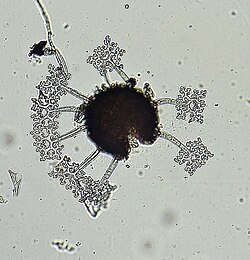
Key Facts
- Classification: Family Erysiphaceae, Order Helotiales.
- Host Impact: Infects over 10,000 plant species globally.
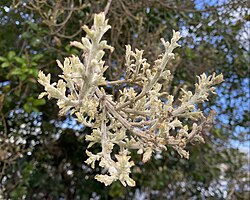
- Appearance: Characterized by a superficial mycelium that creates a white, powdery coating.
- Distribution: Cosmopolitan, found on every continent except Antarctica and Australia.
- Biological Nature: Obligate parasites with high host specificity.
Ecology and Global Distribution
Powdery mildews are found in virtually any habitat that supports vascular plants. While biodiversity studies are extensive in regions like Western Europe, many areas, such as much of Africa, remain largely unexplored by mycologists. The center of biodiversity for these fungi appears to be in East Asia, and many species have been introduced to Europe and North America through the global trade of ornamental plants.
Interestingly, the Erysiphaceae are not without their own predators. Some species host a hyperparasite known as Ampelomyces quisqualis. This fungus attacks the mildew itself, reducing its growth and potentially killing it. Because of this natural control mechanism, A. quisqualis is used as an active ingredient in certain biological fungicides. Beyond this, roughly 40 other fungal species, including ascomycetes like Cladosporium and basidiomycetes like Tilletiopsis, have been observed parasitizing powdery mildews.
Identification Challenges
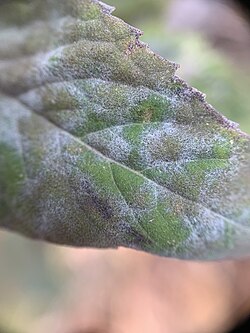
Identifying specific powdery mildew species can be complex. While the scientific gold standard involves a combination of microscopy and DNA sequencing, field identification is often possible by observing the color, texture, and the specific host plant being affected.
Host specificity is a critical factor in identification; most species are highly restricted to a single genus or even a single species of plant. However, even DNA sequencing has its limits, as some species possess identical ITS (Internal Transcribed Spacer) sequences, making host plant information essential for an accurate diagnosis.
Management and Control Strategies
Managing powdery mildew is vital for industrial-scale agriculture. When symptoms first appear, the application of conventional fungicides is often advised. For the best results, these spray programs should be applied on a regular basis. However, growers must be cautious, as some species carry a high risk of developing fungicide resistance.
Beyond chemical intervention, genetic resistance offers a sustainable long-term solution. For instance, researchers have found that specific combinations of the Pm3 allele can provide significantly improved protection against infection.
Taxonomic History and Evolution
The scientific study of these fungi dates back to 1753, when Linnaeus first described a species under the name Mucor erysiphe. Over the centuries, the taxonomy has undergone significant refinement. In the early 1800s, researchers like de Candolle and Wallroth began extensive descriptions, though many species were later grouped into the single genus Erysiphe by Fries.
Modern taxonomy has been revolutionized by genomic DNA analysis. A major shift occurred in 2012 with the implementation of the "one fungus, one name" rule, which led to the discontinuation of anamorph genera (the asexual forms) in favor of a single name for the fungus. This has resulted in many species being reassigned to their correct teleomorph (sexual state) genera.
| Genus | Key Characteristics |
|---|---|
| Erysiphe | Highly diverse; found worldwide in warm-temperate climates. |
| Golovinomyces | Greyish-white species often seen in autumn on herbs and forbs. |
| Sawadaea | Common on maples (Sapindaceae), forming spreading leaf mats. |
| Parauncinula | Earliest-diverging genus; endemic to East Asia. |
| Blumeria | Subject of recent taxonomic revisions via multi-gene DNA sequencing. |
Frequently Asked Questions
What is the difference between powdery mildew and downy mildew?
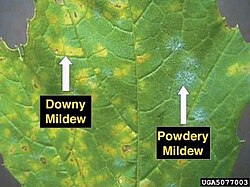
While they may look similar, they are biologically distinct. Powdery mildew is caused by Erysiphaceae fungi and typically forms a superficial, white coating on the surface of leaves, whereas downy mildew is caused by different organisms (often oomycetes) and typically affects the leaf tissue more deeply.
Can powdery mildew be controlled naturally?
Yes, biological control is possible. The hyperparasite Ampelomyces quisqualis is a natural enemy of powdery mildew and is used in some fungicide formulations to reduce mildew growth.
Why is host plant identification important for diagnosis?
Most powdery mildew species are host-specific, meaning they only infect certain types of plants. Because some species have nearly identical DNA sequences, knowing which plant is infected is often the only way to distinguish between them.
How does the "one fungus, one name" rule affect classification?
This rule requires that each fungal species has only one valid scientific name, regardless of whether it is being identified in its asexual (anamorph) or sexual (teleomorph) state. This has led to the absorption of many former genera into single, unified names.
Are powdery mildews invasive?
Yes, some species can become invasive when introduced to new continents through the movement of garden plants and international trade.