Positronium Hydride: The Exotic Molecule of Matter and Antimatter
In the realm of quantum chemistry, there exist species that defy the conventional boundaries of the periodic table. One such curiosity is positronium hydride (also known as hydrogen positride), an exotic molecule that blends ordinary matter with antimatter. Represented by the chemical formula PsH, this molecule provides scientists with a unique window into the interactions between particles and antiparticles.
At its core, positronium hydride consists of a hydrogen atom bound to an atom of positronium. Positronium itself is an exotic atom formed by the pairing of an electron and its antimatter counterpart, the positron. Because it combines these distinct elements, PsH is classified as a diatomic molecule.
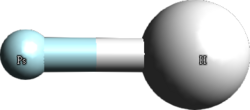
Key Facts
- Chemical Formula: PsH
- IUPAC Name: Positronium hydride
- Molar Mass: 1.00794 g·mol
- Molecular Shape: Diatomic molecule
- Composition: One hydrogen atom and one positronium atom (electron + positron)
The History of Discovery
The existence of positronium hydride was first predicted in 1951 by A. Ore. While theoretical studies followed this prediction, the molecule remained elusive for nearly four decades due to the extreme difficulty of stabilizing antimatter components.
First Observation in Magnesia Crystals
The first successful observation occurred in 1990. Researchers R. Pareja and R. Gonzalez in Madrid utilized a specialized trap prepared by Yok Chen of the Oak Ridge National Laboratory. By trapping positronium within hydrogen-laden magnesia crystals, the team was able to thermalize the positrons—slowing them down so they were not traveling at high speeds—allowing them to react with hydrogen (H) ions within the crystal lattice.
Synthesis via Methane
In 1992, another breakthrough was achieved at Aarhus University in Denmark by David M. Schrader, F.M. Jacobsen, and their colleagues. This team employed a different method: firing intense bursts of positrons into methane. Methane was chosen because it possesses a very high density of hydrogen atoms. As the positrons slowed down, they were captured by electrons to form positronium atoms, which then reacted with the hydrogen atoms from the methane to create PsH.

Technical Specifications
Positronium hydride is characterized by its incredibly low molar mass, reflecting its composition of light particles. Below is a summary of its primary chemical and physical identifiers.
| Property | Detail |
|---|---|
| IUPAC Name | Positronium hydride |
| SMILES String | [Ps][H] |
| ChEBI Identifier | CHEBI:46711 |
| Molar Mass | 1.00794 g·mol |
| Molecular Shape | Diatomic |
Frequently Asked Questions
What exactly is positronium hydride?
Positronium hydride (PsH) is an exotic diatomic molecule composed of a hydrogen atom and a positronium atom, the latter of which is a bound state of an electron and a positron.
Who first predicted the existence of PsH?
The molecule was predicted to exist in 1951 by the scientist A. Ore.
How was positronium hydride first observed?
It was first observed in 1990 by R. Pareja and R. Gonzalez, who trapped thermalized positrons in hydrogen-laden magnesia crystals.
Why was methane used in the 1992 Aarhus University experiment?
Methane was used because it has the highest density of hydrogen atoms, increasing the likelihood that positronium atoms would react with hydrogen to form PsH.
What is the molar mass of positronium hydride?
The molar mass of PsH is 1.00794 g·mol.