Port Wine Styles: A Comprehensive Guide to Portuguese Fortified Wines
Port is a world-renowned fortified wine from Portugal, celebrated for its richness and diversity. At its core, the vast array of Port styles is defined by how the wine matures. The primary distinction lies between wines that undergo reductive aging—maturing in sealed glass bottles without air exposure—and those that undergo oxidative aging—maturing in permeable wooden barrels.
Reductive aging preserves color and creates a smoother, less tannic palate. In contrast, oxidative aging allows oxygen to interact with the wine, causing it to lose color more quickly and evaporate volume (a phenomenon known as the "angel's share"), which results in a more viscous liquid. The IVDP (Instituto dos Vinhos do Douro e Porto) categorizes these wines into "normal ports" (standard ruby, white, and three-year-old tawny) and Categorias Especiais (special categories).
Key Facts
- Aging Methods: Reductive aging (bottles) preserves fruit and color; oxidative aging (barrels) creates nutty flavors and amber hues.
- Vintage Port: Represents only about 2% of total production and is made from a single declared year.
- LBV: Late Bottled Vintage is designed to offer a vintage-like experience without decades of bottle aging.
- Tawny: Defined by wood aging, resulting in a golden-brown color and nutty profile.
- Colheita: A single-vintage tawny that spends significant time in wood rather than the bottle.
Ruby Port Styles
Ruby ports are characterized by their bright red color and full-bodied fruitiness. To prevent oxidation, they are typically stored in stainless steel or concrete tanks. While standard rubies are blended for brand consistency and filtered before bottling, they generally do not improve with age.
Reserve Ruby
Reserve ruby is a premium version approved by the Câmara de Provadores (the IVDP's tasting panel). Since 2002, the term "vintage character" is prohibited for this style because it is typically a blend of several vintages rather than a single year.
Late Bottled Vintage (LBV)
Originally wine intended for vintage bottling that remained in barrels longer than planned, LBV is now a deliberate style bottled four to six years after harvest. There are two primary versions:
- Filtered: Ready to drink upon release, often in stoppered bottles. Some experts believe filtration removes some of the wine's character.
- Unfiltered: Often labeled as "bottle matured," these require decanting and can age nearly as long as vintage ports. Since 2002, "bottle matured" labels must indicate at least three years of aging in the bottle.
Historically, the first known reference to LBV appeared in The Wine Society's 1964 catalogue, featuring Fonseca's Quinta Milieu 1958.
Crusted Port
Crusted port is a blend of several vintages, allowing the blender to balance different characteristics. It is bottled unfiltered with a driven cork and must be decanted before serving.
Vintage Port
Vintage port is the pinnacle of Ruby Port craftsmanship, made from the finest grapes of a single declared vintage year. These wines spend a maximum of two and a half years in barrels before spending 10 to 40+ years maturing in the bottle.
Because of the slow decomposition of grape solids during bottle aging, vintage ports require settling and decanting. These wines possess incredible longevity; for example, the 1815 Ferreira is one of the oldest known vintage ports still available as of 2018.
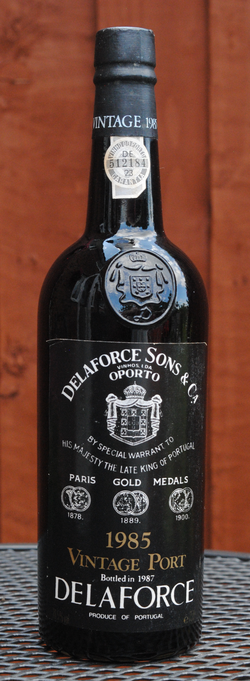
Single Quinta Vintage Port
While standard vintage ports may source grapes from multiple estates, a Single Quinta vintage port comes from one specific estate (quinta). These are often produced in years when a house does not declare a general vintage port.
Rosé Port
Introduced in 2008 by Poças and Croft, Rosé port is technically a ruby port fermented with limited skin contact to achieve its characteristic pink hue.
Tawny Port Styles
Tawny ports are aged in wooden barrels, where gradual oxidation transforms the wine into a golden-brown color with distinct nutty flavors. They range from sweet to medium-dry.
- Standard Tawny: A blend that has spent at least three years in wood.
- Reserve Tawny: Aged for approximately seven years.
- Aged Tawny: Blends with a target age profile stated on the label (typically 10, 20, 30, or 40 years).
Colheita
Unlike vintage port, which matures in the bottle, Colheita is a single-vintage tawny that matures in wooden barrels for at least seven years—sometimes for 20 years or more—before bottling.
Garrafeira
A rare style associated with producers like Niepoort, Garrafeira combines wood aging (3-6 years) with reductive maturation in large glass demijohns (called bon-bons) for at least eight additional years. Some describe this style as having a slight taste of bacon due to oil precipitation during the glass-aging phase.
White Port
Made from white grape varieties such as Malvasia Fina, Donzelinho, Gouveio, Codega, and Rabigato, white ports vary in sweetness from dry to lagrima (extra sweet). A notable variation is the "Chip Dry" style introduced by Taylor in 1934, which is made drier by adding brandy later in the fermentation process.
Port Style Summary
| Style | Aging Method | Primary Characteristics | Typical Maturity |
|---|---|---|---|
| Ruby | Tanks (Reductive) | Bright red, fruity, full-bodied | Ready to drink |
| Vintage | Bottle (Reductive) | Dark ruby, complex, high longevity | 10 to 40+ years |
| LBV | Barrel then Bottle | Balanced fruit and wood | 4 to 6 years (release) |
| Tawny | Barrel (Oxidative) | Golden-brown, nutty, sweet/dry | 3 to 40+ years (wood) |
| Colheita | Barrel (Oxidative) | Single vintage, amber hue | 7+ years in wood |
| White | Various | Pale, ranges from dry to extra sweet | Ready to drink |
Frequently Asked Questions
What is the difference between Vintage Port and Colheita?
The primary difference is where they mature. Vintage Port spends a short time in barrels and the majority of its life maturing in the bottle. Colheita is a single-vintage tawny that spends the majority of its maturation in wooden barrels.
Do I need to decant LBV Port?
It depends on the type. Unfiltered LBVs (often labeled "bottle matured") must be decanted and should be consumed within a few days of opening. Filtered LBVs are ready to drink without decanting.
What does "angel's share" refer to in Port production?
The "angel's share" is the volume of wine lost to evaporation while the Port is aging in permeable wooden barrels during the oxidative aging process.
How is Rosé Port made?
Rosé Port is technically a ruby port, but it is fermented with limited exposure to the grape skins, similar to the process used for traditional rosé wines, to create its pink color.
What is the role of the IVDP?
The Instituto dos Vinhos do Douro e Porto (IVDP) is the governing body that regulates Port production, defines categories, and manages the tasting panel (Câmara de Provadores) that approves Reserve rubies.