Understanding Port and Starboard: The Essential Guide to Nautical Direction
If you have ever stepped aboard a ship or watched a maritime film, you have likely heard the terms port and starboard. While they essentially mean "left" and "right," these terms are far more than mere synonyms. In the world of navigation, using "left" or "right" can lead to dangerous confusion. Instead, mariners use these specific terms to ensure that directions remain constant, regardless of which way a person is facing.
This article explores the foundational concepts of nautical orientation, the fascinating history behind these words, and why they remain critical for safety on the high seas today.
Defining the Sides of a Vessel
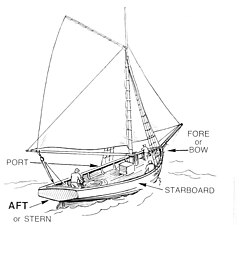
In maritime, aviation, and spacecraft navigation, port and starboard refer to fixed sides of a vessel. To determine which side is which, you must be aboard the vessel and facing the bow (the front of the ship) while it is heading forward.
- Port: The left side of the vessel.
- Starboard: The right side of the vessel.
Because these terms refer to the structure of the vessel itself, they are unambiguous. Unlike "left" or "right," which change depending on the observer's orientation, port and starboard always refer to the same physical part of the ship. This allows crew members to communicate orders clearly, even if they are facing away from the direction of travel.
Bilateral Symmetry and Access
Most vessels possess bilateral symmetry, meaning they have left and right halves that are mirror images of one another. However, many vessels feature asymmetric elements. For example, access to a boat or aircraft is often located only on the port side, which is why the term is so frequently used in daily operations.
The Etymology of Navigation
The history of these terms provides a window into how ancient seafaring technology functioned. The word "starboard" has its roots in the Old English steorbord, where steor means "steer" and bord means "side."
Before the invention of the modern rudder, ships were steered using a steering oar. Because most people are right-handed, this oar was placed on the right side of the vessel. Consequently, the "steer-board" became the standard side for navigation.
![Image from the Bayeux Tapestry showing a longship with a steering oar on the starboard side.[4]](/images/26/ec/26ec04a31c1f4ba2fc9809437290d37089db5b3e9686f1087f50ded1177486a3.jpg)
The Evolution of "Port" and "Larboard"
Since the steering oar was positioned on the right, ships would typically dock on their left side to avoid damaging the oar. In Old English, this left side was known as bæcbord (back-board), referring to the fact that the person at the steering oar had their back to the left side of the ship.
Over time, several terms emerged for the left side:
- Ladde-borde: Used around 1300, meaning "load-side" (the side used for loading).
- Larboard: A variation of ladebord that emerged in the 1500s.
- Port: A term used because it was the side used for docking at a port.
The term "larboard" eventually fell out of favor because it sounded too similar to "starboard," which could cause fatal errors during high-stress maneuvers. In 1844, the Royal Navy officially ordered that "port" be used instead. The United States Navy followed this convention in 1846. While "larboard" persisted among whalers and riverboat pilots—noted by authors like Mark Twain—it is no longer a standard maritime term.
Safety and Collision Prevention
The use of standardized terms is not just a matter of tradition; it is a legal requirement for safety. International regulations, such as the International Regulations for Preventing Collisions at Sea, rely on these terms to dictate how vessels should behave when overtaking, approaching head-on, or crossing paths.
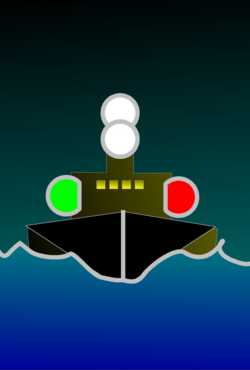
To aid in decision-making during low visibility, vessels are equipped with navigation lights. These lights allow other sailors to identify a vessel's orientation from a distance:
- Port side: Marked by a red light.
- Starboard side: Marked by a green light.
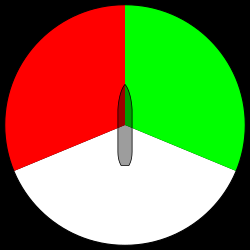
This color-coding system is also used in aviation, ensuring that pilots can identify the orientation of other aircraft in the sky.
Key Facts
- Port refers to the left side; Starboard refers to the right side.
- Orientation is determined by facing the bow (front) of the vessel.
- Starboard comes from the Old English steorbord (steering side).
- Port is the docking side, and the term replaced "larboard" to avoid confusion with starboard.
- Navigation lights use Red for Port and Green for Starboard.
- These terms are used in maritime, aviation, and spacecraft navigation.
Summary of Nautical Orientations
| Feature | Port Side | Starboard Side |
|---|---|---|
| Direction (facing bow) | Left | Right |
| Navigation Light Color | Red | Green |
| Historical Origin | Docking/Loading side | Steering oar side |
Frequently Asked Questions
Why don't sailors just use "left" and "right"?
Using "left" and "right" is relative to the person speaking. If a captain tells a crew member to "move to the left," it depends on which way that crew member is facing. "Port" and "starboard" are fixed to the ship's structure, ensuring everyone understands the exact location regardless of their orientation.
What colors are used for navigation lights?
To prevent collisions, vessels use specific colored lights: red for the port side and green for the starboard side. This allows other vessels to determine the direction and orientation of an oncoming ship at night or in poor visibility.
Is "larboard" still a valid term?
While "larboard" was used historically and by some riverboat pilots in the 19th century, it was officially replaced by "port" in the mid-1800s to prevent confusion with "starboard." It is no longer used in modern professional maritime navigation.
Does this terminology apply to aircraft?
Yes. The conventions for port and starboard are used in aviation and spacecraft navigation to ensure standardized communication and orientation.
How are crews divided using these terms?
In some naval traditions, such as the Royal Navy, crews may be divided into teams named "Port" and "Starboard" for duty rotations, such as a two-watch system.