Pontiac Catalina: The Evolution of a Full-Size American Icon
For over three decades, the Pontiac Catalina stood as a cornerstone of General Motors' full-size lineup. From its origins as a premium trim level in the early 1950s to its eventual role as an entry-level full-size powerhouse, the Catalina nameplate represented a unique intersection of value, performance, and style. Spanning production from 1950 to 1981, this vehicle helped shape the identity of the Pontiac brand.
Initially introduced as a trim line for the Chieftain Eight and DeLuxe Eight series, the Catalina underwent a significant transformation in 1959. It transitioned from a mere trim designation to a standalone model, serving as the entry point for Pontiac's full-size offerings. This shift allowed Pontiac to compete effectively within the GM hierarchy, offering more amenities and more powerful engines than Chevrolet models while maintaining a competitive price point.
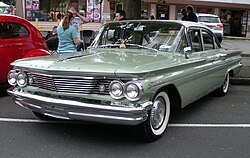
Key Facts
- Production Years: 1950–1981
- Manufacturer: Pontiac (General Motors)
- Platform: GM B platform
- Layout: Front-engine, rear-wheel drive (FR layout)
- Total Sales: Over 3.8 million units sold since 1959
- Legacy: Predecessor to the Pontiac Bonneville in the full-size hierarchy
The Early Years: From Trim to Standalone Model
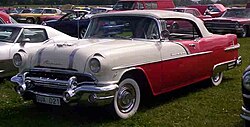
Between 1950 and 1958, the Catalina was not a separate model but a high-end trim level available on the Chieftain and Star Chief lines. It offered various body styles, including hardtop coupes and sedans, providing a touch of prestige to the existing Pontiac lineup.
The First Generation (1959–1960)
In 1959, the Catalina became its own model. During this era, it was positioned strategically within the GM price structure. While it sat below the Buick LeSabre and Oldsmobile 88 in terms of trim, it was priced approximately $100 to $200 lower. To provide superior value, Pontiac equipped the Catalina with more standard amenities and a larger 389 cubic-inch V8 engine compared to the smaller engines found in contemporary Chevrolets.
Engine enthusiasts had various options, including an "Economy V8" designed to run on regular gasoline and achieve over 20 MPG on the highway. For those seeking more power, the 389 V8 could be outfitted with "Tri-Power" configurations—utilizing triple two-barrel carburetors—to produce up to 345 horsepower.
The Golden Era of Performance (1961–1970)
The 1960s marked a period of rapid evolution for the Catalina, characterized by shrinking dimensions for better handling and a massive surge in performance capabilities.
Second Generation: The Wide Track Era (1961–1964)
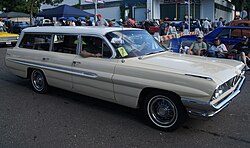
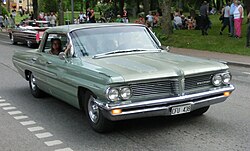
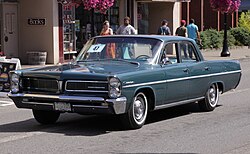
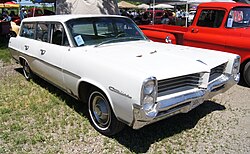
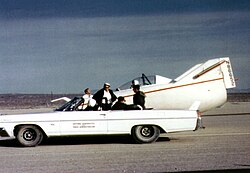
The second generation introduced a smaller, lighter body. In 1961, Pontiac marketed these vehicles on a "new wide track," emphasizing improved stability. By 1962, the design received a heavy facelift with more rounded contours. This era also saw the birth of the Grand Prix, a sporty version of the Catalina hardtop coupe, and the introduction of the Pontiac 2+2 package, which brought bucket seats and heavy-duty suspension to the Catalina line.
Third Generation: Coke-Bottle Styling (1965–1970)
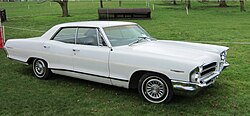
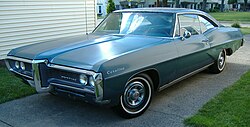
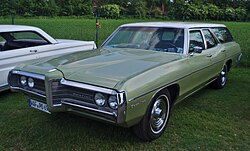
In 1965, the Catalina was completely restyled with flowing sheet metal and "Coke-bottle" profiles—a design trend characterized by a narrow waist and flared fenders. The 2+2 package evolved from a mere trim option into a dedicated performance model, similar to the legendary GTO, featuring high-output 421 cubic-inch V8 engines.
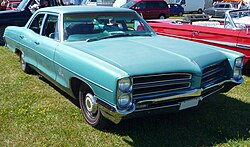
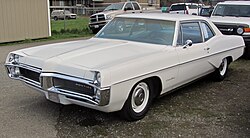
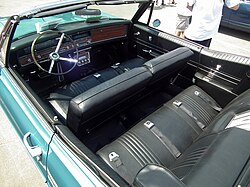
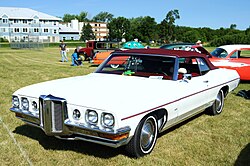
As the decade progressed, engine offerings expanded to include the massive 455 cubic-inch V8. By 1970, the Catalina adopted a new V-nose grille and "horns ports" on the front end, maintaining a bold presence on American roads.
The Shift Toward Luxury and Downsizing (1971–1981)
The 1970s brought significant changes to the automotive landscape, including new emissions regulations and a shift in consumer preference toward efficiency.
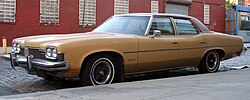
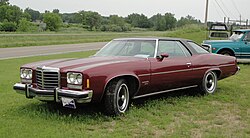
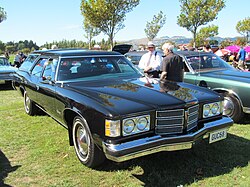
Fourth Generation (1971–1976)
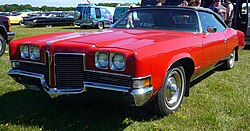
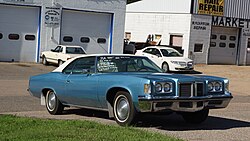
The 1971 model year introduced the Catalina Brougham, a series focused on luxury interior trim. However, due to changing regulations, engines were redesigned to run on lower-octane unleaded gasoline, which necessitated lower compression ratios. This era also marked the end of the Catalina convertible in 1972.
Fifth Generation and the End of an Era (1977–1981)
In 1977, Pontiac joined the industry-wide trend of downsizing. The fifth-generation Catalina was significantly lighter and more compact to improve fuel economy. While V8 engines remained available, the base models transitioned to a Buick-built V6. The Catalina was eventually discontinued after the 1981 model year as Pontiac shifted its focus away from the full-size market.
Canadian Variants: The Laurentian and Strato-Chief
In the Canadian market, Pontiac utilized different nameplates. The Laurentian used Chevrolet chassis and drivetrains but featured body shells similar to the U.S. Catalina. These models provided a unique regional variation of the Pontiac experience through 1970.
| Generation | Years | Key Characteristics |
|---|---|---|
| First | 1959–1960 | Transitioned to standalone model; featured 389 V8. |
| Second | 1961–1964 | "Wide Track" design; introduction of Grand Prix and 2+2. |
| Third | 1965–1970 | "Coke-bottle" styling; high-performance 421 and 455 V8s. |
| Fourth | 1971–1976 | Introduction of Brougham luxury trim; end of convertible. |
| Fifth | 1977–1981 | Downsized for fuel efficiency; final production run. |
Frequently Asked Questions
What was the significance of the Pontiac 2+2?
The 2+2 began as a trim package for the Catalina but evolved into a high-performance model designed to compete with muscle cars, featuring upgraded suspensions and powerful V8 engines.
How did the Catalina differ from Chevrolet models?
While priced competitively, the Catalina typically offered more standard amenities and larger, more powerful V8 engines than its Chevrolet counterparts, such as the Impala.
What does "Tri-Power" mean in a Pontiac context?
Tri-Power refers to an engine configuration using three two-barrel carburetors, which was an optional performance upgrade to increase horsepower.
Why was the Catalina discontinued in 1981?
The discontinuation was part of General Motors' broader downsizing program, as Pontiac moved away from the full-size automobile market.
What was the Laurentian?
The Laurentian was the Canadian version of the Pontiac full-size line, utilizing Chevrolet components with a body style similar to the American Catalina.