Politecnico di Torino: A Global Leader in Engineering and Architecture
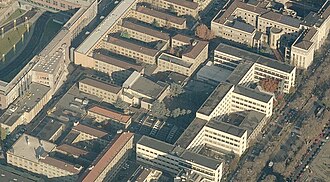
Politecnico di Torino stands as a premier institution for technical education, consistently recognized as one of the top universities in Italy and Europe. Specializing in the intersection of science, technology, and design, the university provides a rigorous academic environment that bridges the gap between theoretical research and industrial application.
The university is renowned for its commitment to innovation, evidenced by its high global rankings and its strategic partnerships with industry giants. From its historic roots to its modern research facilities, the institution continues to shape the future of global infrastructure and technology.
Key Facts
- Global Standing: Ranked 53rd globally for Engineering & Technology (QS 2026).
- High Employability: Master's graduates see an 87.5% employment rate one year after graduation, significantly exceeding the Italian national average of 70.7%.
- International Reach: 16% of the student body consists of international students, with 23 courses taught entirely in English.
- Academic Breadth: Offers 23 Bachelor's and 30 Master's degree programmes across 11 specialized departments.
- European Integration: Member of the UNITE! alliance, creating a trans-European campus with six other technical universities.
Academic Structure and Offerings
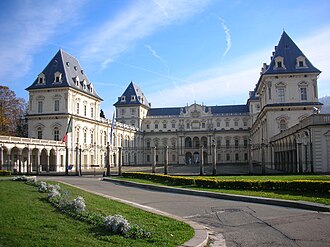
The university is organized into 11 departments that integrate teaching and research. These departments manage the coordination and promotion of scientific inquiry while overseeing the daily organization of academic activities.
Specialized Departments
- Architecture and Design: DAD
- Control and Computer Engineering: DAUIN
- Energy: DENERG
- Electronics and Telecommunications: DET
- Environment, Land and Infrastructure Engineering: DIATI
- Management and Production Engineering: DIGEP
- Mechanical and Aerospace Engineering: DIMEAS
- Applied Science and Technology: DISAT
- Structural, Geotechnical and Building Engineering: DISEG
- Mathematical Sciences: DISMA
- Regional and Urban Studies and Planning: DIST (Interuniversity Department)
Degree Programmes
The course catalog is diverse, catering to various levels of specialization. For the 2019–2020 academic year, the university offered 23 Bachelor's programmes (including 19 in Engineering and 3 in Architecture, Design and Spatial Planning) and 30 Master's programmes. Advanced specialization is further supported by 22 Specialization Masters (divided into I and II levels) and 16 PhD programmes, some of which are conducted in cooperation with other research centers and universities.
The curriculum covers a vast array of disciplines, including Aerospace Engineering, Biomedical Engineering, Nanotechnology, Nuclear Engineering, and Textile Engineering, among others.
Global Rankings and Research Excellence
Politecnico di Torino is a powerhouse in technical rankings. As of 2024, the QS World University Rankings place it among the top 52 engineering and technology universities worldwide. Specific disciplines show even stronger performance:
- Architecture: 21st in the world
- Petroleum Engineering: 22nd in the world
- Mechanical Engineering: 28th in the world
- Civil Engineering: 33rd in the world
The university's research capabilities are bolstered by the I3P (Innovative Enterprise and Business Incubator), which was ranked 5th in Europe and 15th globally by the UBI Index in 2014. Additionally, the Automotive Engineering program, developed with the Fiat Group, has maintained a top-three European ranking for a decade.
Internationalization and Strategic Alliances
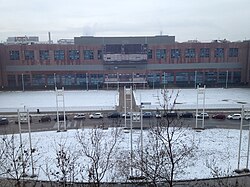
To foster global collaboration, the university has been designated a "European University" by the European Commission. It is a founding member of the UNITE! (University Network for Innovation, Technology and Engineering) alliance. This partnership includes Aalto University, KTH Royal Institute of Technology, Technische Universität Darmstadt, the Polytechnic University of Catalonia, and the University of Lisbon.
Beyond Europe, the institution maintains a strong presence in Uzbekistan through an agreement with the Turin Polytechnic University in Tashkent, providing education in Civil Engineering, Computer Science, and Mechanical Engineering.
University Statistics Summary
| Category | Statistic |
|---|---|
| Total Bachelor's and Master's Students | 35,700 |
| International Students | 16% |
| PhD Candidates | 696 |
| Total Graduates (2018) | 6,691 |
| Average Age (Bachelor's Graduates) | 23.7 |
| Average Age (Master's Graduates) | 26.2 |
| Master's Employment Rate (1 year post-grad) | 87.5% |
Frequently Asked Questions
How does the employment rate of Politecnico di Torino graduates compare to the national average?
According to the 2021 Almalaurea survey, Master's students have an employment rate of 87.5% one year after graduation, which is significantly higher than the Italian national average of 70.7%.
What is the UNITE! alliance?
UNITE! is a network of seven European technical universities, including Politecnico di Torino, aimed at creating a trans-European campus, developing shared curricula, and strengthening scientific cooperation and knowledge transfer across borders.
Which subjects are the university's strongest according to QS Rankings?
The university excels particularly in Architecture (21st), Petroleum Engineering (22nd), Mechanical Engineering (28th), and Civil Engineering (33rd).
Are there courses available for non-Italian speakers?
Yes, the university offers 23 courses that are taught completely in English to accommodate its international student population, which makes up 16% of the student body.
Does the university have partnerships with the automotive industry?
Yes, the Automotive Engineering program was conceived in collaboration with the Fiat Group and has consistently ranked among the top three in Europe for ten years.