Police Forces: Evolution, Organization, and Global Functions
The police are a constituted body of individuals empowered by a state to enforce the law, protect public order, and ensure the safety, health, and possessions of citizens. By maintaining a state-legitimized monopoly on violence, police forces work to prevent crime and civil disorder within defined legal or territorial jurisdictions.
While often associated primarily with law enforcement, policing encompasses a broader array of activities focused on the preservation of order. In modern complex societies, these forces are ubiquitous, though their role remains a subject of debate regarding corruption, brutality, and the enforcement of authoritarian rule. Most police forces operate as public sector services funded through taxation.
Depending on the region, these organizations may be called a police department, police service, constabulary, law enforcement agency, or civil guard. In Ireland, the national force and its members are known as the Gardaí (singular: Garda).
Key Facts
- Primary Goal: Enforcing the law and protecting public order and safety.
- Legal Authority: Empowered by the state to perform arrests and use legitimate force.
- Distinction: Generally separate from the military, except for gendarmerie (military units charged with civil policing).
- Funding: Typically public sector services funded by taxes.
- Scope: Includes uniformed patrol, detectives, specialized units, and administrative duties.
Personnel and Organizational Structure
Police organizations are structured to handle a variety of societal needs, ranging from immediate emergency response to long-term criminal investigations.
Uniformed and Specialized Officers
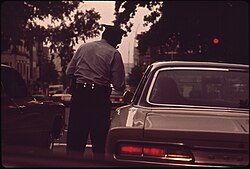
Uniformed officers provide a visible presence to deter crime and assist the public. In some regions, specific symbols, such as the British custodian helmet, have become iconic representations of this presence.
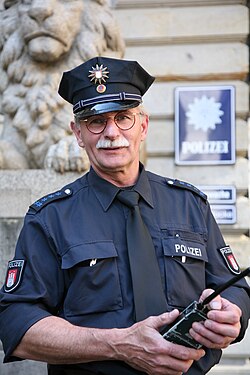

![Metropolitan Police officers in 2019. The custodian helmet has been called "an iconic symbol of British policing".[156]](/images/41/d1/41d15e9dc9e3c1d4631e089cd821ca139f441ec75055a68ba754f4cf1a556e8b.jpg)
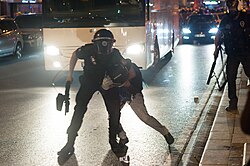
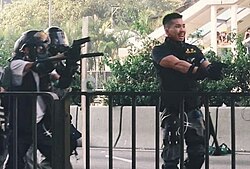
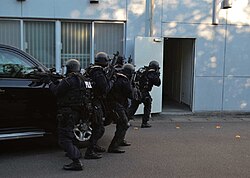
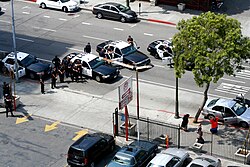
Beyond general patrol, specialized units handle high-risk or technical tasks. This includes riot control for managing civil unrest and Special Assault Teams for high-stakes tactical entries.
Detectives and Plainclothes Operations
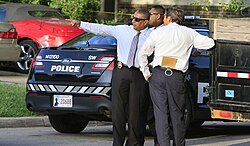
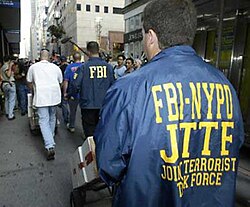
Detectives focus on the investigation of crimes after they have occurred. They often operate in plainclothes—civilian attire—to blend into environments during homicide investigations or surveillance.
Administrative and Auxiliary Support
Policing also relies on administrative staff for management and auxiliary or volunteer officers who support full-time personnel in various capacities.
Diverse Policing Models
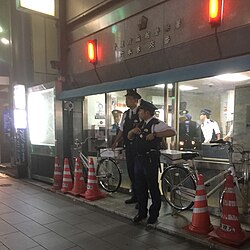
Different nations employ unique strategies to maintain order. For example, Japan utilizes the kōban system—small police stations that establish a permanent presence in neighborhoods while occupying minimal space.
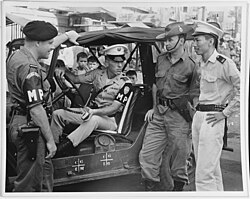
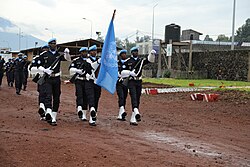
Other models include military police, which can vary from units policing civilian populations (such as the Romanian Gendarmerie) to special military law enforcement services. International policing is also conducted by bodies like the United Nations to maintain order in conflict zones.
Equipment and Strategy
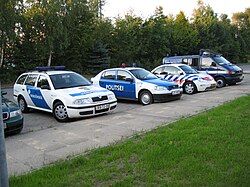
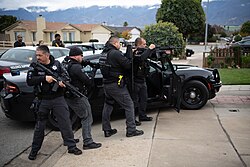
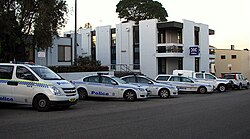
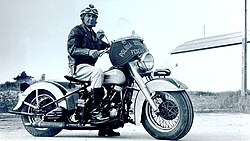
To execute their duties, police utilize a range of equipment, including specialized vehicles, communication systems, and weaponry tailored to the threat level.

Modern strategies often focus on the clearance rate (the rate at which crimes are solved) and the use of intelligence-led policing to target "hot spots" of criminal activity.
History of Policing
The concept of policing dates back to ancient civilizations, including China, Babylonia, Egypt, Greece, Rome, and India, as well as the Achaemenid Empire and Israel.
Early Modern and Professional Development
In medieval Spain, the Santas Hermandades were formed to protect pilgrims. Later, figures like Gabriel Nicolas de la Reynie founded the Prefecture of Police, the world's first uniformed force, while Patrick Colquhoun established the Thames River Police.
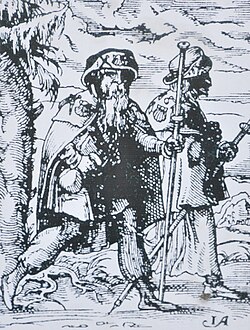
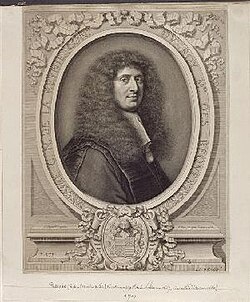
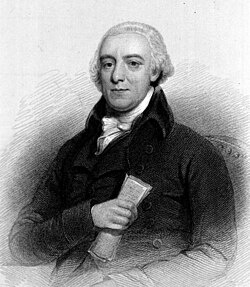
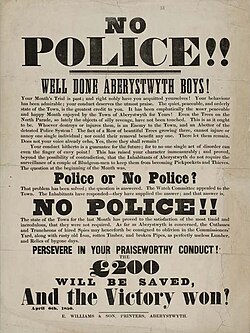
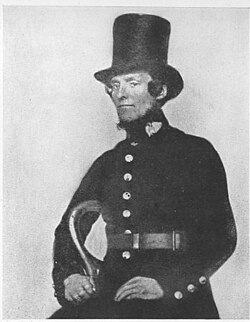
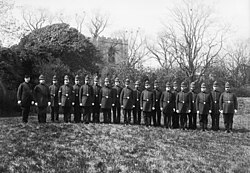
The 19th century saw the rise of professionalized forces. In England, the Metropolitan Police emerged, though they were not always welcomed, as evidenced by anti-police posters in Wales in 1850.
Development in the Americas
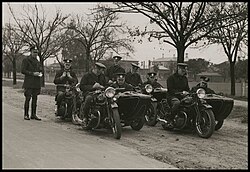
In the United States, the Marshals Service was established in 1789, followed by the U.S. Parks Police (1791) and U.S. Mint Police (1792). Municipal services followed in Richmond (1807), Boston (1838), and New York City (1845). The Secret Service was later founded in 1865 as a primary federal investigative body.
Accountability and Power
Because police hold the power of arrest and the use of force, strict accountability measures are necessary. These include legal restrictions on searches (such as searches incident to arrest or those conducted under exigent circumstances) and the requirement of consent in specific scenarios.
Issues such as selective enforcement and the protection of individual rights remain central to the legal discourse surrounding police conduct.
Summary of Policing Types
| Type | Primary Characteristic | Example |
|---|---|---|
| Civilian Police | Public sector, non-military law enforcement | Metropolitan Police (UK) |
| Gendarmerie | Military units performing civil policing | Romanian Gendarmerie |
| International Police | Multinational forces for global stability | United Nations Police |
| Specialized/Tactical | High-risk intervention and assault | Japanese Special Assault Team |
| Community-Based | Localized, permanent neighborhood presence | Japanese Kōban |
Frequently Asked Questions
What is the difference between police and gendarmerie?
Police are typically civilian public sector services, whereas gendarmerie are military units specifically charged with performing civil policing duties.
What is a kōban?
A kōban is a small police station used in Japan to maintain a permanent police presence and provide services across a wide area while using minimal space.
What are plainclothes officers?
Plainclothes officers, often detectives, wear civilian attire instead of uniforms to conduct investigations or surveillance without being easily identified.
How is the U.S. federal policing structured?
The U.S. has several federal agencies, including the U.S. Marshals Service (est. 1789), the U.S. Secret Service (est. 1865), and specialized forces like the U.S. Parks Police.
What is the purpose of a clearance rate?
The clearance rate is a metric used to measure the effectiveness of a police force by calculating the percentage of reported crimes that are solved.