Platform Geology: Cratons and Sedimentary Layers
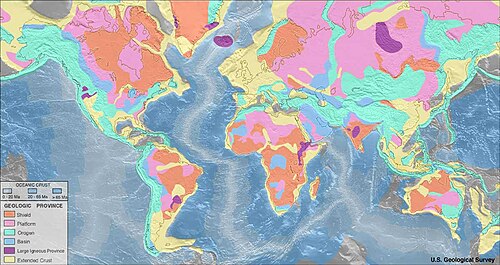
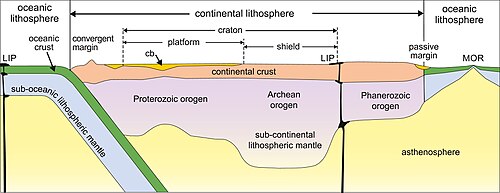
In the study of Earth's crust, a platform is defined as a craton—a stable, ancient part of the continental lithosphere—that has been covered by a layer of sedimentary rocks. Unlike shields, which are exposed cratonic cores, platforms hide their crystalline basement beneath these accumulated deposits.
Understanding the structure of platforms allows geologists to reconstruct the history of continental growth and the environmental conditions that existed millions of years ago.
Key Facts
- A platform is essentially a craton covered with sediments.
- Platforms are categorized into four distinct groups based on the nature of their sedimentary layers.
- The Baltic area's Mesoproterozoic Jotnian sediments serve as a primary example of a quasiplatform.
- Post-Ordovician rocks in South America exemplify an orthoplatform.
Classifying Geological Platforms
Not all platforms are created equal. Geologists classify them into specific groups based on the degree of deformation and the position of the sediments within the stratigraphic column.
The Four Platform Types
- Protoplatform: These consist of metamorphosed sediments located at the bottom of the sequence.
- Quasiplatform: These contain sediments that have undergone slight deformation. An example is found in the Mesoproterozoic Jotnian sediments of the Baltic area.
- Cataplatform: A transitional sedimentary layer situated above the quasiplatform.
- Orthoplatform: The topmost layer of the sequence. The post-Ordovician rocks of the South American Platform are a classic example of this type.
Summary of Platform Classifications
| Platform Type | Characteristics | Example/Location |
|---|---|---|
| Protoplatform | Metamorphosed sediments at the base | N/A |
| Quasiplatform | Slightly deformed sediments | Jotnian sediments (Baltic area) |
| Cataplatform | Intermediate sedimentary layer | N/A |
| Orthoplatform | Topmost sedimentary layer | Post-Ordovician rocks (South American Platform) |
Frequently Asked Questions
What is the difference between a shield and a platform?
While both are part of a craton, a shield is the exposed crystalline basement, whereas a platform is a craton covered by a layer of sediments.
What characterizes a quasiplatform?
A quasiplatform is characterized by sedimentary layers that have experienced slight deformation, such as the Mesoproterozoic Jotnian sediments in the Baltic area.
Where can an orthoplatform be found?
An orthoplatform represents the topmost sedimentary layer of a craton; a notable example is found in the post-Ordovician rocks of the South American Platform.
What are protoplatforms?
Protoplatforms are the deepest layers of a platform, consisting of sediments that have undergone metamorphism.