Pioneer Square Totem Pole: A History of Theft, Controversy, and Restoration
Standing as one of the most recognizable landmarks in downtown Seattle, the Pioneer Square totem pole is more than just a piece of art; it is a complex symbol of civic pride, cultural theft, and eventual reconciliation. While it has come to represent the city's identity as the "Gateway to Alaska," its origins are rooted in a 19th-century expedition that blurred the lines between diplomacy and plunder.
The Tlingit Origins
The original totem pole was carved around 1790 for the Kinninook family, a Tlingit clan of the Raven moiety (a matrilineal kinship group). Unlike many poles of the era, this specific monument was dedicated to a woman: Chief-of-All-Women. She had tragically drowned in the Nass River while traveling to visit her ill sister.
To honor her memory, the family commissioned a carver to translate their oral histories into visual form. Once completed, the community held a potlatch—a traditional ceremonial feast involving the redistribution of wealth—to raise the pole in their village on Tongass Island.
The 1899 Expedition and the Theft
In August 1899, the Seattle Post-Intelligencer sponsored a "goodwill tour" to the District of Alaska. The expedition, consisting of 165 men and women aboard the steamship City of Seattle, aimed to investigate trade and investment opportunities to solidify Seattle's status as a commercial hub.
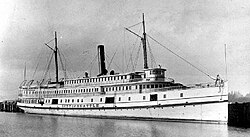
On August 28, 1899, the ship stopped at Fort Tongass. Finding the village largely deserted as the residents were away for the fishing and cannery season, members of the Chamber of Commerce decided to take a totem pole as a souvenir. Third mate R. D. McGillvery and a crew of sailors chopped down the pole, sawing it in two to transport it. During the theft, they broke the beak of the bottom figure and also stole an eight-foot carving of a seal.
The Chamber of Commerce committee paid McGillvery $2.50 for his labor before presenting the stolen artifact to the Seattle City Council as a gift.
Installation and Public Reception
The pole was repaired and unveiled in Pioneer Square on October 18, 1899. While city officials claimed the pole had been "saved from certain destruction" and belonged to no one, the public reaction was sharply divided.
- Supporters viewed it as a "handsome curio" and a fitting symbol for the gateway to Alaska.
- Critics, including local business owners, called it a "blot" and a "disgrace," arguing it belonged back in its place of origin.
The rivalry between local newspapers intensified the conflict. The Seattle Daily Times published a cartoon accusing the Seattle Post-Intelligencer of specializing in "robbing Indian graves."
Legal Battles and Tlingit Response
The Tlingit people were shocked to find their monument missing upon their return. William E. Kinninook filed a claim for $10,000 in damages, which the Seattle City Council refused to consider. Legal proceedings then shifted to Alaska, where the captain and purser of the City of Seattle were subpoenaed by a Federal grand jury.
Under the threat of indictments, the Seattle Post-Intelligencer eventually negotiated a settlement in December 1899, paying $500 each to four individuals claiming ownership. Despite this, eight members of the expedition—including the editor of the Post-Intelligencer and the manager of the Dexter Horton Bank—were indicted for theft of government property.
The case was eventually dismissed in June 1900 by District Judge Melville C. Brown. The District Attorney noted that while the defendants were "guilty of vandalism," they did not intend to commit a crime. A final settlement of $500 was paid to provide for the pole and a replacement marble monument.
From Civic Icon to Replica
Over the following decades, the pole became a source of immense civic pride, appearing on brochures and postcards. By 1910, it was described as the "totem pole that made Seattle famous." It even inspired the naming of the city's professional ice hockey team, the Seattle Totems, in 1958.

Tragedy struck in October 1938 when an arsonist damaged the pole. By 1939, inspectors found that fire and dry rot had rendered the original beyond repair. To replace it, the U.S. Forest Service employed Tlingit carvers, including members of the Kinninook family, to create a replica in Saxman, Alaska.
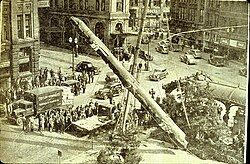
The replica was dedicated with tribal blessings and raised in Pioneer Square on July 24, 1940. It was later restored in 1972 by Tsimshian carver John C. Hudson, Jr., and designated a National Historic Landmark in 1977.
Modern Perspectives and Cultural Sensitivity
In recent years, the presence of totem poles in Seattle has sparked renewed debate. The Coast Salish people, native to the Puget Sound region, did not traditionally carve totem poles; these are characteristic of Northern Northwest Coast cultures like the Tlingit. This has led to concerns that the poles have become a generic, and sometimes inaccurate, symbol of all Indigenous peoples.
In 2018, Seattle City Councilmember Debora Juarez called for a review of city-owned totem poles for cultural sensitivity. This review highlighted that some poles in the city, such as those in Victor Steinbrueck Park, were created by non-Native artists. As of 2023, the Pioneer Square totem pole remains standing as a testament to a complicated history of appropriation and artistry.
Key Facts
- Origin: Carved c. 1790 for the Kinninook family (Tlingit) to honor Chief-of-All-Women.
- Theft: Stolen in August 1899 by members of a Seattle Post-Intelligencer expedition.
- Legal Outcome: Initial claims were dismissed, but settlements totaling over $2,500 were paid to Tlingit claimants.
- Replica: The original was destroyed by arson and rot; a replica carved by Tlingit artists was installed in 1940.
- Status: Designated a National Historic Landmark in 1977.
| Year | Event | Significance |
|---|---|---|
| c. 1790 | Original Carving | Created to honor Chief-of-All-Women on Tongass Island. |
| 1899 | Theft and Installation | Stolen from Fort Tongass and erected in Pioneer Square. |
| 1900 | Legal Dismissal | U.S. District Court dismisses theft charges. |
| 1938-39 | Destruction | Arson and dry rot lead to the removal of the original pole. |
| 1940 | Replica Installation | A new pole carved by Tlingit artists is raised. |
| 1977 | Landmark Status | Designated as a National Historic Landmark. |
Frequently Asked Questions
Who originally owned the Pioneer Square totem pole?
The pole belonged to the Kinninook family, a Tlingit clan of the Raven moiety, and was located in a village on Tongass Island.
How did the totem pole get to Seattle?
It was stolen in 1899 by members of a business expedition sponsored by the Seattle Post-Intelligencer, who chopped it down while the village was deserted during the fishing season.
Is the current totem pole the original one?
No. The original was destroyed by arson and dry rot in the late 1930s. The current pole is a replica completed in 1940 by Tlingit carvers, including members of the original Kinninook family.
Why is there controversy regarding totem poles in Seattle?
The controversy stems from the fact that the local Coast Salish people did not traditionally carve totem poles. Using them as a general symbol for the region is seen by some as culturally insensitive or a misrepresentation of local Indigenous heritage.
Was any compensation paid for the stolen pole?
Yes. Following legal threats and indictments, the Seattle Post-Intelligencer paid $500 each to four claimants, and a later settlement provided $300 for the pole and $200 for a replacement monument.