Physical Review: The Definitive History and Evolution of Physics Publishing
Physical Review is a premier peer-reviewed scientific journal that serves as a cornerstone for the global physics community. Established in 1893 by Edward Nichols, the journal provides a platform for original research, scientific reviews, and literature reviews spanning all aspects of physics. Published by the American Physical Society (APS), it has evolved from a single publication into a comprehensive family of sub-journals, each dedicated to specific domains of physical science.
The journal's legacy is marked by its ability to adapt to the expanding frontiers of science, moving from its early days at Cornell University to its current role as a multi-disciplinary powerhouse of academic literature.
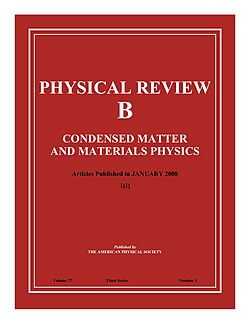
Key Facts
- Founded: 1893 by Edward Nichols.
- Publisher: American Physical Society (APS).
- Structure: Currently in its third series, divided into multiple specialized sub-journals.
- Sister Publication: Physical Review Letters, focusing on shorter articles of broad interest.
- Open Access: Offers various open-access options, including fully open-access journals like Physical Review X and Physical Review Research.
- Current Editor in Chief: Robert Rosner (term began March 2025).
The Historical Evolution of Physical Review
Series I and II: The Formative Years
Physical Review began publication in July 1893. Organized by Cornell University professor Edward Nichols with support from Cornell president J. Gould Schurman, the journal was managed at Cornell by Nichols, Ernest Merritt, and Frederick Bedell until 1913. These first 33 volumes comprise Series I.
In 1913, the American Physical Society (APS)—which had been founded in 1899—took over publication, initiating Series II. The editorial office remained at Cornell under G. S. Fulcher until 1926, after which it moved to the University of Minnesota under editor John Torrence Tate, Sr. In 1932, the American Institute of Physics assumed publication duties.
A notable moment of philanthropy occurred during the Great Depression, when scientist Alfred Loomis anonymously paid the publication fees for authors who were unable to afford them.
Series III and the Expansion of Sub-Journals
Following the death of John Torrence Tate, Sr. in 1950, the editorial office eventually moved to Brookhaven National Laboratory on Long Island, New York. A major milestone occurred in July 1958 with the launch of Physical Review Letters, designed for short, high-impact articles.
By 1970, the growth of physics research necessitated a split. Physical Review divided into four specialized sub-journals: Physical Review A, B, C, and D. In 1993, Physical Review E was added to accommodate the surge in research regarding nonlinear dynamics. Together, these five journals constitute Series III.
Modern Era and Digital Transformation
The 21st century has seen a rapid expansion of the APS portfolio. In 2011, the APS launched Physics, an online publication helping researchers stay informed about developments outside their specific subfields. This absorbed the earlier Physical Review Focus magazine.
The APS has also embraced open access (a publishing model where research is freely available to the public). This includes the launch of Physical Review X (2014), Physical Review Applied (2016), Physical Review Fluids (2017), Physical Review Materials (2019), and Physical Review Research (2020). Most recently, PRX Quantum (2020) and PRX Life (2023) were established to bridge physics with quantum information science and the life sciences, respectively.
Journal Portfolio and Scope
The current ecosystem of Physical Review journals covers everything from the smallest subatomic particles to the largest cosmological structures.
| Journal | Launched | Primary Scope | Impact Factor (2025) |
|---|---|---|---|
| Physical Review Letters | 1958 | Broad, fundamental, and interdisciplinary physics | 9.4 |
| Reviews of Modern Physics | 1929 | Comprehensive review articles | 48.9 |
| Physical Review A | 1970 | Atomic, molecular, and optical physics; quantum info | 3.0 |
| Physical Review B | 1970 | Condensed matter and materials physics | 3.9 |
| Physical Review C | 1970 | Nuclear physics | 3.3 |
| Physical Review D | 1970 | Particle physics, field theory, gravitation, and cosmology | 5.3 |
| Physical Review E | 1993 | Statistical, nonlinear, biological, and soft matter physics | 2.5 |
| Physical Review X | 2011 | Innovative interdisciplinary research (Open Access) | 16.8 |
| PRX Quantum | 2020 | Quantum information science and technology | 12.3 |
Frequently Asked Questions
What is the difference between Physical Review and Physical Review Letters?
Physical Review consists of several sub-journals (A through E and others) that publish detailed original research in specific fields. Physical Review Letters is a sister journal that publishes shorter articles intended to have a broader impact across the entire physics community.
How does the APS handle open access and copyright?
Since 2011, authors can pay an article processing charge to make their papers open access under the Creative Commons Attribution 3.0 License (CC-BY). Additionally, the APS copyright policy allows authors to reuse parts of their published work in new or derivative works, including on Wikipedia.
What are the different series of Physical Review?
The journal is divided into three historical series: Series I (1893–1913), Series II (1913–1970), and Series III (1970–present), which includes the specialized sub-journals A, B, C, D, and E.
Which Physical Review journal focuses on quantum technology?
PRX Quantum, launched in 2020, is specifically dedicated to quantum information science and technology, spanning pure science, engineering, and computer science.
Are there any free archives of Physical Review?
Yes, volumes published before 1928 are in the public domain and are available for free online via platforms like the Internet Archive and HathiTrust.