Photography Copyright Law: The Mannion v. Coors Decision
Determining what makes a photograph "original" is one of the most complex challenges in intellectual property law. In a pivotal legal analysis, Judge Kaplan examined the boundaries of copyright protection in a case involving a photograph of an individual named Garnett and a subsequent advertising campaign by Coors. The central question was not whether the image was copied—as Coors conceded access to the original—but whether the resulting work was substantially similar enough to constitute copyright infringement.
To resolve this, the court had to move beyond the simple fact of a photograph's existence and analyze the specific elements that grant a photographer legal protection over their work.
Key Facts
- Originality in photography is not derived from the effort expended (the "sweat of the brow" doctrine) but from the features of the work itself.
- Copyright does not generally cover the subject matter of a photo unless the photographer created or arranged that subject.
- Judge Kaplan identified three distinct ways a photograph can be original: rendition, timing, and creation of the subject.
- The idea-expression distinction, while critical in literary works, is often considered irrelevant or meaningless in the visual arts.
- Infringement is determined by whether an "ordinary observer" would find the aesthetic appeal of two images to be the same.
The Three Pillars of Originality in Photography
Judge Kaplan noted that while a photographer cannot prevent others from photographing a pre-existing object (like a tree or a building), originality arises when the photographer influences the image. He categorized this originality into three non-exclusive types:
1. Rendition
Rendition refers to how a subject is depicted. This includes the combined effect of camera settings (exposure and aperture), lens choice, lighting, developing techniques, angle, and framing. In this context, copyright protects the technical and artistic execution rather than the subject itself.
2. Timing
Timing involves the photographer's decision of exactly when to capture a moment. This is particularly relevant in street photography or candid shots, where the artistic positioning of animate and inanimate objects creates a unique, protectable moment.
3. Creation of the Subject
This is an exception to the rule that subject matter is not protectable. In posed portraits or still lifes, where the photographer arranges the scene and controls the environment, the copyright extends to the subject itself. This allows photographers to prevent others from duplicating the specific arrangement of a scene in other media.

Applying the Law to the Garnett Photograph
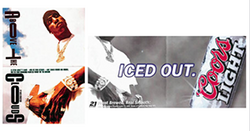
In applying these principles to Mannion's photograph of Garnett, Judge Kaplan ruled that the work was undoubtedly original. The rendition was established through a distinctive angle and lighting, while the creation of the subject was evident in the composition of posing the man against the sky.
Coors attempted to argue that because Garnett chose his own clothing and jewelry, the image lacked originality. The court rejected this, stating that the originality of the overall image is what matters, not the individual components. To suggest otherwise would be as illogical as claiming a painting lacks originality because the colors of paint had been used by others in the past.
The Idea vs. Expression Debate
A major point of contention was the idea-expression distinction—the legal principle that only the expression of an idea is copyrightable, not the idea itself. Coors argued that Mannion was trying to copyright the general "idea" of a young African American man in a white T-shirt and jewelry.
Judge Kaplan found this distinction largely useless in visual arts. He argued that in literature, one can describe the theory of relativity (the idea) using different words (the expression). However, in art, the "idea" is often to depict a subject in a specific way. Therefore, the "conception" of a photo—its rendition, timing, and subject creation—is simultaneously the idea and the expression.
Determining Substantial Similarity
The final hurdle was whether the Coors image was substantially similar to Mannion's. The court used the "ordinary observer" test: would a typical person, without searching for disparities, regard the aesthetic appeal of the two images as the same?
The court noted several similarities and differences:
| Feature | Similarities | Differences |
|---|---|---|
| Subject | Pose, dress, and jewelry | Coors image lacked a head |
| Composition | Angle and lighting | Slightly different posing angle |
| Visual Style | General aesthetic appeal | Original was color; Coors was B&W |
| Background | Similar backdrop | Minor variations in elements |
Ultimately, Judge Kaplan concluded that a reasonable jury could find substantial similarity either present or absent. Because the balance between the similarities and differences was so close, the case could not be decided as a matter of law, and Mannion's motion for summary judgment was denied.
Frequently Asked Questions
Can a photographer copyright a person's likeness?
No. As noted in the case, a photographer cannot claim copyright over the likeness of the subject (such as the person's face) or naturally occurring elements like the sky.
What is the "sweat of the brow" doctrine?
This is the outdated idea that copyright protection is granted based on the amount of effort put into a work. The Supreme Court rejected this in Feist Publications, Inc. v. Rural Telephone Service Co., ruling that protection derives from the work's original features, not the effort expended.
What is the merger doctrine?
The merger doctrine applies when an idea and its expression are so closely intertwined that granting copyright to the expression would effectively grant a monopoly over the idea itself.
How is "substantial similarity" measured in court?
Courts typically use the "ordinary observer" test, asking if a reasonable person would overlook the differences between two works and perceive their overall aesthetic appeal as the same.
Does using a different medium (e.g., sculpture vs. photo) prevent copyright infringement?
Not necessarily. In Rogers v. Koons, the court ruled that a sculpture infringed upon a photograph because it meticulously replicated the original image's creation of the subject, despite the change in medium.