Philippine Prime Ministership: A History of the Council of Government
The structure of the Philippine government has undergone numerous transformations since the late 19th century. While the current system centers on a presidential model, the nation twice experimented with a role equivalent to a prime minister. This office, first appearing as the President of the Council of Government and later as the Prime Minister, reflects the country's turbulent struggle for sovereignty and its shifts in political ideology.
The First Creation: The Council of Government (1899)
The 1899 Constitution of the Philippines established the Council of Government (Spanish: Consejo de Gobierno). This body consisted of seven secretaries led by a president of the Council. Although titled as a president, this role was the de facto equivalent of a prime minister.
On January 2, 1899, Emilio Aguinaldo, the president of the revolutionary government, appointed his advisor and Secretary of Foreign Affairs, Apolinario Mabini, as the first president of the Council of Government. Mabini concurrently served as the republic's foreign minister.
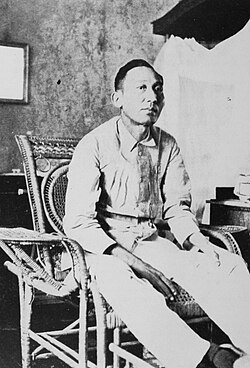
Diplomatic Struggles and the Philippine-American War
The early days of the Council were marked by intense diplomatic tension. Following the Spanish-American War, Spain surrendered the Philippines to the United States on December 10, 1898. Despite the Philippine declaration of independence on June 12, 1898, the United States refused to recognize Filipino sovereignty. Aguinaldo dispatched lawyer Felipe Agoncillo to both the U.S. government and the U.S. Senate to lobby for formal recognition, but these efforts failed.
Internal political pressure and the inability to secure a ceasefire with American forces led to the outbreak of the Philippine-American War on February 4, 1899. As the government was forced to flee Malolos, Mabini faced mounting criticism from political adversaries. He eventually resigned on May 7, 1899.
The Tenure of Pedro Paterno
Following Mabini's resignation, Aguinaldo appointed Pedro Paterno as the president of the Council of Government on May 8, 1899. Paterno had previously served as the president of the Congress of the Republic and had clashed with Mabini over military strategy. Paterno advocated for the Philippines to become a U.S. protectorate with full autonomy, a plan he proposed to the Schurman Commission.
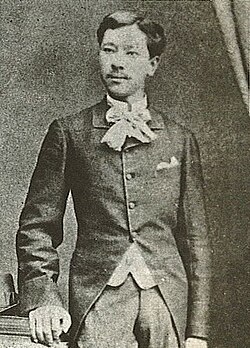
Paterno's willingness to accept U.S. sovereignty infuriated General Antonio Luna, the commanding officer of the Philippine Army. While Luna's attempt to arrest Paterno failed, the tension culminated in Paterno issuing a formal declaration of war against the United States on June 2, 1899. Shortly after, on June 5, General Luna was assassinated in Nueva Ecija.
Paterno's term ended abruptly on November 13, 1899, when he was captured by U.S. forces in Benguet. He later accepted amnesty from General Arthur MacArthur Jr. on June 21, 1900, and swore allegiance to the United States.
The Second Creation: The Marcos Era (1978–1986)
The office of the prime minister returned decades later under President Ferdinand Marcos. Following a 1976 constitutional referendum and the ratification of the Sixth Amendment to the 1973 Constitution, legislative and executive powers were fused. This amendment allowed the president to also hold the title of Prime Minister.
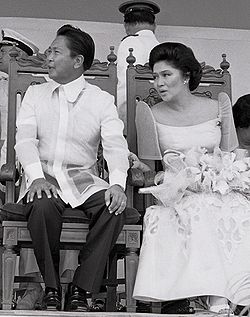
Marcos was confirmed as prime minister on June 12, 1978, coinciding with the inauguration of the Interim Batasang Pambansa (Interim National Assembly), a unicameral legislature dominated by his party, the Kilusang Bagong Lipunan.
The Transition to Cesar Virata
Upon beginning his third presidential term on June 30, 1981, Marcos relinquished the premiership. On July 27, 1981, he appointed Cesar Virata, the then-finance minister and grand-nephew of Emilio Aguinaldo, as prime minister. Virata, known for his experience with the World Bank, was seen as a non-threatening political figure, allowing Marcos to maintain control while delegating administrative duties.
Abolition of the Office
The premiership ended following the 1986 People Power Revolution. Corazon Aquino initially appointed Salvador Laurel to succeed Virata under her revolutionary government. However, the position was formally abolished in March 1986 through Proclamation No. 3, known as the Freedom Constitution.
The current 1987 Constitution does not provide for a prime minister, as the president serves as both the head of state and the head of government.
Key Facts
- First Prime Minister Equivalent: Apolinario Mabini (appointed January 2, 1899).
- First Conflict: The office was created during the transition from Spanish to American colonial influence.
- Second Iteration: Re-established under Ferdinand Marcos via the 1973 Constitution's Sixth Amendment.
- Final Prime Minister: Cesar Virata served until the 1986 People Power Revolution.
- Current Status: Abolished; the 1987 Constitution utilizes a pure presidential system.
| Period | Official Title | Key Figures | Outcome |
|---|---|---|---|
| 1899 | President of the Council of Government | Apolinario Mabini, Pedro Paterno | Ended by U.S. capture of Paterno |
| 1978–1986 | Prime Minister | Ferdinand Marcos, Cesar Virata | Abolished by the Freedom Constitution |
Frequently Asked Questions
Who was the first person to hold a role equivalent to prime minister in the Philippines?
Apolinario Mabini was the first, appointed by Emilio Aguinaldo as the president of the Council of Government on January 2, 1899.
Why was the office of the Council of Government created in 1899?
It was created by the 1899 Constitution to organize the revolutionary government's executive functions, consisting of a president of the Council and seven secretaries.
How did Ferdinand Marcos become Prime Minister?
Marcos assumed the title through the Sixth Amendment to the 1973 Constitution, which fused executive and legislative powers in the office of the president.
Who succeeded Ferdinand Marcos as Prime Minister?
Cesar Virata, the former finance minister, was appointed prime minister by Marcos on July 27, 1981.
When was the position of Prime Minister permanently abolished?
The position was abolished in March 1986 under Corazon Aquino's "Freedom Constitution" (Proclamation No. 3) and was not included in the 1987 Constitution.