Philadelphia International Airport
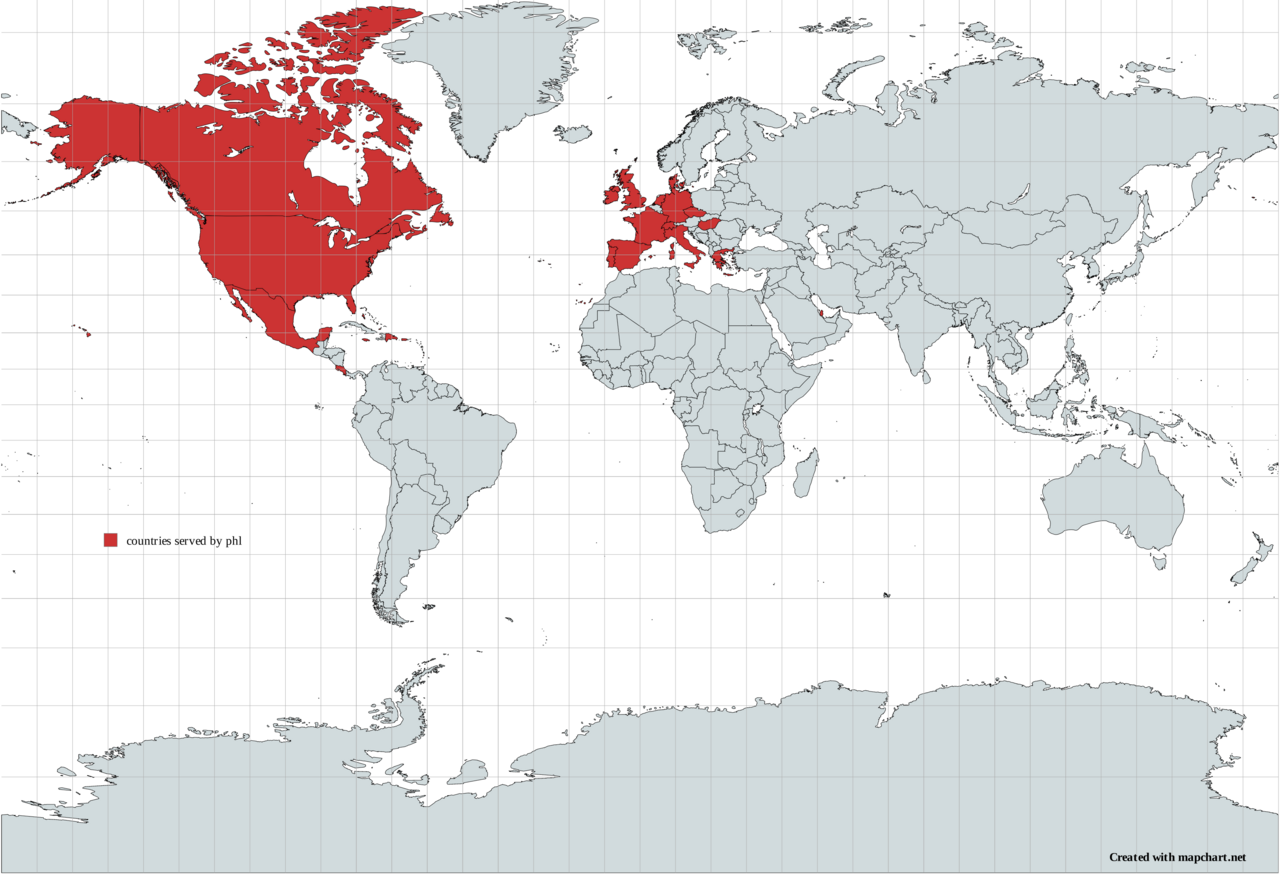
Philadelphia International Airport (PHL) serves as the primary aviation gateway for the Philadelphia metropolitan area and South Jersey. Located just 7 miles (11 km) from Center City Philadelphia, it stands as the busiest airport in Pennsylvania and ranks as the 21st-busiest in the United States. In 2025, the airport facilitated the travel of over 30 million passengers, offering nearly 500 daily departures to more than 130 global destinations.
The airport operates as a major hub for American Airlines and UPS Airlines, while also serving as an operating base for Frontier Airlines. Its strategic location and extensive network make it a critical piece of infrastructure for both commercial travel and global logistics.
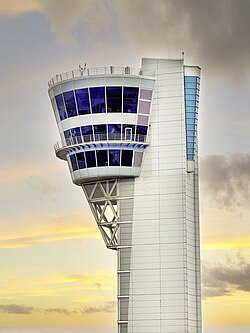
Key Facts
- Annual Passengers (2025): 30,136,790
- Aircraft Operations (2025): 323,122
- Total Cargo (2025): 482,483.6 metric tons
- Primary Hubs: American Airlines and UPS Airlines
- Global Reach: Over 130 destinations worldwide
- Elevation: 11 meters (36 feet) above mean sea level (AMSL)
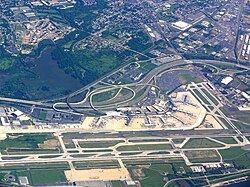
History and Evolution
The foundations of the airport date back to 1925, though it officially opened in its municipal capacity on June 20, 1940. A pivotal shift occurred in 1945 when the facility was renamed Philadelphia International Airport to coincide with the start of direct flights to Europe by American Overseas Airlines.
The airport underwent significant modernization in the mid-20th century, with a new terminal opening in December 1953. The core of the current terminal complex, specifically Terminals B and C, was developed during the late 1950s to accommodate the growing demand for air travel.
Airport Facilities and Infrastructure
Terminals
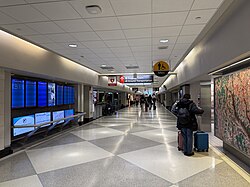
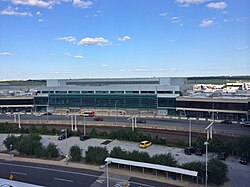
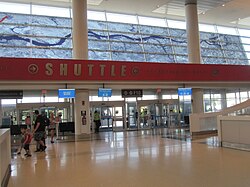
The airport is organized into several terminals to manage its high volume of passenger traffic:
- Terminal A: Features a check-in lobby, airside facilities, and a unique LEGO replica of the Liberty Bell. It also houses Federal Inspection facilities for international arrivals and a direct walkway to the parking garage.
- Terminals B and C: These represent the oldest sections of the current complex.
- Terminals D and E: Modern facilities that include a connector for streamlined passenger movement.
- Terminal F: Opened in 2001, this terminal was designed with a significant focus on passenger experience, including 10,000 square feet of concession space.
Runways
To support a wide variety of aircraft, from regional jets to heavy cargo planes, PHL utilizes four asphalt runways:
| Direction | Length (m) | Length (ft) | Surface |
|---|---|---|---|
| 8/26 | 1,524 | 5,001 | Asphalt |
| 9L/27R | 2,896 | 9,500 | Asphalt |
| 9R/27L | 3,658 | 12,000 | Asphalt |
| 17/35 | 1,981 | 6,500 | Asphalt |
Ground Transportation
Passengers have multiple options for accessing the city and surrounding regions. The SEPTA Airport Line provides rail connectivity with four dedicated stops at the airport. Additionally, airline shuttle buses operated by Landline connect passengers to regional cities including Allentown, Atlantic City, Trenton, Wilkes-Barre/Scranton, and Wilmington.

Airlines and Destinations
PHL is served by 22 airlines. American Airlines is the dominant carrier, holding a 47.11% market share of passengers. Other significant carriers include Frontier Airlines, Delta Air Lines, and Southwest Airlines.
Top Passenger Destinations
The most frequented domestic routes are to Florida and Georgia, with Orlando and Atlanta topping the list. Internationally, London-Heathrow is the most popular destination, followed by Cancún and Punta Cana.
Safety and Incidents
While maintaining high operational standards, the airport has been the site of notable emergencies. On April 17, 2018, Southwest Airlines Flight 1380 diverted to PHL following an engine failure that caused rapid depressurization and a shattered window. The incident resulted in one fatality and eight injuries.
Frequently Asked Questions
Which airlines use Philadelphia International Airport as a hub?
American Airlines and UPS Airlines both utilize PHL as a primary hub, while Frontier Airlines uses the airport as an operating base.
How many passengers did PHL serve in 2025?
In 2025, the airport served 30,136,790 passengers.
What is the best way to get to Center City Philadelphia from the airport?
The SEPTA Airport Line is a primary rail option, with four stops located throughout the airport complex.
Which is the busiest international destination from PHL?
London-Heathrow is the top international destination, serving 457,568 passengers.
What are the runway surfaces at PHL?
All four runways at Philadelphia International Airport are constructed with asphalt surfaces.