Peter French and the Legacy of the P Ranch
The history of cattle ranching in the American West is often defined by ambitious figures who transformed vast landscapes into productive enterprises. Among these was Peter French, a man whose vision and determination led to the creation of one of the most expansive livestock operations in the Harney Basin of Oregon.
Early Life and the Venture North
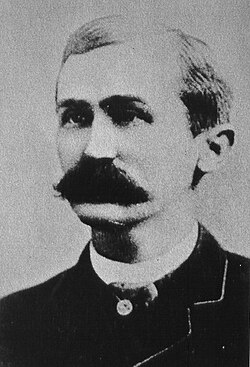
Born in Missouri in 1849, Peter French moved to California with his family in 1850. As a young man, he entered the employment of Doctor Hugh J. Glenn, a prominent landowner in the Sacramento Valley. In 1872, Glenn sought to expand his business interests into Oregon and selected the 23-year-old French to lead the expedition.
French traveled north accompanied by six vaqueros (skilled cattle handlers) and a herd of 1,200 cattle. Upon arriving in the Blitzen Valley, French encountered a prospector named Porter. Finding little gold, Porter was ready to leave the region, and French seized the opportunity to purchase Porter's small cattle herd, his "P" brand, and the rights to the west slope of Steens Mountain.
The Rise of the P Ranch
French established his base along the Donner und Blitzen River. Over several years, he undertook the massive task of fencing and draining thousands of acres of wetlands. This land became known as the P Ranch, named after the brand he acquired from Porter.
In 1877, French expanded the operation by purchasing the 43,000-acre (170 km²) Sod House Ranch from A. H. Robie, along with additional properties in the Diamond and Blitzen valleys.
By the 1880s, the ranch had become a profitable venture for Doctor Glenn. Cattle grazed in the lush valley pastures before being driven 200 miles (300 km) every fall to the railhead in Winnemucca, Nevada, for transport.
The French-Glenn Livestock Company
The professional relationship between French and Glenn became a familial one in 1883 when French married Glenn's daughter, Ella. Tragedy struck just three weeks later when Doctor Glenn was murdered by a former employee. Despite this loss, French continued to manage the Oregon operations for the Glenn family, selling cattle to settle the family's debts.
In 1894, the partnership was formally incorporated as the French-Glenn Livestock Company, with Peter French serving as president. Under his leadership, the company's holdings grew exponentially, eventually spanning the foothills of Steens Mountain and extending 40 miles (64 km) along both sides of the Donner und Blitzen River to Malheur Lake.
Scale of Operations
At its peak, the company controlled a massive portion of the Harney Basin. While some records suggest the ranch covered as much as 200,000 acres (810 km²), official figures indicate at least 140,000 acres (570 km²). The operation was divided into five main sections:
- P Ranch: The main headquarters.
- Sod House Division: The sub-headquarters located near the mouth of the Donner und Blitzen River.
- Happy Valley Division
- Diamond Division
- Catlow Valley Division
To manage their livestock, which included 3,000 horses and mules and between 30,000 to 45,000 head of cattle, the company constructed 500 miles (800 km) of barbed wire fencing.
Conflict and Death
French's dominance in the region created friction with new homesteaders. Because he controlled the majority of the water in the southern Harney Basin and his extensive fencing blocked access to various properties, he became an unpopular figure among settlers.
This tension culminated on December 26, 1897, when French was shot and killed near the Sod House Ranch. The perpetrator was a settler who had been denied a road easement across French's land.
The Decline and Transition of the Land
Following French's death, F. C. Lusk, the company secretary, took over as ranch manager and executor of the estate. To address company debts, Lusk began selling off assets. In 1906, a significant portion of the property, including the Sod House Ranch, was sold to C.E.S. Wood and Henry L. Corbett.
The land changed hands again in 1916 when it was acquired by the Eastern Oregon Live Stock Company. In the 1920s, John Jenkins purchased the Barton Lake Ranch portion, which contains the historic Pete French Round Barn. Finally, in 1935, the United States Government purchased the remaining land to expand the Malheur National Wildlife Refuge.
Key Facts
- Founder: Peter French established the P Ranch using a brand purchased from a prospector named Porter.
- Peak Size: The French-Glenn Livestock Company owned between 140,000 and 200,000 acres.
- Livestock: The ranch managed up to 45,000 cattle and 3,000 horses and mules.
- Infrastructure: The operation featured 500 miles of barbed wire fencing.
- Fate of Land: Much of the original property is now part of the Malheur National Wildlife Refuge.
| Feature | Detail |
|---|---|
| Primary Headquarters | P Ranch |
| Sub-Headquarters | Sod House Ranch |
| Total Acreage | 140,000 to 200,000 acres |
| Cattle Population | 30,000 to 45,000 head |
| Key Water Source | Donner und Blitzen River |
| Market Destination | Winnemucca, Nevada |
Frequently Asked Questions
How did Peter French acquire the "P" brand?
French purchased the "P" cattle brand, along with a small herd of cattle and rights to the west slope of Steens Mountain, from a prospector named Porter who was leaving the area.
What was the purpose of the Sod House Ranch?
The Sod House Ranch served as Peter French's sub-headquarters. It was located at the northern end of his property near the south shore of Malheur Lake and the mouth of the Donner und Blitzen River.
Why was Peter French disliked by local settlers?
French controlled most of the water in the southern Harney Basin and used extensive barbed wire fencing that prevented other homesteaders from accessing their own land.
What happened to the P Ranch after Peter French's death?
The estate was managed by F. C. Lusk, who sold assets to pay debts. The land passed through several owners, including Henry L. Corbett and the Eastern Oregon Live Stock Company, before the U.S. Government acquired the remainder in 1935.
What is the Pete French Round Barn?
The Pete French Round Barn is a notable structure located on the Barton Lake Ranch, a portion of the original property purchased by John Jenkins in the 1920s.