Peter and the Wolf: Iconic Cinematic Adaptations
The timeless tale of Peter and the Wolf, composed by Sergei Prokofiev, has transcended the concert hall to become a staple of cinematic storytelling. From the golden age of hand-drawn animation to modern stop-motion techniques, filmmakers have reimagined Prokofiev's musical narrative to suit different eras and audiences.
The Disney Era: A Mid-Century Classic
The connection between Disney and Prokofiev began in 1938 when the composer visited Los Angeles. During this visit, Prokofiev performed the piano version of the piece for Walt Disney—a meeting Prokofiev later referred to in letters to his sons as "le papa de Mickey Mouse" (Mickey Mouse's dad). While Disney initially hoped to include the story in the 1940 film Fantasia, the onset of World War II delayed these plans.
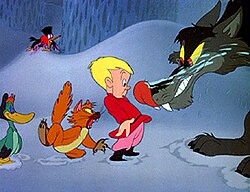
It was not until 1946 that Disney released his adaptation, featuring narration by Sterling Holloway. The short was first seen as part of Make Mine Music before being reissued as a standalone subject and later on home video in the 1990s. Because Prokofiev was behind the Iron Curtain at the time, it remains unknown if he ever saw the film.
Key Narrative Changes in the Disney Version
To make the story more child-friendly and detailed, Disney introduced several modifications to the original plot:
- Character Names: The pets were given specific names: Sascha (songbird), Sonia (duck), and Ivan (cat). The hunters were also named Misha, Yasha, and Vladimir.
- Plot Shifts: Unlike the original, Peter and his friends are aware of the wolf's presence from the start and actively prepare to catch him. Peter even enters the garden armed with a wooden pop gun.
- The Fate of Sonia: In a significant departure from the original, the duck survives. Although the wolf appears to eat her, it is later revealed that Sonia had hidden in a hollow tree trunk, leading to a happy reunion.
In 1957, Walt Disney recounted this history on one of his television programs, using pianist Ingolf Dahl—who bore a resemblance to Prokofiev—to demonstrate how the composer had originally played the themes.
The 2006 Stop-Motion Reimagining
Decades later, directors Suzie Templeton and Hugh Welchman brought a starkly different vision to the story. Their 2006 stop-motion animated adaptation stripped away all dialogue and narration, relying entirely on imagery, silence, and a soundtrack performed by the Philharmonia Orchestra.
This artistic approach earned significant critical acclaim, including the Annecy Cristal and the Audience Award at the 2007 Annecy International Animated Film Festival, as well as the Academy Award for Best Animated Short Film.
Modern Interpretations and Plot Twists
The 2006 version reimagines the characters and their dynamics to create a more poignant narrative:
- The Hunters: Instead of traditional woodsmen, the hunters are portrayed as teenage bullies. One intimidates Peter by throwing him into a rubbish bin.
- The Bird: The bird is depicted with a broken wing, requiring Peter's balloon to help it fly.
- The Climax: The wolf is captured in a net. In a reversal of roles, Peter eventually entangles the bullying hunter in the same net.
- The Resolution: Rather than the wolf being taken to a zoo, Peter unlocks the cage after a moment of connection. The wolf is freed to return to the forest under a silver moon.
Key Facts
- Original Composer: Sergei Prokofiev.
- Disney Release: 1946 (narrated by Sterling Holloway).
- 2006 Version: A dialogue-free stop-motion film directed by Suzie Templeton.
- Major Award: The 2006 adaptation won the Academy Award for Best Animated Short Film.
- Musical Performance: The 2006 soundtrack was performed by the Philharmonia Orchestra.
| Feature | Disney (1946) | Templeton/Welchman (2006) |
|---|---|---|
| Animation Style | Traditional Hand-Drawn | Stop-Motion |
| Audio | Narrated | Music and Silence (No Dialogue) |
| Tone | Child-friendly / Whimsical | Artistic / Poignant |
| Wolf's Fate | Captured | Released into the wild |
Frequently Asked Questions
How did Walt Disney first encounter Peter and the Wolf?
Walt Disney met Sergei Prokofiev in Los Angeles in 1938, where the composer performed the piano version of the piece for him.
What changes did Disney make to the story's ending?
Disney changed the ending to be more child-friendly by revealing that Sonia the duck was not actually eaten by the wolf, but had hidden in a tree.
What makes the 2006 adaptation unique?
The 2006 version is unique because it contains no dialogue or narration, telling the story exclusively through music and visual imagery.
Which awards did the 2006 stop-motion film win?
It won the Academy Award for Best Animated Short Film, as well as the Annecy Cristal and the Audience Award at the 2007 Annecy International Animated Film Festival.
Who narrated the 1946 Disney version?
The 1946 adaptation was narrated by Sterling Holloway.