Peshawar: The Historic City of Flowers
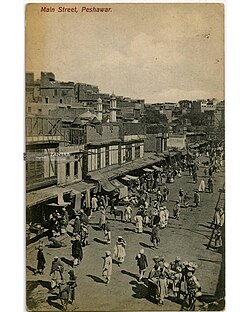
Known affectionately as the City of Flowers, Peshawar is one of the oldest living cities in South Asia. Located in the Khyber Pakhtunkhwa province of Pakistan, this metropolis serves as a vital cultural and economic hub, bridging the gap between Central and South Asia. With a history that spans millennia, Peshawar is a living museum where ancient Buddhist ruins, Mughal grandeur, and British colonial architecture coexist with a bustling modern urban center.
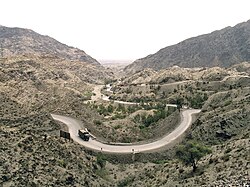
The city's strategic importance is defined by its geography, sitting at the eastern end of the Khyber Pass—a legendary mountain pass that has served as a primary trade and invasion route for approximately 2,000 years since the Kushan era.
Key Facts
- Population: Approximately 1,905,975 (2023 Census).
- Nickname: City of Flowers.
- Primary Languages: Pashto and Hindko.
- Strategic Location: Gateway to the Khyber Pass.
- Administrative Status: Capital of Khyber Pakhtunkhwa province.
- Elevation: 331 meters (1,086 feet).
A Journey Through History
Ancient Foundations and the Gandhara Era
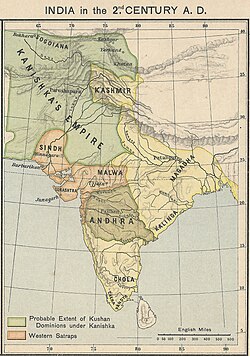
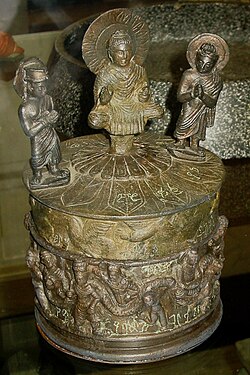
Peshawar's origins are deeply tied to the ancient city of Purushapura, established near the Gandharan capital of Pushkalavati. During the Kushan Empire, the city became a global center for Buddhist learning and spirituality. The Kanishka stupa once housed sacred Buddhist relics in the Kanishka casket, while the nearby Takht-i-Bahi monastery, established in 46 CE, stood as a beacon of monastic education.
![The nearby Takht-i-Bahi monastery was established in 46 CE,[50] and was once a major centre of Buddhist learning.](/images/6b/86/6b860d95604258b3f53479ff9de38b589f2b7783c6af903d5612a525ccfcec4b.jpg)
Medieval and Early Modern Transitions
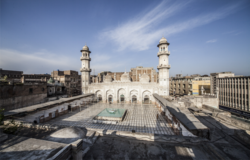
Over the centuries, Peshawar was shaped by successive empires, including the Greeks, Mauryans, White Huns, and the Ghaznavids. During the Mughal era, the city's architectural landscape was enriched by governors like Mohabbat Khan, who bestowed the city with the stunning white-marble Mohabbat Khan Mosque in 1630.
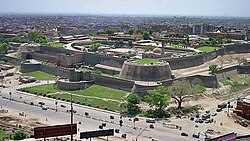
Later, the city served as a royal residence for the Durrani Afghan kings at the formidable Bala Hissar fort, before passing through the hands of the Sikh Empire and eventually the British Raj.
City Landmarks and Architecture
Colonial and Traditional Heritage
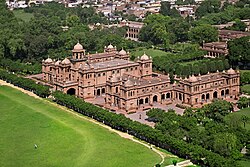
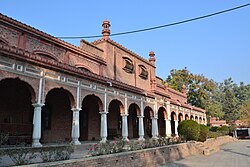
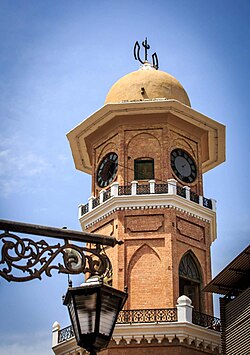
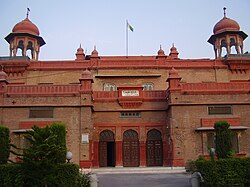
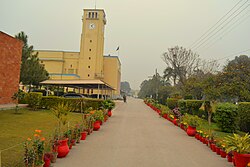
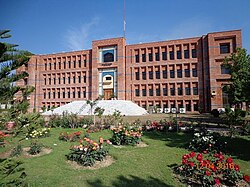
The British era left a lasting mark on Peshawar's skyline. The Indo-Saracenic Revival style is prominently seen in the architecture of Islamia College, while Edwardes College remains one of the city's most prestigious educational institutions. The Cunningham Clock Tower, built in 1900 and known locally as "Ghanta Ghar," remains a central landmark.
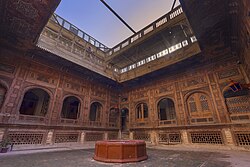
For a glimpse into the lives of the city's historic elite, the Sethi Mohallah features grand homes built for wealthy merchants in a distinct Central Asian architectural style.
Cultural and Religious Sites
Peshawar is a tapestry of diverse faiths. Beyond its iconic mosques, the city hosts the Panch Tirath (an ancient Hindu site with five sacred ponds), the Gorkhatri site for Hindu yogis, and the Sikh Gurudwara at Jogan Shah. The Peshawar Museum preserves the region's vast archaeological wealth, while the Pashto Academy sits upon the site of an ancient Buddhist university.
Modern Peshawar: Infrastructure and Education
Urban Development and Transport
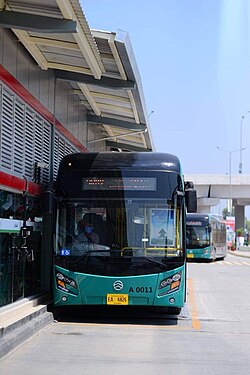
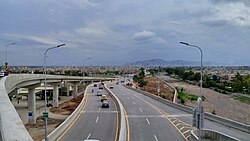
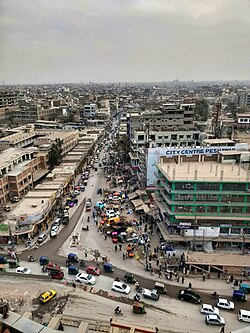
Today, Peshawar is evolving into a modern metropolis. The city has implemented one of the most advanced Bus Rapid Transit (BRT) systems to alleviate congestion. Recent infrastructure projects include new flyovers, such as those near the Hayatabad suburb, to improve traffic flow. The City Center Road continues to be the heart of the city's trade zone.
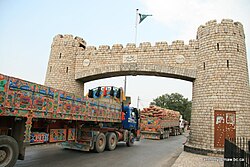
The city's entrance is marked by the iconic Khyber Gate, signaling the start of the pass that connects Pakistan to Afghanistan.
Academic Excellence
Peshawar is a major educational center, hosting a wide array of institutions. Notable among these are the University of Peshawar, the University of Engineering and Technology, and the National University of Computer and Emerging Sciences (FAST) campus.
City Profile Summary
| Category | Details |
|---|---|
| Coordinates | 34°00′52″N 71°34′03″E |
| City Area | 215 km² (83 sq mi) |
| Metro Area | 1,257 km² (485 sq mi) |
| Population (2023) | 1,905,975 |
| Main Languages | Pashto (87.8%), Hindko (5.57%), Urdu (4.11%) |
| Religion (2023) | Islam (98.56%), Christianity (1.24%), Sikhism (0.08%) |
Frequently Asked Questions
Why is Peshawar called the City of Flowers?
Peshawar is known as the City of Flowers due to its historical beauty and the lush greenery and floral abundance that have characterized the region throughout its history.
What is the significance of the Khyber Pass?
The Khyber Pass is a critical mountain pass that has served as a trade route and a strategic military corridor between Central Asia and the Indian subcontinent for approximately 2,000 years.
Which are the most famous historical sites in Peshawar?
Key historical sites include the Bala Hissar Fort, the Mohabbat Khan Mosque, the Sethi Mohallah, and the ruins of the Kanishka stupa at Shahji ki Dheri.
What are the primary languages spoken in Peshawar?
The dominant language is Pashto, spoken by approximately 87.8% of the population, followed by Hindko and Urdu.
What is the architectural style of Islamia College?
Islamia College was built in the Indo-Saracenic Revival style, which blends traditional Indian and Islamic architectural elements with British colonial influences.