Peruvian Rock: A Comprehensive History of its Evolution and Influence
Rock music first took root in Peru during the late 1950s, sparked by the global popularity of American rockabilly icons such as Elvis Presley, Buddy Holly, and Bill Haley. This initial wave of influence led to the formation of the country's first rock ensembles, including Los Millonarios del Jazz, Los Stars, Conjunto Astoria, Los Incas Modernos, and Los Zodiacs.
The 1960s: From Surf to Supergroups
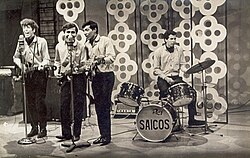
As the 1960s progressed, the Peruvian scene expanded to embrace British Merseybeat and American surf music. This era saw the rise of Los Saicos, a pioneering band that blended garage rock, surf, and psychedelic rock. Other notable figures included guitar virtuoso Pico Ego-Aguirre of Los Shains (and later Pax), and the emergence of Traffic Sound, Peru's first "supergroup," which combined key members of Los Hang Ten's with other prominent musicians. The decade was further enriched by bands like Los York's, Los Jaguars, Los Silvertons, Los Belkings, and Los Doltons.
The 1970s: Political Suppression and Artistic Resilience
The trajectory of Peruvian rock shifted dramatically following the military coup in October 1968. Under the government of General Juan Velasco Alvarado, rock music was labeled an "alienating phenomenon." This political climate led to the banning of concerts in major venues, most notably the cancellation of a highly anticipated Carlos Santana performance in 1971.
Despite these restrictions, the spirit of rock persisted. AM radio stations like Radio Miraflores, Radio 1160, and Radio Atalaya continued to broadcast rock tracks, while record companies kept LPs by international acts like Jimi Hendrix and Led Zeppelin available. The film Woodstock also remained a cultural touchstone, screening in Lima every few years. During this time, bands such as El Polen, Traffic Sound, Pax, We All Together, and the first progressive rock outfit, Red Amber, left a lasting mark. By the late 1970s, the band Breeze, featuring Roxana Valdivieso, released a self-titled album with English lyrics.
However, the mid-1970s marked a period of obscurity for the genre as disco and salsa began to dominate the airwaves. Some musicians, such as guitarist Richie Zellon, transitioned into jazz during this downturn.
The 1980s: The Underground vs. The Mainstream
Entering the 1980s, Peruvian rock was largely split between a commercial scene and a burgeoning underground movement. The mainstream scene featured bands from middle and upper-class backgrounds, such as Fragil (who released their first LP in 1981), Rio, Miki Gonzales, and Pax. These groups occasionally found visibility through the TV show Disco Club, hosted by Gerardo Manuel.
Parallel to this, a raw underground scene emerged, heavily influenced by British punk rock. Driven by social frustration and economic crisis, bands like Leusemia, Narcosis, Autopsia, Guerrilla Urbana, and Zcuela Crrada formed primarily in impoverished neighborhoods. While some scholars argued the underground scene was more creatively rich, others noted its limited reach, as it was mostly confined to Lima and lacked the technical resources of the commercial bands.
Simultaneously, a niche for death metal and black metal began to develop in Lima, influenced by European sounds, leading to the formation of bands like Mortem and Kranium.
The 1990s: Diversification and Commercial Breakthrough
The 1990s brought economic liberalization and social growth, allowing the rock scene to diversify into various sub-circuits. Leusemia evolved from a basic rock act into a prolific leader of the scene, incorporating symphonic and progressive elements. The "goth" sound was championed by Dolores Delirio, Voz Propia, and Cardenales, while Huelga De Hambre brought grunge influences to the forefront.
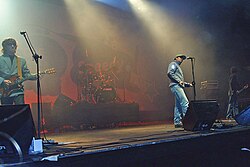
Other influential bands of the late 90s included Mar De Copas, Líbido, and Cementerio Club. While many bands initially played to small crowds of 50 people, the decade ended with massive events like "Acustirock" and "Inrockuptibles" drawing over 10,000 fans each.
The mainstream media eventually embraced a "safer" sound, promoting acts like Nosequien y Los Nosecuantos and Arena Hash. From the latter, Pedro Suárez-Vértiz launched a solo career, becoming the most commercially successful rocker in Peruvian history.
Meanwhile, the metal scene remained underground. Black metal acts like Illapa and Nahual, and death-thrash bands like Dark Silence and Hadez, operated independently, though many split due to internal rivalries and political instability.
The 2000s and Beyond: Global Exposure and New Psychedelia
By the 2000s, improved economic conditions and the interest of MTV Latin America brought Peruvian rock to a wider audience. Líbido became a global success, earning Grammy nominations and MTV awards. Other successful acts included Amen, Zen, and TK. The scene further diversified with the emergence of Nu-Metal (Area 7), electronic music (Theremyn 4), and rock in the Quechua language (Uchpa).
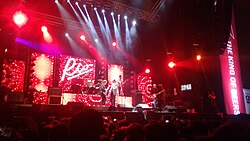
In the 2010s, a new movement known as Nueva Psicodelia Latinoamericana (New Latin American Psychedelia) emerged. This trend blended psychedelic sounds with other genres, as seen in the work of Cholo Visceral (prog rock), Spatial Moods (blues), and The Dead End-Alley Band (stoner rock).
Key Facts
- Origins: Emerged in the late 1950s influenced by US rockabilly.
- Pioneers: Los Saicos are among the most influential early bands, blending garage and surf rock.
- Political Impact: The 1968 military coup led to a government ban on rock concerts in the early 1970s.
- Social Divide: The 1980s were characterized by a split between a middle-class "commercial" scene and a working-class "underground" punk scene.
- Commercial Peak: Pedro Suárez-Vértiz is regarded as the most commercially successful Peruvian rocker.
- Modern Trends: The 2010s saw the rise of "Nueva Psicodelia Latinoamericana."
| Era | Dominant Styles | Key Bands/Artists | Defining Characteristic |
|---|---|---|---|
| 1950s-60s | Rockabilly, Surf, Garage | Los Saicos, Traffic Sound | Initial emergence and supergroups |
| 1970s | Progressive, Psychedelic | Red Amber, Fragil | Government suppression and censorship |
| 1980s | Punk, New Wave, Metal | Leusemia, Narcosis, Rio | Underground vs. Mainstream divide |
| 1990s | Grunge, Goth, Alternative | Líbido, Pedro Suárez-Vértiz | Diversification and mass popularity |
| 2000s-Present | Nu-Metal, Electronic, Psychedelia | Amen, Cholo Visceral | International exposure and genre blending |
Frequently Asked Questions
Who are Los Saicos?
Los Saicos were a highly influential Peruvian band from the 1960s known for blending psychedelic rock, garage rock, and surf music.
How did the 1968 military coup affect rock music?
The government of General Juan Velasco Alvarado branded rock as an alienating phenomenon, leading to bans on concerts in key venues, including a 1971 Carlos Santana show.
What was the difference between the 'underground' and 'commercial' scenes in the 1980s?
The underground scene was primarily composed of punk bands from poor neighborhoods and was seen as more creatively raw, while the commercial scene consisted of middle- and upper-class bands with more technical skill and mainstream support.
Who is considered the most successful Peruvian rocker?
Pedro Suárez-Vértiz, formerly of Arena Hash, is often considered the greatest and most commercially successful Peruvian rocker in history.
What is Nueva Psicodelia Latinoamericana?
It is a modern movement emerging in the 2010s that blends psychedelic rock with other genres like jazz, blues, and stoner rock to differentiate it from earlier Latin American psychedelic movements.