Peruvian Art and Cultural Heritage: From Ancient Civilizations to Modernity
Peru's rich cultural landscape is rooted in the ancient Andean civilizations that flourished long before the arrival of the Spanish. These societies achieved a remarkable level of intellectual and technological sophistication independently, creating a legacy of archaeological treasures that reflect a deep connection to symbolic and religious expression.
The Foundations of Andean Art
The earliest evidence of advanced artistic evolution appears in the Chavín de Huántar and Cupisnique sites, dating between the 9th and 4th centuries BCE. These cultures produced sophisticated silver and gold jewelry, ceramics, architecture, and stone sculptures that served religious and symbolic purposes.
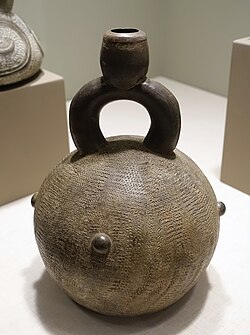
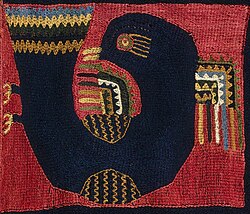
Following this era, between the 8th century BCE and the 1st century CE, the Paracas culture split into two distinct phases. The Paracas Cavernas period is noted for its polychrome (multi-colored) ceramics featuring religious imagery, while the Paracas Necrópolis period is celebrated for its monochrome ceramics and exceptionally delicate, complex textiles.
Urban Growth and Engineering
Between the 3rd century BCE and the 7th century CE, the Moche (in Lambayeque) and the Nazca (in the Río Grande valley of Ica) emerged as dominant urban cultures. Both are renowned for their mastery of terrace agriculture—a method of farming on stepped slopes—and advanced hydraulic engineering. Their artistic output spanned ceramics, textiles, painting, and sculpture.
Later, from the 7th to the 12th centuries, the Wari civilization in Ayacucho pioneered rational urban design, influencing other centers such as Pachacámac, Cajamarquilla, and Wari Willka. Simultaneously, the Tiahuanaco culture developed on the shores of Lake Titicaca (9th to 13th centuries), utilizing bronze to create monumental stone architecture and sculpture.
The Late Pre-Columbian Era
The Chimú people (14th to 15th centuries) established the city of Chan Chan in the Moche River valley, where they excelled in hydraulic engineering and the art of jewelry-making.
The Inca civilization eventually absorbed much of this ancestral legacy. They left behind an enduring architectural imprint, including the city of Cuzco, the fortress of Sacsahuamán, and the citadel of Machu Picchu, all connected by an extensive network of imperial roads.
Colonial Influence and Artistic Mestizaje
The Spanish conquest introduced a cultural blending, or mestizaje, where European styles merged with indigenous influences. Following the Renaissance, the Baroque style flourished, seen in the ornate designs of the Iglesia de la Compañia in Cuzco and the Convent of San Francisco in Lima.
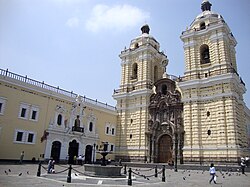
Painting and sculpture during this era were heavily influenced by the Sevillian Baroque school through workshops founded by religious figures. This is evident in the fountain of the Plaza Mayor and the cathedral's choir stalls. Painting, in particular, became a primary medium for mestizaje, incorporating native elements into European forms. Notable artists of this period include Damián de la Bastida y Mora, who painted the imprisoned Atahualpa, as well as Mateo Pérez de Alesio, Angelino Medoro, Francisco Bejarano, Jesús de Illescas, and Joaquín Rodríguez.
Evolution Toward Modernity
The 19th century saw a shift toward French-inspired Neoclassicism and Romanticism to fill the creative void left by the War of Independence. Key figures of this movement included Luis Montero, Francisco Masías, and Ignacio Merino.
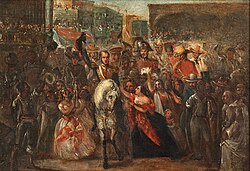
The 20th century brought architectural eclecticism and the rise of constructive functionalism, exemplified by Lima's Plaza San Martín. A pivotal moment for the visual arts occurred in 1919 with the founding of the School of Fine Arts of Lima.
Contemporary Movements
Modern Peruvian sculpture has been shaped by artists such as Luis Agurto, Luis Valdettaro, Joaquín Roca Rey, Jorge Piqueras, Alberto Guzmán, Víctor Delfín, and Francisco Sánchez. In painting, the indigenist movement—which focuses on the indigenous identity and experience—became a cornerstone of contemporary art. Led by José Sabogal, this movement included artists such as Fernando de Szyszlo, Tilsa Tsuchiya, and many others including Alberto Dávila, Armando Villegas, and Carlos Revilla.
Key Facts
- Ancient Roots: Early high-tech art began with the Chavín and Cupisnique cultures (9th–4th centuries BCE).
- Textile Mastery: The Paracas Necrópolis culture is world-renowned for its delicate, complex textiles.
- Urban Pioneers: The Wari civilization introduced rational urban design to the Andean region.
- Inca Legacy: The Incas integrated previous cultural achievements into sites like Machu Picchu and Cuzco.
- Artistic Blending: Colonial art is characterized by mestizaje, blending European Baroque with native elements.
- Modern Identity: The indigenist movement, led by José Sabogal, defines much of 20th-century Peruvian painting.
| Period/Culture | Approximate Dates | Key Artistic/Technical Contributions |
|---|---|---|
| Chavín & Cupisnique | 9th – 4th century BCE | Gold/silver jewelry, stone sculpture, religious art |
| Paracas | 8th century BCE – 1st century CE | Polychrome and monochrome ceramics, complex textiles |
| Moche & Nazca | 3rd century BCE – 7th century CE | Hydraulic engineering, terrace agriculture, ceramics |
| Wari & Tiahuanaco | 7th – 13th century | Rational urban design, monumental stone architecture |
| Chimú | 14th – 15th century | City of Chan Chan, jewelry-making |
| Inca | Pre-Spanish Conquest | Imperial road networks, Machu Picchu, Cuzco |
| Colonial/Modern | 16th century – Present | Baroque mestizaje, Neoclassicism, Indigenism |
Today, Peru continues to celebrate its heritage through widespread crafts, including silverwork, leather embossing, straw weaving, and the production of vibrant alpaca wool fabrics.
Frequently Asked Questions
What is artistic mestizaje in the context of Peruvian art?
Artistic mestizaje refers to the cultural blending that occurred after the Spanish arrival, where European artistic styles (such as the Baroque) were merged with indigenous Peruvian influences and heritage.
Which culture is most famous for its textiles?
The Paracas Necrópolis culture is particularly renowned for producing complex and delicate textiles, while the modern era continues this tradition with colorful alpaca wool fabrics.
What was the significance of the indigenist movement?
Led by José Sabogal, the indigenist movement became a pillar of contemporary Peruvian painting by focusing on and elevating indigenous identity and themes.
Which ancient civilizations excelled in hydraulic engineering?
The Moche, Nazca, and Chimú cultures are all noted for their advanced hydraulic engineering and agricultural techniques, such as terrace farming.
What architectural style dominated the colonial period in Peru?
The Baroque style reached a rich expression during the colonial period, as seen in the Convent of San Francisco in Lima and the Iglesia de la Compañia in Cuzco.