Peruvian Air Force: History, Fleet, and Modernization
The Fuerza Aérea del Perú (Air Force of Peru), commonly known as the FAP, is the aerial warfare branch of the Peruvian Armed Forces. Founded on January 28, 1919, the FAP has evolved from a small collection of aviation divisions into a sophisticated force tasked with safeguarding Peru's national sovereignty and providing critical support during internal and external conflicts.
From its early days of biplanes in the Amazon to the acquisition of advanced multirole fighters, the FAP's trajectory reflects Peru's shifting geopolitical alliances and its commitment to maintaining a credible air defense capability in South America.
Key Facts
- Founded: January 28, 1919.
- Role: Aerial warfare and national defense.
- Current Leadership: Commander-in-Chief Dante Antonio Arévalo Abate.
- Primary Fighter Fleet: Mirage 2000 and MiG-29.
- National Hero: Captain José Quiñones Gonzales.
- Recent Procurement: Confirmed purchase of 24 Saab Gripen E/F fighters.
Historical Evolution
Foundations and Early Conflicts
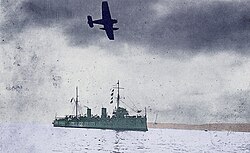
The FAP's origins trace back to the merger of the Peruvian Army and Navy aviation divisions on May 20, 1929, forming the Cuerpo de Aviación del Perú (CAP). During the Colombia-Peru War of 1933, the CAP utilized Vought O2U Corsair and Curtiss Hawk II biplanes. By 1936, the organization was renamed the Cuerpo Aeronáutico del Perú.
The 1941 Ecuadorian–Peruvian War marked a significant chapter for the force. Equipped with Caproni and North American aircraft, the CAP played a pivotal role in the conflict. It was during this war that Lieutenant José Quiñones Gonzales became a national hero; after his North American NA-50 fighter was hit during an attack on the Zarumilla River, he deliberately crashed his aircraft into an enemy anti-aircraft position.
The Cold War and Shifting Alliances
In 1950, the force was reorganized and officially named the Fuerza Aérea del Perú (FAP). Initially aligned with the United States and Great Britain, the FAP entered the Jet Age with English Electric Canberra bombers, Hawker Hunters, and Lockheed F-80 Shooting Stars.
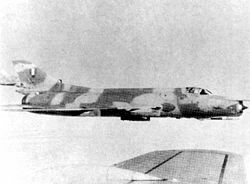
A dramatic shift occurred in 1968 following a coup by General Juan Velasco Alvarado. Aligning Peru with the Soviet Bloc led to a U.S. arms embargo in 1969. Consequently, the FAP turned to the Soviet Union, acquiring Sukhoi Su-22 fighters and various Mil helicopters.
Economic Stagnation and the Cenepa War
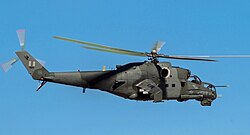
The late 1980s and early 1990s were characterized by economic hardship, leading to budget cuts and a decrease in Annual Flying Hours (AFH)—a key metric for pilot skill and readiness. Despite these challenges, the FAP provided essential support during the 1995 Cenepa War, utilizing Mi-25 helicopters and Su-22 aircraft to support ground troops in the Amazon Basin.
Modern Fleet and Organization
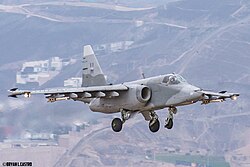
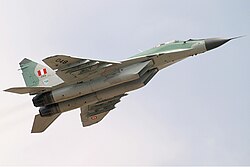
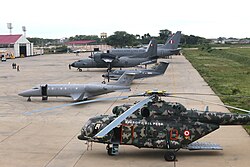
In the late 1990s, the FAP bolstered its strength by acquiring MiG-29 and Su-25 aircraft from Belarus and Russia, complementing its French-made Mirage 2000 fleet. Today, these aircraft form the backbone of Peru's air defense, with key operations based at La Joya and Talara airbases.
Current Aircraft Inventory
| Category | Primary Models | Origin |
|---|---|---|
| Multirole Fighters | Mirage 2000, MiG-29 | France, Russia |
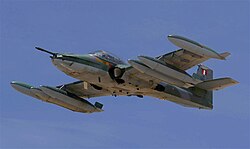
| Attack Aircraft | Su-25, Cessna A-37 Dragonfly | Russia, USA |
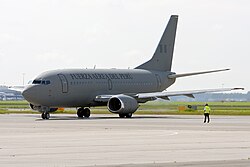
| Transport | C-130 Hercules, An-32, Boeing 737 | USA, Ukraine |
| Helicopters | Mi-17, Mi-35, Bell 412 | Russia, USA |
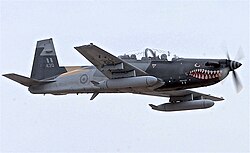
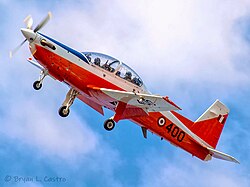
| Trainers | KAI KT-1P Woongbi, CH 2000 | South Korea, USA |
Organizational Structure
The FAP is organized into several Air Wings, each with specific strategic focuses:
- Air Wing Nº 1: Focuses on combat operations with MiG-29s and A-37s based in Chiclayo, Piura, and Talara.
- Air Wing Nº 2: Manages transport, helicopters, and pilot training (EFOPI) based in Callao and Pisco.
- Air Wing Nº 3: Operates attack helicopters and Mirage 2000s in the Arequipa region.
- Air Wing Nº 5: Handles utility and transport operations in Iquitos.
Future Modernization and Procurement
The FAP is currently undergoing a significant transition to replace its aging fleet. After evaluating several options, including the Rafale and F-16, Peru confirmed in July 2025 the purchase of 24 Saab Gripen E/F fighters. To fund this, the government approved an external debt operation of approximately 2 billion dollars (S/ 7.58 billion) to recover operational air defense capacity.
Ground Support and Personnel
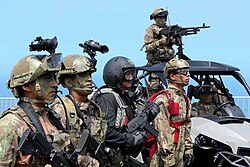
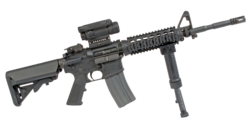
Beyond the air, the FAP maintains infantry capabilities using a variety of small arms, including the M4 carbine and IMI Galil, as well as Soviet-era armored personnel carriers like the BTR-60.
Frequently Asked Questions
Who is the national hero of the Peruvian Air Force?
Captain José Quiñones Gonzales is the national hero of the FAP. He is remembered for sacrificing his life during the 1941 Ecuadorian–Peruvian War by crashing his aircraft into an enemy anti-aircraft position.
Which fighter jets will the FAP use in the future?
Peru has confirmed the purchase of 24 Saab Gripen E/F fighters to modernize its air defense and replace older Mirage 2000 and MiG-29 aircraft.
What is the significance of Annual Flying Hours (AFH)?
AFH is a critical measure of a pilot's experience and readiness. A higher number of annual flying hours generally indicates better-trained pilots and a higher state of operational readiness for the air force.
Which countries have provided aircraft to the FAP?
The FAP has a diverse fleet sourced from the United States, Russia, France, South Korea, Ukraine, Italy, and Canada, reflecting its changing geopolitical alignments over the last century.