People Power Party: A Comprehensive Overview of South Korea's Conservative Force
The People Power Party (PPP), known in Korean as Gungminui him (국민의힘), stands as a major pillar of the South Korean political landscape. Representing a spectrum from right-wing to far-right ideologies, the party is a central player in the nation's governance, legislative processes, and international relations.
Tracing its roots through various mergers and rebrandings, the party has evolved significantly to meet the changing political climate of South Korea. Today, it serves as a primary vehicle for conservatism and South Korean nationalism.
Key Facts
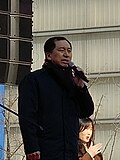
- Current Leader: Jang Dong-hyeok
- Core Ideology: Conservatism, South Korean nationalism, and right-wing populism
- Political Position: Right-wing to far-right
- Party Colors: Red
- Membership (2023): 4,449,281
- Headquarters: Yeouido-dong, Seoul, South Korea
Historical Evolution and Foundations
The current iteration of the People Power Party is the result of several political consolidations. It was originally established as the United Future Party on February 17, 2020, following a merger involving the Liberty Korea Party, the New Conservative Party, and Onward for Future 4.0. On August 31, 2020, the party transitioned into its current form.
Throughout its history, the party has engaged in several strategic mergers to strengthen its position, including the incorporation of the Future Korea Party in May 2020, the People Party in September 2022, Transition Korea in November 2023, and the People Future Party in April 2024.
Leadership Transitions
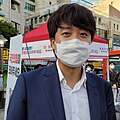
The party has seen a diverse array of leaders and Emergency Response Committees (ERC)—temporary leadership bodies appointed to manage the party during periods of crisis or transition. Notable leaders include Lee Jun-seok, who led the party from June 2021 to August 2022, and Han Dong-hoon, who served as leader in 2024.
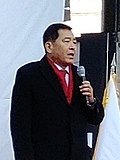
Currently, Jang Dong-hyeok holds the leadership position, having taken office in August 2025 following a competitive election process.
Political Influence and Election Results
The People Power Party maintains a significant presence across various levels of South Korean government. Its influence is most visible in the National Assembly, where it holds 109 out of 300 seats as of the most recent data.
Beyond the legislature, the party holds substantial local power, including 4 out of 16 Metropolitan Mayors and Governors, and 95 out of 227 Municipal Mayors. This widespread representation allows the party to shape policy from the local municipal level up to the national stage.
| Category | Metric/Result |
|---|---|
| National Assembly Seats | 109 / 300 |
| Metropolitan Mayors/Governors | 4 / 16 |
| Municipal Mayors | 95 / 227 |
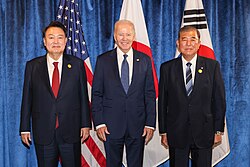
| 2022 Presidential Election | Yoon Suk Yeol (Elected - 48.56%) |
| 2025 Presidential Election | Kim Moon-soo (Lost - 41.15%) |
Factions and Internal Dynamics
The party is not a monolith; it is characterized by distinct internal factions that often influence its strategic direction. These are broadly categorized into Pro-Yoon and Anti-Yoon groups, centered around the political influence of former President Yoon Suk Yeol.
Pro-Yoon Faction
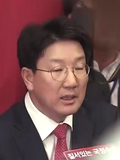
This group includes influential figures such as Kweon Seong-dong and the current leader, Jang Dong-hyeok. This faction generally aligns with the policies and leadership style associated with the Yoon administration.
Anti-Yoon Faction
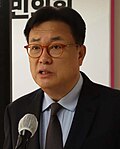
Conversely, the Anti-Yoon faction includes members such as Ahn Cheol-soo and former Minister Choung Byoung-gug. These members often represent different strategic or ideological viewpoints within the conservative spectrum.
International Affiliations
On the global stage, the People Power Party maintains connections with international political organizations to foster democratic cooperation. It is a member of the Asia Pacific Democracy Union and the International Democracy Union.
Frequently Asked Questions
What is the primary ideology of the People Power Party?
The party primarily adheres to conservatism, South Korean nationalism, and right-wing populism.
How many seats does the PPP hold in the National Assembly?
The party currently holds 109 seats out of the 300 available in the National Assembly.
Who is the current leader of the People Power Party?
As of August 2025, the leader of the party is Jang Dong-hyeok.
What are the party's official colors?
The official color of the People Power Party is red.
Has the party changed its name before?
Yes, the party was previously known as the United Future Party before transitioning to its current name, the People Power Party.