Pentagon City: The Evolution of an Arlington Urban Hub
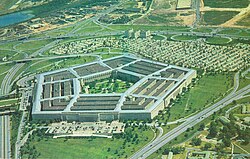
Pentagon City stands today as a dense center of commerce and residence in Arlington, Virginia. However, its origins were far more modest, beginning as a collection of open fields and industrial warehouses. The transformation of this 190-acre tract into a high-density urban environment is a story of strategic real estate investment and the catalytic power of public transportation.
The Early Foundations (1946–1960s)
The development of Pentagon City began in 1946 when developers Morris Cafritz and Charles H. Tompkins purchased 190 acres of land for $1.5 million. At the time, the area consisted primarily of empty fields and commercial warehouses.
Industrial growth arrived in the 1950s with the opening of a Western Electric telephone manufacturing facility. This site would later undergo a transition, eventually being converted into a small shopping mall called the "Pentagon Centre." By the 1960s, the area began to shift toward residential use with the construction of high-rise apartment buildings along Joyce, Fern, and Hayes Streets.
Transit-Driven Growth and Commercial Expansion
A pivotal moment in the area's history occurred on July 1, 1977, with the opening of the Pentagon City Metrorail station on the Blue Line. While the station initially bordered a large empty field, its presence acted as a catalyst for rapid, high-density development over the following decade.
The Rise of Corporate and Retail Hubs
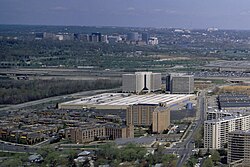
By the 1990s, Pentagon City had evolved into a major corporate destination. MCI Communications established a significant presence in the area. The company's Consumer Markets headquarters were located in Washington Tower, a twelve-story office building situated atop the Fashion Centre at Pentagon City—a four-story indoor shopping mall that opened its doors in 1989.
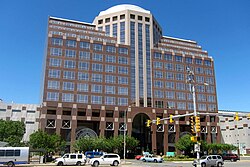
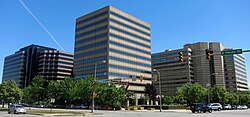
In addition to Washington Tower, MCI occupied two of the four office towers located across South Hayes Street, known as Pentagon City I and II (commonly abbreviated as "PCY"). Today, these office buildings continue to serve as critical infrastructure, housing agencies such as the Drug Enforcement Administration and the Transportation Security Administration headquarters.
The Baseball Stadium Controversy
In 2003, Pentagon City became the center of a local political debate when the Virginia Baseball Stadium Authority proposed five potential sites in Northern Virginia to host the relocating Montreal Expos. Pentagon Centre was one of three proposed sites within Arlington County, alongside a site in Rosslyn and a plot of undeveloped land closer to the Pentagon.
The proposal was highly divisive, leading some local residents to launch a visible campaign against the stadium. Ultimately, the Arlington County Board opposed the project. The final Virginia bid shifted to a location near Dulles Airport, and by the fall of 2004, Major League Baseball announced that the Expos would move to Washington, D.C., becoming the Washington Nationals.
Key Facts
- Founded: 1946 by Morris Cafritz and Charles H. Tompkins.
- Initial Cost: $1.5 million for 190 acres.
- Transit Catalyst: The Blue Line Metrorail station opened July 1, 1977.
- Major Landmarks: The Fashion Centre at Pentagon City (opened 1989) and Washington Tower.
- Corporate History: Formerly a major hub for MCI Communications.
| Era/Year | Key Event | Impact |
|---|---|---|
| 1946 | Land Acquisition | 190 acres purchased for $1.5 million |
| 1950s | Western Electric Facility | Industrial start; later became Pentagon Centre |
| 1960s | Residential High-rises | Urban housing growth on Hayes, Fern, and Joyce Streets |
| 1977 | Metrorail Opening | Stimulated high-density commercial development |
| 1989 | Fashion Centre Opens | Established the area as a retail destination |
| 2003-2004 | Stadium Proposal | Rejected bid for the Montreal Expos/Washington Nationals |
Frequently Asked Questions
Who originally developed Pentagon City?
Pentagon City was founded in 1946 by developers Morris Cafritz and Charles H. Tompkins, who purchased the land for $1.5 million.
How did the Metrorail affect the area?
The opening of the Pentagon City station on the Blue Line in 1977 served as a primary driver for high-density development, transforming empty fields into a commercial hub within ten years.
What is the relationship between Washington Tower and the Fashion Centre?
Washington Tower is a twelve-story office building that is physically located above the four-story Fashion Centre at Pentagon City shopping mall.
Was a professional baseball stadium ever built in Pentagon City?
No. While the Pentagon Centre was proposed as a site for the Montreal Expos in 2003, the Arlington County Board opposed the plan, and the team eventually moved to Washington, D.C., as the Washington Nationals.
Which major companies or agencies have been located there?
MCI Communications had a major presence in Washington Tower and the PCY office towers. Currently, the area houses the headquarters of the Transportation Security Administration and the Drug Enforcement Administration.