Penalty Shoot-outs: The High-Stakes Tie-Breaker of Association Football
In the world of association football, few moments are as tense as the penalty shoot-out. Formerly known as "kicks from the penalty mark," this method serves as the final tie-breaker to determine a winner in matches that cannot end in a draw. It is typically employed after normal regulation time and any applicable extra time have expired without a deciding goal.
From the global stage of the FIFA World Cup elimination rounds—including the round of 32, round of 16, quarter-finals, semi-finals, and the final—to domestic cup competitions, the shoot-out transforms a team sport into a series of high-pressure individual duels.
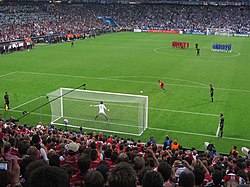
Key Facts
- Purpose: To determine a winner when a match remains tied after normal and extra time.
- Standard Format: Each team takes five shots; the team with the most successful kicks wins.
- Sudden Death: If tied after five kicks, the shoot-out continues in single-round pairs until a winner emerges.
- Scoring: Shoot-out goals are tallied separately and do not count toward the match score or individual player statistics.
- Restrictions: Only the goalkeeper may defend the goal; no other players may touch the ball once kicked.
The Procedure and Rules
The penalty shoot-out is one of three approved methods for breaking a draw under the Laws of the Game, alongside extra time and the away goals rule (used in two-legged ties). The specific method used is determined by the match organizing body before the game begins.
In most professional competitions, the sequence follows a strict protocol: two 15-minute periods of extra time are played first. If the score remains level, the shoot-out commences. Each team selects different players to take five shots from the penalty mark. The contest ends immediately if one team gains an insurmountable lead before all ten kicks are taken.
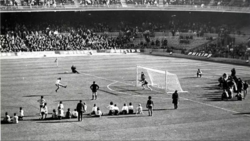
Tactical Approaches
While the physical act is a simple kick, the psychological battle is intense. Goalkeepers often employ specific tactics to lower the kicker's success rate, such as:
- Verbally irritating, annoying, or provoking the kicker to break their concentration.
- Physically confronting the kicker to intimidate them.
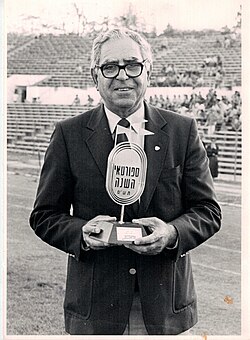
History and Evolution
Though widely adopted since the 1970s, the shoot-out had a gradual introduction to major tournaments. The first World Cup penalty shoot-out occurred on January 9, 1977, during the African qualifying round, where Tunisia defeated Morocco. The finals tournament first saw a shoot-out in 1982, when West Germany beat France in the semi-final.
Initially, the 1982 final would not have gone straight to penalties; a replay would have been required first. However, from 1986 onward, penalties were scheduled immediately following the final if a draw persisted.
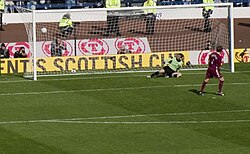
Famous Incidents and Records
The drama of the shoot-out has produced some of football's most iconic moments. In the 2006 FIFA World Cup final, Italy secured their fourth world title by defeating France 5–3 on penalties. More recently, Argentina lifted the 2022 FIFA World Cup trophy by beating France 4–2 in a shoot-out after a 3–3 draw in extra time.
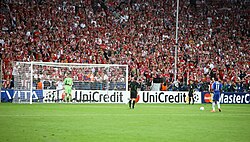
Beyond the World Cup, some matches have pushed the limits of endurance. A 2007 UEFA European Under-21 Championship semi-final between the Netherlands and England required 32 penalties, with the Netherlands eventually winning 13–12. In English domestic football, a 2005 FA Cup replay between Tunbridge Wells and Littlehampton Town saw 40 kicks taken, ending in a 16–15 victory for Tunbridge Wells.
The world record for the most consecutive penalties scored in a single shoot-out was set on December 17, 2024, during a Vertu Trophy match. Blackpool and Aston Villa U21s scored 31 consecutive penalties before the 32nd was saved, resulting in an 18–17 win for Aston Villa.
| Event | Date/Year | Outcome | Significance |
|---|---|---|---|
| WC African Qualifying | 1977 | Tunisia def. Morocco | First World Cup shoot-out |
| WC Semi-final | 1982 | West Germany def. France | First shoot-out in WC finals |
| WC Final | 2022 | Argentina def. France | Decided World Cup champion |
| Vertu Trophy | 2024 | Aston Villa def. Blackpool | World record 31 consecutive scores |
Criticisms and Alternatives
Despite its excitement, the penalty shoot-out is often criticized for relying more on luck than skill. Critics argue that individual duels contradict the essence of football as a team sport. However, some data suggests that overall team strength still predicts the winner, and many fans value the unpredictability and pressure as a thrilling finale.
To address these concerns, UEFA trialed a new sequence in 2017 across various Under-17 and Under-19 championships, as well as the FA Community Shield, to explore different ways of conducting the shoot-out.
Frequently Asked Questions
Do goals scored in a shoot-out count toward the final match score?
No. Balls successfully kicked into the goal during a shoot-out are tallied separately and do not count as goals for the individual players or the team's official match score.
What happens if the score is still tied after five kicks each?
The shoot-out enters "sudden-death" rounds. In this phase, teams take one kick each per round; the first team to score while the other misses is declared the winner.
Can any player other than the goalkeeper touch the ball during a shoot-out?
No. Once the ball is kicked, neither the kicker nor any other player except the goalkeeper may play the ball again.
When was the first penalty shoot-out used in a World Cup finals tournament?
The first shoot-out in the finals tournament took place in 1982, during the semi-final match between West Germany and France.
Why is the penalty shoot-out considered controversial?
It is often criticized for being a "lottery" that relies on luck and individual performance rather than the collective team skill and strategy typical of a football match.