Pelicans: Biology, Species Diversity, and Cultural Symbolism
Pelicans are large, water-bird species belonging to the family Pelecanidae. Known for their distinctive oversized bills and expandable throat pouches, these birds have inhabited the Earth since the late Eocene epoch, approximately 36 million years ago. From the coastal shores of the Americas to the wetlands of Australia and Africa, pelicans play a vital role in their respective ecosystems.
These birds are characterized by their impressive size and specialized feeding mechanisms. While most are known for scooping fish from the water's surface, some species have evolved more dramatic hunting techniques, such as plunge-diving from significant heights.

Key Facts
- Largest Species: The Dalmatian pelican can weigh up to 15 kg (33 lb) and reach a length of 1.83 m (6.0 ft).
- Smallest Species: The brown pelican is the smallest, with some individuals weighing as little as 2.75 kg (6.1 lb).
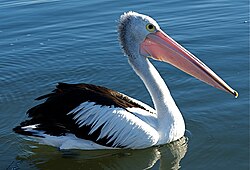
- Longest Bill: The Australian pelican holds the record for the longest bill of any bird, reaching up to 0.5 m (1.6 ft) in large males.
- Conservation Success: The brown pelican recovered from the endangered list after DDT restrictions were implemented in the US.
- Temporal Range: The lineage dates back 36 million years to the late Eocene.
Species Overview and Diversity
![An adult brown pelican with a chick in a nest in Chesapeake Bay, Maryland, US. This species will nest on the ground when no suitable trees are available.[50]](/images/47/91/4791a0efddcfd0383a1c90441fb14f4ea6a14b3275c1ad85e85edb43cdbdbe0b.jpg)
There are eight extant species of pelicans, each adapted to specific environments. Males are generally larger than females and typically possess longer bills.
The Americas
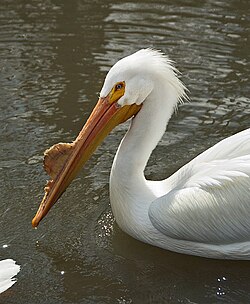
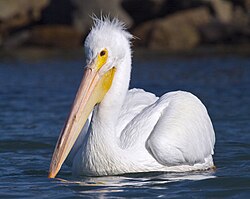
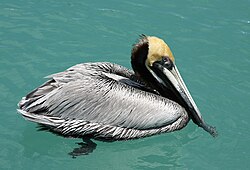
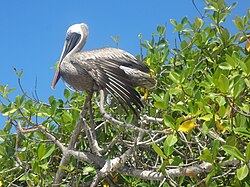
The American white pelican is a prominent figure in North American wetlands, often developing a distinct knob on its bill before the breeding season. In contrast, the brown pelican is the smallest of all species and is uniquely distinguished by its brown plumage and its habit of plunge-diving to catch prey.
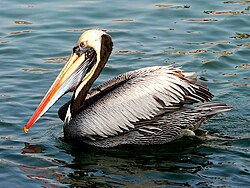
The Peruvian pelican is another key species found in South American coastal regions, sharing some similarities with the brown pelican.
Africa, Asia, and Australia
The Great white pelican and the Dalmatian pelican are found across Africa and Eurasia. The Dalmatian pelican is the largest of the group, identifiable by its greyish-white plumage, grey legs, and curly nape feathers.
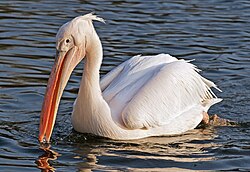

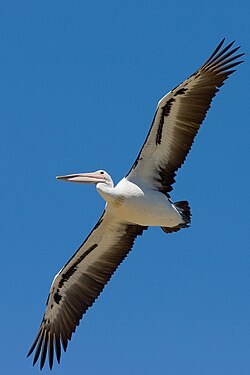
In Asia, the spot-billed pelican is found, while the pink-backed pelican is native to Africa. Australia is home to the Australian pelican, which is renowned for its massive bill and gliding flight capabilities.


Physical Characteristics and Adaptation
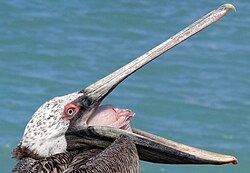
The most striking feature of the pelican is the gular pouch, a stretchable skin fold attached to the lower mandible. This pouch is used primarily for scooping fish and draining water before swallowing the prey.
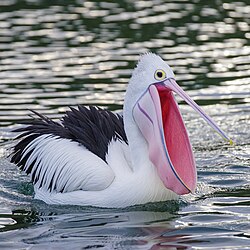
Beyond the pouch, pelicans are built for efficiency in the air. The Australian pelican, for example, uses its large wingspan to glide over vast distances with minimal effort.
Conservation and Environmental Threats

Pelican populations have historically been vulnerable to human-induced environmental changes. The brown pelican experienced a severe population crash in the 1950s and 1960s due to DDT pollution. After being listed as endangered in 1970, the species recovered following the 1972 restrictions on DDT and was delisted in 2009.
Other threats include habitat loss and chemical poisoning. The spot-billed pelican is currently considered near threatened due to deforestation and the loss of feeding sites. Additionally, mass mortality events have occurred due to botulism and neurotoxic domoic acid produced by diatoms, which contaminate the fish pelicans consume.
| Species | Max Length | Max Weight | Distinguishing Feature |
|---|---|---|---|
| Brown Pelican | 1.06 m | 4.5 kg | Plunge-diving behavior |
| Dalmatian Pelican | 1.83 m | 15 kg | Curly nape feathers |
| Australian Pelican | N/A | N/A | Longest bill of any bird |
Cultural Significance and Symbolism
Pelicans have appeared in human art and symbolism for millennia. Ancient Egyptian wall fragments from the Sun Temple of Nyuserre Ini (c. 2430 BCE) depict breeding pelicans.

In Christian iconography, the "pelican in her piety" is a symbol of self-sacrifice, based on the myth that the bird wounds its own breast to feed its chicks with blood.

This imagery has influenced various historical and modern symbols, including the portrait of Queen Elizabeth I, the arms of the Kiszely family, and the logo of the German stationery company Pelikan. The bird also appears on the flag of the US state of Louisiana and the Albanian 1 lek coin.



![First logo of the German stationery company, Pelikan. Inspired by the coat of arms of its former owner Günther Wagner.[117]](/images/e1/f7/e1f7b2ee371f88e76bb85a7bcafeae7fd0f865ee035bb4e10a8d7ebb78ad0a36.png)


Frequently Asked Questions
Which pelican is the largest?
The Dalmatian pelican is the largest, reaching up to 1.83 meters in length and weighing as much as 15 kilograms.
How do pelicans use their throat pouches?
The gular pouch is used to scoop up fish and water from the surface; the bird then tilts its head to drain the water before swallowing the fish.
Why was the brown pelican once endangered?
The brown pelican's population plummeted in the mid-20th century primarily due to environmental pollution caused by the pesticide DDT.
Do pelicans only eat fish?
While fish are their primary food source, pelicans are opportunistic and have been known to swallow other birds, such as pigeons or gannets.
What is a "pelican spider"?
Despite the name, the pelican spider (Archaeidae) is not a bird but a member of the spider family, named for its unique physical appearance.