Pearl River Community College: A Legacy of Educational Resilience
The story of Pearl River Community College (PRCC) is one of perseverance, community support, and a pioneering spirit. From its origins as a specialized agricultural school to its evolution into a multi-campus community college, the institution has consistently broken new ground in the Mississippi educational landscape.
The Founding of Pearl River County Agricultural High School
The institution began as the Pearl River County Agricultural High School (PRCAHS), established under the Mississippi Agricultural High School Law of 1908. This landmark legislation created the first state-funded system of agricultural high schools in the United States. However, the school's early years were marked by legal turmoil. In late 1909, the state's Supreme Court ruled that the law violated the separate but equal clause of the state constitution because it failed to provide equal opportunities for African-American children.
This ruling stripped state funding from nearly all the original twenty agricultural high schools, forcing seventeen of them to close. PRCAHS survived only because the citizens of Pearl River County refused to let the school fail. Local private citizens secured a bank loan to keep the doors open until the Mississippi Legislature could pass a new law that provided opportunities for both races.
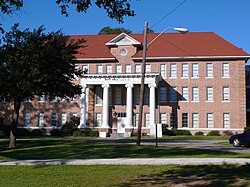
Classes officially commenced on September 8, 1909, led by Professor T.M. Kelly. The original boarding school consisted of a single three-story building situated on 20 acres of land on the outskirts of Poplarville, the county seat. The facility was designed for maximum utility: the first floor housed the classrooms and cafeteria, the second floor served as the girls' dormitory, and the third floor was the boys' dormitory.
Evolution into a Public College
Under the leadership of James Andrew Huff, the institution began to expand its academic horizons. In the 1921-22 academic year, freshman college classes were added to the curriculum. This transition made Pearl River College the first two-year public institution in the state of Mississippi. The college continued its growth by introducing sophomore classes during the 1925-26 term.
Today, the college has grown far beyond its original 20-acre plot. It now operates across four distinct locations:
- The main campus in Poplarville.
- The Forrest County Center in Hattiesburg, MS.
- The Lowery Woodall Advanced Technology Center in Hattiesburg, MS.
- The Hancock Center in Waveland, MS.
Overcoming the Devastation of Hurricane Katrina
In August 2005, the college faced one of its greatest challenges when Hurricane Katrina struck the region. The Poplarville campus sustained an estimated $40–50 million in damages. The storm caused severe structural failure in the M. R. White Coliseum (the college's sports arena) and the auditorium wing of Moody Hall, which was the oldest instructional building on any junior college campus in the state.
For the safety of the students, both the sports arena and the Moody Hall auditorium wing were razed. In their place, the college constructed a new M. R. White Coliseum and the Ethel Holden Brownstone Center for the Arts. The recovery effort was massive; most campus roofs required replacement, and numerous buildings underwent extensive mold remediation—the process of cleaning and removing fungal growth from building materials.
The impact extended to the Gulf Coast, where the Hancock Center was completely gutted by a massive tidal surge. While the main campus was forced to shut down for three weeks, the Hancock Center remained closed for four weeks during the initial recovery phase.
Key Facts
- Founded: Classes began September 8, 1909.
- Pioneer Status: First 2-year public institution in Mississippi (established 1921-22).
- Original Site: A single three-story building on 20 acres in Poplarville.
- Current Reach: Four locations across Poplarville, Hattiesburg, and Waveland.
- Katrina Impact: $40–50 million in damages at the Poplarville campus in 2005.
| Year/Period | Event/Milestone | Significance |
|---|---|---|
| 1908-1909 | Establishment of PRCAHS | Part of the first state-funded agricultural high school system. |
| 1921-1922 | Addition of Freshman classes | Became Mississippi's first 2-year public institution. |
| 1925-1926 | Addition of Sophomore classes | Expanded the collegiate curriculum. |
| August 2005 | Hurricane Katrina | Caused $40-50M in damage; led to new facility construction. |
Frequently Asked Questions
Why did the original funding for the school disappear in 1909?
The Mississippi Supreme Court ruled that the Agricultural High School Law of 1908 violated the state constitution's separate but equal clause because it did not provide equal opportunities for African-American children, leading to the loss of state funding.
How did the school survive the loss of state funding?
Private citizens in Pearl River County secured a loan from a local bank to fund the school until the state legislature could pass a new, inclusive law.
What was the original layout of the first school building?
The three-story building featured classrooms and a cafeteria on the first floor, a girls' dormitory on the second floor, and a boys' dormitory on the third floor.
Which buildings were replaced after Hurricane Katrina?
The M. R. White Coliseum and the auditorium wing of Moody Hall were razed and replaced by a new M. R. White Coliseum and the Ethel Holden Brownstone Center for the Arts.
Where are the current campuses of Pearl River Community College located?
The college operates a main campus in Poplarville, two centers in Hattiesburg (Forrest County Center and Lowery Woodall Advanced Technology Center), and the Hancock Center in Waveland.