Pear Varieties, Cultivation, and Global Production
The pear, belonging to the genus Pyrus, is a versatile and widely enjoyed fruit found in various forms across the globe. From the classic, elongated European pear to the crisp, round Asian pear, these fruits offer a vast spectrum of shapes, textures, and flavors. With approximately 3,000 varieties grown worldwide, the pear is a cornerstone of both fresh fruit consumption and processed goods.
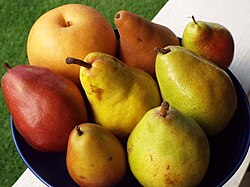
Key Facts
- Global Production: In 2024, world production reached approximately 28 million tonnes.
- Leading Producer: China dominates the market, accounting for 76% of total global production.
- Botanical Classification: Pears are pomes, a type of fruit produced by flowering plants in the Rosaceae family.
- Diversity: There are about 30 species within the Pyrus genus.
- Common Uses: Pears are consumed fresh, canned, juiced, dried, or fermented into perry (a pear cider).
Botanical Description and Taxonomy
Pears are primarily small to medium-sized trees, though some species appear shrubby or possess thorns. Most pear trees are deciduous, meaning they shed their leaves annually, although a few species in Southeast Asia remain evergreen. The leaves are typically simple and arranged alternately along the branches, ranging from 2 to 12 cm in length.
The flowers of the pear tree are generally white, occasionally showing tints of pink or yellow. These blossoms typically measure 2–4 cm in diameter and feature five petals and numerous stamens. The fruit itself is a pome, which can vary significantly in size; while wild species are often small (1–4 cm), cultivated varieties can reach up to 18 cm in length.
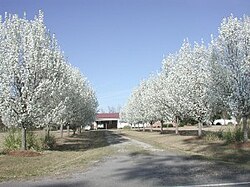
Subgenera and Distribution
The genus Pyrus is divided into two primary subgenera: Pyrus (the Occidental clade) and Pashia (the Oriental clade). The Occidental clade is mainly distributed across North Africa and western Eurasia, while the Oriental clade is native to East Asia. Interestingly, these two groups meet in Xinjiang, China, where hybridization has occurred.
Global Production and Cultivation
The cultivation of pears is a massive global industry. In 2024, the total world production was estimated at 27.6 million tonnes. China remains the undisputed leader in production, contributing 76% of the world's supply. Other significant producers include Argentina, where the Patagonian valley of Río Negro accounts for nearly 48% of the Southern Hemisphere's pear production.
| Region/Country | Production (Million Tonnes) | Percentage of World Total |
|---|---|---|
| China | 21.0 | 76% |
| Argentina | 0.67 | ~2.4% |
| Turkey | 0.63 | ~2.3% |
| South Africa | 0.47 | ~1.7% |
| United States | 0.46 | ~1.7% |
| Italy | 0.44 | ~1.6% |
| World Total | 27.6 | 100% |
Nutritional Profile
Pears are a healthy addition to a balanced diet. A 100g serving of raw pear provides approximately 57 kcal of energy. The fruit is composed of 84% water and contains a moderate amount of dietary fiber (3.1g per 100g). While it contains negligible amounts of protein and fat, it is a source of various carbohydrates, including sucrose, glucose, and fructose.
Nutritional Value per 100g
| Nutrient | Amount |
|---|---|
| Energy | 239 kJ (57 kcal) |
| Carbohydrates | 15.23 g |
| Sugars | 9.75 g |
| Dietary Fibre | 3.1 g |
| Protein | 0.36 g |
| Fat | 0.14 g |
| Water | 84 g |
Frequently Asked Questions
What is the difference between European and Asian pears?
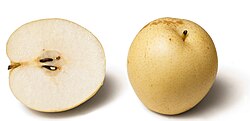
European pears often exhibit the classic "pyriform" or pear shape with a bulbous end and an elongated base. In contrast, many Asian pear varieties, such as the Nashi pear, are not "pear-shaped" and often have a more globose or round appearance.
What is perry?
Perry is a fermented beverage made from pears, similar to how cider is made from apples.
How cold-hardy are pear trees?
Some pear species are highly cold-hardy, capable of withstanding temperatures between −25 to −40 °C (−13 to −40 °F). However, many agricultural varieties are more vulnerable to cold damage, and evergreen species typically only tolerate temperatures down to about −12 °C (10 °F).
What are the most common uses for pears?
Pears are highly versatile and can be eaten fresh, canned, used in juices, dried, or fermented into perry. Additionally, pearwood is sometimes used in fine woodworking and relief sculptures.
Which country produces the most pears?
China is the world's leading producer, accounting for 76% of the total global pear production as of 2024.