Peach: History, Cultivation, and Nutritional Profile of Prunus persica
The peach, known scientifically as Prunus persica, is a beloved stone fruit belonging to the Rosaceae family. While its botanical name suggests a Persian origin, this succulent fruit is deeply rooted in the history and agriculture of East Asia. From its ancient domestication to its global production today, the peach remains a staple of both culinary arts and horticultural study.
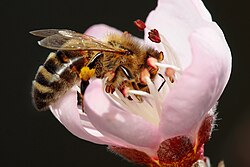
Botanically, the peach is a deciduous tree characterized by its gray bark with lenticels (small pores for gas exchange) and fragrant blossoms that signal the arrival of spring.
Key Facts
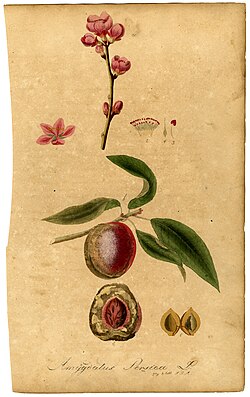
!['Crosby' cultivar in The Peaches of New York, 1917[23]](/images/62/d2/62d20f0eb14b1fc720818f7d80b736c68b38626c6fbb8a7f6750cf37bacf7a25.jpg)
- Origin: Domesticated in China as early as 6000 BCE in Zhejiang Province.
- Scientific Name: Prunus persica.
- Primary Producer: China is the world's leading producer of peaches.
- Varieties: Includes both fuzzy-skinned peaches and smooth-skinned nectarines.
- Nutritional Value: Rich in Vitamin C, Vitamin E, and potassium.
Origins and Historical Journey
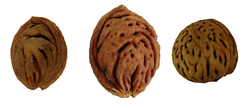
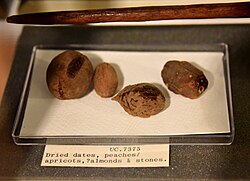
For decades, historians believed peach cultivation began around 2000 BCE. However, research published in 2014 shifted this timeline significantly, revealing that domestication occurred as early as 6000 BCE in the Zhejiang Province on the central east coast of China. Archaeological evidence, specifically peach stones found at the Kuahuqiao site near Hangzhou, suggests that the Yangtze River Valley was the primary hub for the early selection of favorable varieties.

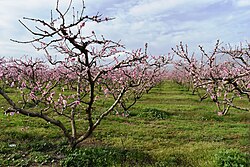
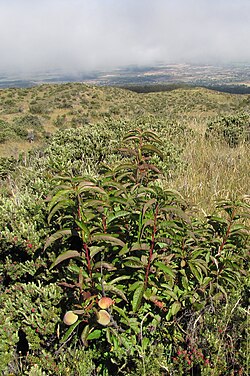
As the fruit spread from China, it traveled through Persia and eventually into Europe and the Americas. This global migration led to the development of diverse cultivars adapted to various climates, from the orchards of Northern Greece to the high altitudes of the Tibetan Plateau.
Botany and Taxonomy
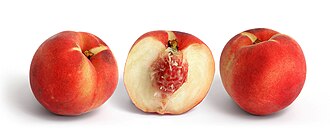
The peach is classified under the genus Prunus. It is closely related to other stone fruits such as apricots and plums. One of the most notable variations within the species is the nectarine, a smooth-skinned version of the peach that occurs due to a genetic mutation.
Growth and Development
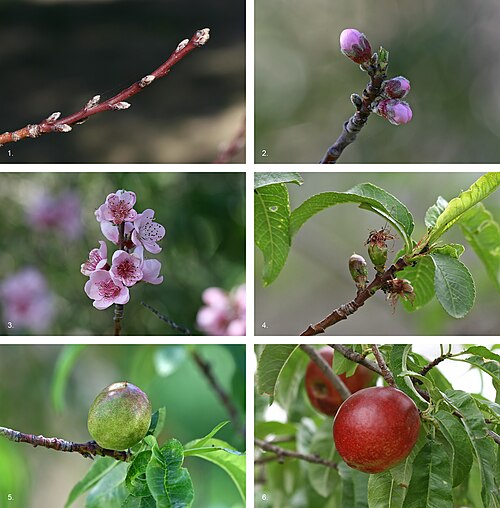
The developmental cycle of the fruit is a complex process. It begins with bud formation in early winter, followed by flowering, and culminates in fruit ripening by midsummer. The fruit itself consists of a fleshy mesocarp surrounding a hard endocarp (the stone) that protects the seed.
Cultivation and Global Production
Peaches are grown worldwide, though they require specific conditions to thrive. They are sensitive to spring frosts, which can damage blossoms and reduce fruit set. Modern agriculture has produced various cultivars, including freestone (where the pit separates easily from the flesh) and clingstone (where the flesh adheres to the pit) varieties.
Global production is heavily dominated by China, which produces the vast majority of the world's supply, followed by Spain, Turkey, Italy, and the United States.
| Country | Production Quantity (Million Tonnes) |
|---|---|
| China | 17.6 |
| Spain | 1.4 |
| Turkey | 1.2 |
| Italy | 1.1 |
| United States | 0.8 |
| Iran | 0.6 |
| World Total | 27.9 |
Nutritional Profile
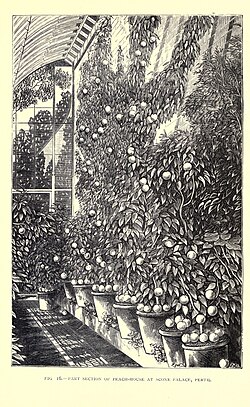
Peaches are a nutrient-dense fruit, providing essential vitamins and minerals while remaining low in calories. They are particularly noted for their content of beta-carotene and various B vitamins.
Per 100 grams of raw peach, the nutritional breakdown is as follows:
- Energy: 46 kcal
- Carbohydrates: 9.87 g (including 8.39 g of sugars)
- Dietary Fiber: 1.5 g
- Protein: 0.91 g
- Key Vitamins: Vitamin C (5% DV), Vitamin E (5% DV), Niacin (5% DV).
- Key Minerals: Copper (9% DV), Potassium (4% DV).
Cultural Significance
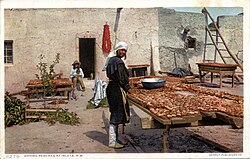
Beyond their nutritional value, peaches hold deep symbolic meaning. In Japanese folklore, the character Momotarō is famously born from a giant peach. In art, the fruit has been a frequent subject for masters such as Caravaggio, Claude Monet, and Pierre-Auguste Renoir, often symbolizing vitality or the abundance of nature.

Frequently Asked Questions
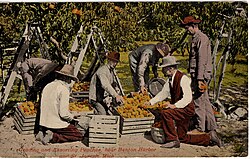

Where did peaches originally come from?
Peaches originated in China, with archaeological evidence from the Kuahuqiao site indicating domestication as early as 6000 BCE.
What is the difference between a peach and a nectarine?
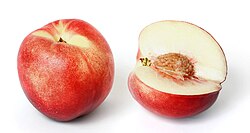
The primary difference is the skin; peaches have a characteristic fuzzy skin, while nectarines have smooth skin due to a genetic variation.
What are freestone and clingstone peaches?
Freestone peaches are those where the pit separates easily from the flesh, whereas in clingstone varieties, the flesh clings tightly to the pit.
Are peaches high in calories?
No, peaches are relatively low in calories, providing approximately 46 kcal per 100 grams.
Which country produces the most peaches?
China is the world's largest producer of peaches, contributing 17.6 million tonnes to the global total.