PBS: The Pillar of American Public Broadcasting
The Public Broadcasting Service, commonly known as PBS, is a cornerstone of non-commercial, free-to-air television in the United States. As a public broadcaster, PBS provides a vast array of educational, cultural, and informative programming to audiences nationwide, extending its reach into parts of Canada and Northern Mexico via over-the-air (OTA) signals.
Unlike commercial networks, PBS is owned by its member public television stations, ensuring that its mission remains focused on public service rather than profit. Today, it continues to evolve, delivering high-definition content (HDTV 1080i) across traditional broadcast airwaves and modern streaming platforms.
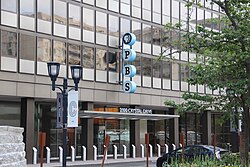
Key Facts
- Founded: November 3, 1969; officially launched on October 5, 1970.
- Leadership: Led by President and CEO Paula Kerger and COO Jonathan Barzilay.
- Ownership: Owned by its member public television stations.
- Reach: Nationwide coverage in the US, with limited reach in Canada and Mexico.
- Format: Primarily HDTV 1080i, with some stations utilizing 720p or 1080p via ATSC 3.0.
- Predecessor: Replaced the National Educational Television (NET), which operated from 1952 to 1970.
History and Evolution
PBS was founded by John Macy, James Day, and Kenneth A. Christiansen to create a more structured and effective public television system. Since its launch in 1970, it has transitioned through several eras of visual identity, moving from its initial 1970 logo to the iconic "P-Head" and eventually to the electric-blue brand refresh introduced on November 4, 2019.

Operational Structure and Programming
PBS operates as a network of member stations that produce and distribute a wide variety of content. This decentralized model allows local stations to contribute high-quality programming to the national schedule.
Prominent Member Stations and Their Contributions
Many of the most beloved PBS shows originate from specific member stations:
- WNET: Produces Nature, PBS NewsHour Weekend, and Amanpour & Company.
- WQED: The home of the legendary Mister Rogers' Neighborhood.
- KLRU: Produces the acclaimed music series Austin City Limits.
- WNED-TV: Known for the educational series Reading Rainbow.
- Twin Cities PBS: Produces science-focused content like DragonflyTV and SciGirls.
Specialized Networks
Beyond its main channel, PBS manages several specialized services:
- PBS Kids: A dedicated network for children's educational programming.
- Create: An independent network focused on educational and artistic content, originating from American Public Television.
- World: A channel dedicated to news and documentaries.
- First Nations Experience: Indigenous programming provided by the San Bernardino Community College District.
Availability and Modern Access
While PBS remains a leader in free-to-air broadcasting, it has aggressively expanded into digital media. Viewers can now access PBS content through various streaming services, including YouTube TV, Hulu + Live TV, DirecTV Stream, and Prime Video Live TV.
| Feature | Details |
|---|---|
| Type | Non-commercial Public Broadcaster |
| Primary Language | English (Spanish available via SAP on select programs) |
| Ownership | Member Public Television Stations |
| Digital Presence | pbs.org and various SVOD/FAST channels |
| Key Figures | Paula Kerger (CEO), Jonathan Barzilay (COO) |
Frequently Asked Questions
Who owns PBS?
PBS is not owned by a single corporation or the government; it is owned by its member public television stations.
What is the difference between PBS and NET?
National Educational Television (NET) was the predecessor to PBS, operating from 1952 until 1970, when it was replaced by the current Public Broadcasting Service.
How can I watch PBS if I don't have a TV antenna?
PBS content is available via the official website pbs.org and through streaming services such as YouTube TV, Hulu + Live TV, and Prime Video.
Does PBS provide programming in languages other than English?
Yes, select programs offer Spanish language options via the SAP (Secondary Audio Programming) audio track.
What is the purpose of the PBS Kids network?
PBS Kids is a dedicated network specifically designed to provide educational and developmental programming for children.