Patisserie Valerie: From Soho Beginnings to Corporate Collapse and Recovery
Patisserie Valerie is a name synonymous with upscale cakes and authentic pastries in the United Kingdom. From its humble origins as a family-run shop in the heart of London's Soho district to its rapid expansion into a national chain, the brand has experienced a volatile journey marked by immense growth, a shocking financial scandal, and a subsequent effort to modernize for the digital age.
The Foundation of a Soho Institution
The story of Patisserie Valerie began in 1926. It was established on the corner of Dean Street and Old Compton Street in Soho, London, by Esther van Gyseghem—originally from Ostend, Belgium—and her husband, Theophile (Theo) Vermeirsch. While there is no record of a "Valerie" in the founders' family, Esther eventually became known as Madame Valerie, giving the business its enduring name.
The business faced significant challenges during World War II when the original location was bombed. After a brief period in Norfolk, Theo and Esther reopened the shop nearby on Old Compton Street. Following Theo's death in 1947, Esther managed the patisserie alone until her retirement in 1965, at which point the business was reportedly sold to an Italian businessman based in Soho.
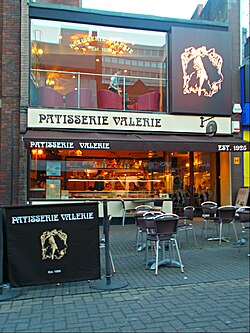
Rapid Expansion and Corporate Growth
The brand entered a new era of growth in 1987 when the Scalzo brothers purchased the business from the founders' descendants, expanding it to nine branches, including prestigious locations in Kensington and Piccadilly. In 2006, the company was acquired by Luke Johnson's Risk Capital Partners, who sought to leverage their experience with brands like Pizza Express and Giraffe to scale the concept across British cities.
This period saw an unprecedented surge in growth. Between 2006 and May 2017, the chain grew from eight shops to 192. This expansion eventually reached international shores in 2017 with the opening of a store in the Blanchardstown Centre in Ireland. However, this rapid scaling led to criticisms that the brand had lost its original identity, with the founder's niece, Leni Vermeirsch, noting that the expanded chain bore little resemblance to the original Soho shop.
Financial Crisis and the "Black Hole"
In April 2014, the company attempted to raise £33 million on the London Alternative Investment Market to reduce its debt. However, the company's stability was short-lived. On October 10, 2018, trading of shares for the parent company, Patisserie Holdings, was suspended following the discovery of fraudulent accounting irregularities.
Reports quickly emerged of a multimillion-pound "black hole" in the accounts. It was later revealed that there were two unauthorized and unreported overdrafts totaling nearly £10 million. Despite a rescue plan involving a £20 million loan from Luke Johnson and the issuance of new shares to raise approximately £15.7 million, the company could not recover.
On January 22, 2019, Patisserie Valerie collapsed into administration. This resulted in the immediate closure of 70 stores and concessions—including the original Soho flagships—and the loss of approximately 900 jobs.
Legal Aftermath and Criminal Trials
The collapse triggered several high-profile investigations. The Financial Reporting Council (FRC) investigated the auditing firm Grant Thornton, which was eventually fined £2.3 million for missing "red flags" and failing to question management's information during audits between 2014 and 2017.
The legal consequences extended to the company's leadership. In September 2023, the Serious Fraud Office (SFO) charged four individuals: former CFO Christopher Marsh, his wife Louise Marsh, financial controller Pritesh Mistry, and financial consultant Nileshkumar Lad. They were accused of conspiring to inflate cash balance sheets and annual reports from 2015 to 2018 using false documentation.
Management Buyout and Modernization
In February 2019, the brand was saved from total disappearance through a management buyout funded by Causeway Capital Partners. They paid £5 million for nearly 100 cafés. Simultaneously, AF Blakemore & Son acquired 21 Philpotts sandwich shops from the group, bringing the total acquisition value to £13 million.
The brand has since undergone a series of strategic shifts:
- Mergers: In March 2020, Causeway Capital merged Patisserie Valerie with its Bakers & Baristas business.
- Digital Pivot: In May 2020, the company launched a nationwide direct-to-consumer online cake shop and enhanced its click-and-collect services.
- Retail Partnerships: A wholesale partnership with Sainsbury's began in 2021, making their cakes available in many supermarkets.
- E-commerce: In 2024, the brand expanded its reach by launching an Amazon store.
To honor its roots, the company recently completed a major refurbishment of its Cribbs Causeway location in 2023, using a design palette inspired by 1920s Soho.
Key Facts
- Founded: 1926 in Soho, London, by Esther van Gyseghem and Theo Vermeirsch.
- Peak Size: Expanded to 192 shops by May 2017.
- The Collapse: Entered administration in January 2019 due to significant accounting fraud.
- Legal Fallout: Grant Thornton was fined £2.3 million; four individuals were charged by the SFO in 2023.
- Current Status: Operates as a merged entity with Bakers & Baristas, with a strong focus on online sales and wholesale partnerships.
| Period/Year | Event | Outcome |
|---|---|---|
| 1926 | Foundation | Opened in Soho, London |
| 1987 | Scalzo Brothers Acquisition | Expansion to 9 branches |
| 2006 | Risk Capital Partners Acquisition | Rapid growth to 192 sites by 2017 |
| 2018 | Accounting Scandal | Share suspension and discovery of fraud |
| 2019 | Administration | 70 stores closed; 900 jobs lost |
| 2019-Present | Management Buyout | Acquired by Causeway Capital Partners |
Frequently Asked Questions
Who founded Patisserie Valerie?
The business was founded in 1926 by Esther van Gyseghem and her husband, Theophile (Theo) Vermeirsch, in Soho, London.
Why did Patisserie Valerie collapse in 2019?
The company collapsed into administration as a direct result of significant fraud, involving the inflation of cash balance sheets and the discovery of a multimillion-pound financial shortfall.
What happened to the auditors during the fraud investigation?
The auditing firm Grant Thornton was fined £2.3 million by the Financial Reporting Council for failing to question management information and missing "red flags" during their audits from 2014 to 2017.
Is Patisserie Valerie still operating today?
Yes. Following a management buyout in 2019 and a merger with Bakers & Baristas in 2020, the brand continues to operate cafés and has expanded into online retail and wholesale partnerships with Sainsbury's.
Who was charged in relation to the fraud?
In 2023, the Serious Fraud Office charged Christopher Marsh (former CFO), Louise Marsh, Pritesh Mistry, and Nileshkumar Lad with conspiring to inflate the company's balance sheets.