Paris Charles de Gaulle International Airport
Commonly known as Roissy Airport, Paris Charles de Gaulle (CDG) serves as the primary international gateway to the Paris metropolitan area. Since its opening on March 8, 1974, it has evolved into one of the world's most significant aviation hubs, facilitating millions of journeys between Europe and the rest of the globe.
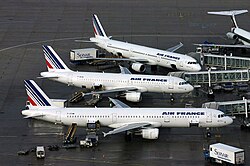
Owned by Groupe ADP and operated by Paris Aéroport, the facility is a critical piece of infrastructure located in Roissy-en-France. It serves as the primary hub for Air France and Air France Cargo, while also acting as a major base for FedEx Express, Air France Hop, and easyJet.
Key Facts
- IATA Code: CDG | ICAO Code: LFPG
- Annual Passengers (2025): 72,029,407
- Aircraft Movements (2025): 473,798
- Elevation: 119 meters (390 feet) above mean sea level (AMSL)
- Primary Hub: Air France and Air France Cargo
- Location: Roissy-en-France, serving the Paris metropolitan area
Airport Infrastructure and Runways
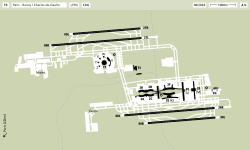
To handle its massive volume of traffic, CDG utilizes a sophisticated runway system. The airport features four main asphalt runways and a specialized turf area for specific operations.
| Direction | Length (m) | Length (ft) | Surface |
|---|---|---|---|
| 08L/26R | 4,142 | 13,589 | Asphalt |
| 08R/26L | 2,700 | 8,858 | Asphalt |
| 09L/27R | 2,700 | 8,858 | Asphalt |
| 09R/27L | 4,200 | 13,780 | Asphalt |
| FATO 08/26 | 440 | 1,444 | Turf |
Terminal Layout and History
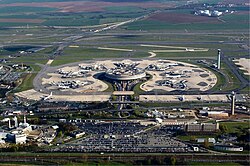
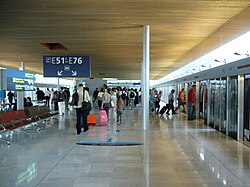
The airport is divided into several terminals, each catering to different airline alliances and flight types. Terminal 1 is one of the airport's original structures, while Terminal 2 is a sprawling complex divided into multiple halls (such as 2A, 2B, 2C, 2D, 2E, 2F, and 2G).
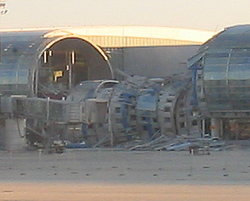
Terminal 2 has seen significant evolution and challenges over the decades. Notably, the airport experienced a structural failure with the collapse of Terminal 2E in June 2004. Despite this, the terminal has been refurbished and expanded, including the addition of Satellite 3 (Hall L) and Satellite 4 (Hall M) to increase capacity.
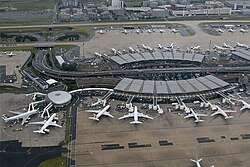
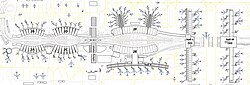
Terminal 3 serves as a secondary facility, often used for low-cost or charter flights. While there were previous plans for a Terminal 4, that project was ultimately cancelled.
Global Connectivity and Cargo
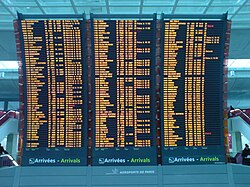
CDG connects Paris to hundreds of destinations worldwide. Major carriers including American Airlines, Emirates, Delta Air Lines, and Singapore Airlines operate here. The airport's reach extends across every continent, from North American hubs like New York-JFK to Asian centers like Tokyo-Haneda.
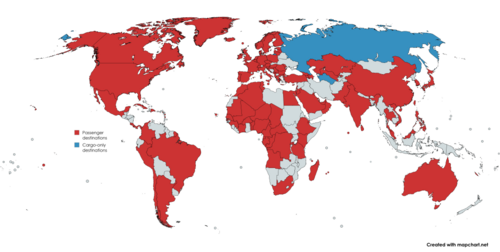
Beyond passenger travel, the airport is a powerhouse for logistics. Air France Cargo, FedEx Express, and UPS Airlines utilize the facility to move goods globally, with dedicated cargo flights serving cities from Leipzig to Hong Kong.
Ground Transportation and Access
Access to the airport is managed through a multi-modal transport network designed to move passengers efficiently between terminals and into the city center.
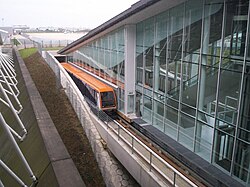
- CDGVAL: An automated shuttle connecting the terminals and parking lots.
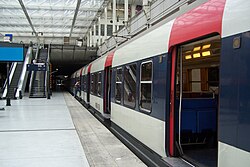
- RER (Réseau Express Régional): Regional trains providing direct links to Paris, with stations at CDG 1 and CDG 2 TGV.
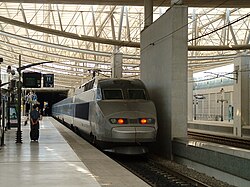
- TGV (Train à Grande Vitesse): High-speed rail services connecting the airport to other major French and European cities.
- Road Access: Extensive bus networks and car access via major highways.
Frequently Asked Questions
Who owns and operates Paris Charles de Gaulle Airport?
The airport is owned by Groupe ADP and is operated by Paris Aéroport.
Which airlines use CDG as a primary hub?
Air France and Air France Cargo use the airport as their primary hub, while FedEx Express also maintains a significant presence.
How can passengers travel between the airport and central Paris?
Passengers can use the RER (Réseau Express Régional) trains, which have stations at both CDG 1 and CDG 2 TGV, or utilize various bus and car options.
What is the CDGVAL?
The CDGVAL is an automated transit system that provides free shuttle service between the airport's terminals, parking areas, and the railway stations.
How many runways does the airport have?
The airport has four main asphalt runways and one turf FATO (Final Approach and Take-Off) area.