Parallels 51 to 55 North: Geography, Daylight, and Borders
Circles of latitude, or parallels, are imaginary lines that run east-west around the Earth, parallel to the equator. The region between the 51st and 55th parallels north encompasses a diverse array of landscapes, spanning Europe, Asia, North America, and the vast stretches of the Atlantic and Pacific Oceans. These lines are more than just coordinates; they define political borders, influence the amount of daylight available for agriculture and life, and have shaped historical territorial claims.
Key Facts
- Daylight Variance: As latitude increases from 51°N to 55°N, summer solstice daylight increases while winter solstice daylight decreases.
- Major Capitals: London and Astana are located between the 51st and 52nd parallels.
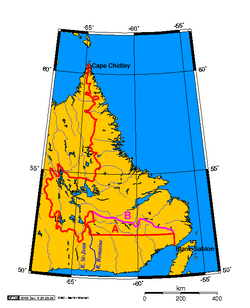
- Border Definitions: The 52nd parallel helps define the border between Quebec and Newfoundland and Labrador in Canada.
- Historical Conflict: The 51st and 54°40′ parallels were central to disputes over the southern boundaries of Russian America.
- Twilight Phenomena: The 55th parallel is roughly the minimum latitude where nautical twilight (the period when the sun is between 6 and 12 degrees below the horizon) can last all night near the summer solstice.
The 51st Parallel North
The 51st parallel north crosses several continents and oceans. It is a significant marker for urban centers, including London, England; Astana, Kazakhstan; Wrocław, Poland; and Calgary, Canada. In terms of solar cycles, residents at this latitude experience 16 hours and 33 minutes of sunlight during the summer solstice and 7 hours and 55 minutes during the winter solstice.
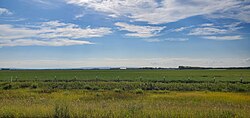
Russian America and the 51st Parallel
Historically, this parallel played a role in the expansion of the Russian Empire. In 1799, Tsar Paul I created the Russian-American Company (RAC), granting it monopoly control north of the 55th parallel. By 1821, a new ukase (imperial decree) claimed Russian sovereignty extended as far south as the 51st parallel, closing those waters to foreign shipping. This claim was strongly opposed by Great Britain and the United States, eventually leading to a permanent boundary established at 54°40′ north.
The 52nd Parallel North
Moving further north, the 52nd parallel crosses the same oceans and continents as the 51st. It is particularly notable in Canada, where it defines part of the legal border between Quebec and Newfoundland and Labrador, although Quebec maintains a dormant claim to some territory north of this line.
In the United Kingdom, the catchment area of London is broadly defined by the space between the 51st and 52nd parallels. Daylight at this latitude shifts slightly, with 16 hours and 44 minutes in the summer and 7 hours and 45 minutes in the winter.
The 53rd Parallel North
The 53rd parallel continues the trend of increasing seasonal daylight variance, offering 16 hours and 56 minutes of sun during the summer solstice and 7 hours and 34 minutes during the winter. Interestingly, at 53°47′ north or lower, it is possible to witness both astronomical dawn and dusk every day throughout August.
From a mathematical perspective, one degree of longitude along the 53rd parallel is approximately 36.252 nautical miles (67.14 km), while one minute of longitude is about 0.6042 nautical miles (1.119 km).
The 54th Parallel North
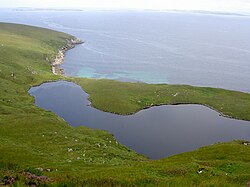
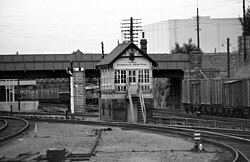
The 54th parallel north sees the summer solstice daylight extend to 17 hours and 9 minutes, while the winter solstice drops to 7 hours and 22 minutes. This line passes through various landmarks, including Lough Nakeeroge on Achill Island and follows closely along the R178 road near the Dundalk South signal cabin.
The 55th Parallel North
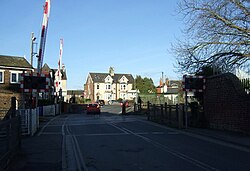
The 55th parallel north is a significant geographic marker, serving as the southern boundary of the Nunavik territory in Quebec. It passes through numerous major cities, including Moscow, Copenhagen, and Newcastle upon Tyne. In Newcastle, the parallel is a point of local pride, inspiring the name of a luxury apartment complex and a BBC police drama series.
At this latitude, the summer solstice provides 17 hours and 22 minutes of daylight, while the winter solstice provides 7 hours and 10 minutes.
Summary of Parallels 51°N to 55°N
| Parallel | Summer Solstice Daylight | Winter Solstice Daylight | Notable Cities/Regions |
|---|---|---|---|
| 51° N | 16h 33m | 7h 55m | London, Astana, Calgary |
| 52° N | 16h 44m | 7h 45m | Quebec/Newfoundland Border |
| 53° N | 16h 56m | 7h 34m | Lincolnshire (UK) |
| 54° N | 17h 09m | 7h 22m | Achill Island, Dundalk |
| 55° N | 17h 22m | 7h 10m | Moscow, Copenhagen, Newcastle |
Frequently Asked Questions
Which capital cities are located between the 51st and 52nd parallels?
The capital cities located between these two parallels are London and Astana.
How did the 51st parallel affect Russian America?
In 1821, a Russian ukase proclaimed that Russian sovereignty extended south to the 51st parallel and closed the waters north of that line to foreign shipping, a claim that was contested by the US and Great Britain.
What is the significance of the 55th parallel in Quebec?
The 55th parallel serves as the southern boundary of the Nunavik territory in Quebec.
How does daylight change between the 51st and 55th parallels?
As you move from 51°N to 55°N, the summer solstice daylight increases (from 16h 33m to 17h 22m) and the winter solstice daylight decreases (from 7h 55m to 7h 10m).
What is unique about the 55th parallel regarding twilight?
The 55th parallel roughly corresponds to the minimum latitude where nautical twilight can last throughout the entire night near the summer solstice.