Paper History and Manufacturing: From Ancient China to Modern Industry
Paper is a fundamental material that has shaped human civilization, serving as the primary medium for information storage, commerce, and daily utility for centuries. From the delicate sheets used for writing to the heavy cardstock used in packaging, the evolution of paper reflects significant advancements in chemistry, engineering, and global trade.
At its core, paper is composed of cellulose, a natural polymer often found in the form of lignocellulose. The ability to manipulate these microscopic fibers into durable sheets is the foundation of the entire paper industry.
Key Facts
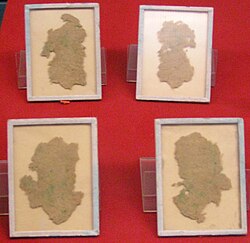
- Origin: The pulp papermaking process is credited to Cai Lun in China around 105 CE.
- Primary Material: Modern paper is predominantly made from wood pulp, a development from the 19th century.
- Chemical Pulping: The kraft process is the most common modern method, known for its efficiency and ability to recover chemical reagents.
- Mechanical Pulping: This method offers high yields but produces paper that yellows and becomes brittle due to remaining lignin.
- Global Production: Asia has recently surpassed North America as the leading continent for pulp and paper production.
The Evolution of Papermaking
While archaeological evidence suggests paper-like materials existed in China as early as the 2nd century BCE, the formal invention of the pulp process is attributed to the Han court eunuch Cai Lun in 105 CE. Before the industrial era, the most common form of paper was rag paper, created from discarded natural fiber textiles collected by ragpickers.
The spread of papermaking technology was a gradual global journey. Although popular history often links the spread of paper to the Battle of Talas in 751 CE, historical archives indicate that paper was already present in the Sogdian-speaking regions well before that conflict. By the late 8th century, paper production was established in Baghdad. From the Middle East, the technology moved into medieval Europe, where the first water-powered paper mills were constructed. Because of its introduction via Baghdad, early European paper was often referred to as bagdatikos.

The 19th century marked a turning point with the Second Industrial Revolution. In 1844, inventors Charles Fenerty and Friedrich Gottlob Keller independently developed processes for pulping wood fibers, making pulpwood paper the dominant variety used today.
Modern Manufacturing Processes
To transform raw wood into usable paper, the material must first be converted into pulp. This is achieved through two primary methods: chemical and mechanical pulping.
Chemical Pulping
Chemical pulping uses a cooking liquor to dissolve lignin—the substance that binds wood fibers together—separating it from the cellulose. This process preserves the length of the fibers, resulting in stronger paper. Paper produced this way is often called wood-free paper because the removal of lignin prevents the paper from deteriorating over time. Common methods include:
- Sulfite Process: A method dating back to the 1840s.
- Kraft Process: The most widely used strategy today; it is highly efficient and can even generate electricity through the heat produced during the chemical reaction.
- Soda Pulping: A specialty process used for hardwoods and materials like straw or bagasse.
Mechanical Pulping
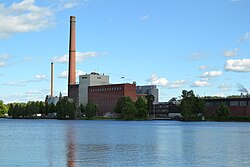
Mechanical pulping is a more cost-effective method but results in shorter fibers and weaker paper. Because it does not remove lignin, the resulting paper is prone to yellowing and brittleness. The two main types are:
- Thermomechanical Pulp (TMP): Wood chips are processed in steam-heated refiners between steel discs.
- Groundwood Pulp (GW): Debarked logs are fed into grinders against rotating stones.
Paper Specifications: Weight, Thickness, and Size
Paper is characterized by several technical metrics to ensure it meets the needs of specific applications, such as printing, packaging, or hygiene.
Thickness and Density
Thickness is measured using a caliper, expressed in micrometres (μm) or thousandths of an inch. Density varies significantly depending on the product, ranging from 250 kg/m³ for tissue paper to 1,500 kg/m³ for specialty stocks.
Weight Systems
Weight is measured differently depending on the region:
- United States: Weight refers to the weight of a ream (500 sheets) of a specific "basic size." For example, standard printing paper is often 20 lb or 24 lb.
- ISO 216 (Europe and elsewhere): Weight is expressed in grams per square metre (gsm). Printing paper typically ranges from 60 gsm to 120 gsm, while anything above 160 gsm is classified as card.
Standard Sizes
The ISO 216 system is based on surface area. The largest standard size is A0 (1 square metre). Each subsequent size is half the area of the previous one (A1 is half of A0, A2 is half of A1, etc.). Common office sizes include A4 and A3.
Environmental Considerations and Industry Trends
The paper industry faces significant environmental challenges. Global consumption has risen by 400% over the last 40 years, contributing to deforestation. While many companies plant trees to offset harvesting, the logging of old-growth forests remains a controversial issue. Additionally, the use of elemental chlorine in traditional bleaching can release dioxins, which are toxic, persistent organic pollutants.
However, the industry is evolving. The rise of e-commerce has caused a surge in cardboard and paperboard production, even as the demand for traditional graphic papers (like newsprint) has declined. Recycling also plays a vital role, with deinking processes allowing for the reuse of fibers, though recycled paper may not always match the strength or brightness of virgin pulp.
Summary of Paper Types and Processes
| Process/Type | Key Feature | Common Result |
|---|---|---|
| Chemical (Kraft) | Removes lignin | Strong, durable, "wood-free" paper |
| Mechanical | High yield, low cost | Weak, yellowing paper |
| Recycled | Uses de-inked pulp | Eco-friendly, variable strength |
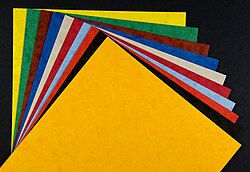
| Card/Cardstock | High weight (gsm) | Rigid, used for crafts and packaging |
Frequently Asked Questions
What is the difference between chemical and mechanical pulping?
Chemical pulping uses chemicals to dissolve lignin, resulting in stronger, more stable paper. Mechanical pulping uses physical force to grind wood, which is cheaper and has a higher yield but produces weaker paper that turns yellow over time.
Why does some paper turn yellow over time?
Yellowing is primarily caused by the presence of lignin. In mechanical pulping, lignin is not removed, and when exposed to light and air, it undergoes chemical changes that cause discoloration.
What does "gsm" stand for in paper weight?
GSM stands for grams per square metre. It is the standard unit of measurement for paper weight in the ISO 216 system used in most countries outside the United States.
Is recycled paper as good as new paper?
Recycled paper is highly sustainable, but it is generally not as strong or as bright as paper made from virgin pulp, as the fibers can degrade during the recycling process.
What is the purpose of the kraft process?
The kraft process is a chemical pulping method used to produce strong paper. It is highly efficient because it allows for the recovery and reuse of inorganic chemical reagents and can even generate electricity.