Pallbearers: Roles, Traditions, and Global Funeral Customs
In the solemn atmosphere of a funeral, pallbearers serve a vital role in honoring the deceased. While many view their task simply as the physical act of transporting a casket, the role is often steeped in cultural significance, social honor, and specific ritual requirements. From the ceremonial draping of the pall to the varied methods of carrying a coffin across different continents, the duties of a pallbearer reflect the diverse ways humanity handles grief and remembrance.
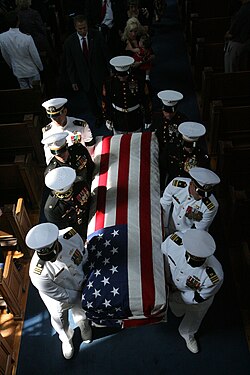
The term originates from the pall, a heavy cloth draped over a coffin. Historically, this traces back to the pallium, a cloak worn by soldiers in the Holy Roman Empire, which was later shortened to "pall" in medieval times. In Christian traditions, the pall symbolizes equality before God and the victory of Easter, regardless of the coffin's extravagance.
Key Facts
- Primary Role: Pallbearers assist in carrying the casket or an urn ark (a wooden box with glass and handles used for urns).
- Distinction: In some traditions, a "pallbearer" holds the ceremonial cloth (pall), while a "casket bearer" performs the heavy lifting.
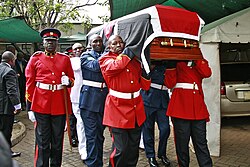
- Composition: Usually male family members, friends, or colleagues in Western cultures, though professional agencies are common in some African cultures.
- Honorary Roles: Honorary pallbearers walk in front of or behind the casket as a mark of distinction, often being high-achieving professionals from the deceased's field.
- Attire: White gloves are often worn to prevent damage to the casket and as a sign of respect.
Global Traditions and Cultural Variations
Buddhist Customs
In ancient Indian Buddhist traditions, pallbearers may adhere to strict dietary restrictions to produce merit for the deceased. This often includes a vegetarian diet excluding garlic, onions, leeks, and chives, as well as abstaining from alcohol for at least 49 days following the death. This period is believed to be the maximum duration between death and rebirth. Additionally, spiritualists may be consulted to ensure the family has produced enough merit to prevent an unwanted rebirth.
British and European History
Historically, the role of pallbearer in Britain was a significant honor, granting individuals rare proximity to royalty. While traditionally a male role, the funeral of Princess Louisa in 1768 marked one of the first recorded instances of women contributing to the pall. In the 19th-century British countryside, pallbearers sometimes wore specific white mourning gowns provided by the church, swapping their work clothes for these garments before the service.
European Renaissance traditions also influenced burial practices through the use of golden palls, royal horses, and expensive wax tapers. In some instances, specialized carriages were used to transport pallbearers—one for the funeral director, clergyman, and two leading pallbearers, and a second for the remaining bearers.
Societal and Fraternity Roles
When the deceased belonged to a fraternity or society, such as the Freemasons, pallbearers are typically selected from that organization. If multiple societies are involved, representatives from each may be chosen. In some modern settings, funeral directors provide trained professional pallbearers who perform their duties discreetly without requiring detailed discussion of their role.
Methods of Carrying the Casket
The physical act of transporting the coffin varies significantly by region, typically requiring 6 to 8 people depending on the weight of the casket.
| Region | Primary Method | Positioning |
|---|---|---|
| US, Canada, Australia | Handle-based carry | Waist height |
| UK, Ireland, Asia | Shoulder-based carry | On the shoulders |
| Scandinavia | Three-strap system | Suspended at knee height |
The Scandinavian method is particularly efficient; the straps distribute weight across the shoulders and allow the casket to be lowered directly into the grave as the bearers walk lengthwise. Once lowered, the bearers on the right side (the side of the deceased's heart) remove the straps.
Frequently Asked Questions
What is the difference between a pallbearer and a casket bearer?
In certain traditions, a pallbearer holds a ceremonial cord or the tip of the pall (the cloth covering the coffin), while the casket bearer is responsible for the actual physical lifting and carrying of the casket.
Who is typically chosen to be a pallbearer?
In Western cultures, they are usually male family members, close friends, or colleagues. However, professional pallbearers are common in some African cultures, and members of fraternal organizations (like the Masons) are often chosen for members of those societies.
What is an honorary pallbearer?
An honorary pallbearer is a person who walks in front of or behind the casket rather than carrying it. This role is a mark of supplemental distinction, often given to a respected professional peer of the deceased.
Why do some pallbearers wear white gloves?
White gloves are worn both as a gesture of respect for the deceased and as a practical measure to prevent fingerprints or damage to the finish of the casket.
What is an urn ark?
An urn ark is a wooden box with glass panels and four handles designed to carry a cremation urn during a memorial service or celebration of life.