Oxyrhynchus Papyri: The Controversy of Stolen Ancient Texts
The world of biblical archaeology was shaken by a series of revelations involving the Oxyrhynchus Papyri, a vast collection of ancient texts discovered in Egypt. What began as the excitement over a potentially record-breaking discovery—the earliest surviving fragment of the Gospel of Mark—evolved into a complex legal battle involving allegations of theft, fraudulent sales, and institutional betrayal.
At the center of this storm was Professor Obbink, a scholar who served as the general editor of the Oxyrhynchus Papyri series for the Egypt Exploration Society (EES). The controversy highlights the fragile intersection of academic research and the private antiquities market.
Key Facts
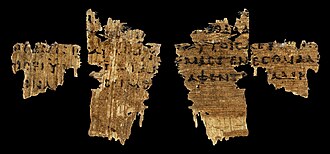
- P.Oxy. 5345: A fragment of the Gospel of Mark, originally rumored to be from the first century but dated to the late second or early third century.
- The EES: The rightful owner of the papyri, which reported 120 missing pieces from its collection.
- Museum of the Bible: The institution that acquired several stolen fragments via Hobby Lobby before returning them to the EES.
- Legal Outcome: A default judgment was issued against Obbink, awarding Hobby Lobby approximately $7 million plus interest.
- Criminal Investigation: The Thames Valley Police were involved following reports of theft in November 2019.
The Mystery of the "First Century Mark"
In 2012, the academic community was buzzed by claims from Daniel B. Wallace that a fragment of the Gospel of Mark had been dated to the late first century, potentially making it the oldest Christian text in existence. This fragment, later identified as P.Oxy. 5345, contained portions of six verses from Mark chapter one.
However, the provenance—the chronology of ownership—of the piece was murky. While Obbink and Daniela Colomo eventually published the fragment in 2018, dating it to the later second or earlier third century, the EES clarified that the "first century" rumor stemmed from a 1980s cataloging error by Revel Coles, who had labeled the fragment as 'I/II'.
Allegations of Secret Sales
The situation shifted from a dating dispute to a legal crisis in June 2019. Michael Holmes of the Museum of the Bible revealed a contract dated January 17, 2013, showing that Obbink had agreed to sell several fragmentary texts to Hobby Lobby, including P.Oxy. 5345.
Jerry Pattengale, representing the Museum of the Bible at the time, later recounted that Obbink had presented the Mark fragment as likely first-century and other fragments of Matthew, Luke, and John as second-century. To view these items, scholars were required to sign non-disclosure agreements (NDAs). Obbink claimed he was selling the items on behalf of a wealthy family, though the EES maintained the fragments were their property and had never been offered for sale.
Recovery of Stolen Artifacts
In October 2019, the Museum of the Bible returned thirteen fragments to the EES. The museum acknowledged that eleven of these had been purchased from Obbink in 2010, while two others came from an Israeli dealer. The EES was only able to identify these items using backup copies of catalogue cards and photographs, as the original records had vanished.
| Inventory Number | Biblical Text/Content |
|---|---|
| P.Oxy. inv. 39 5B.119/C(4–7)b | Genesis 5 |
| P.Oxy. inv. 20 3B.30/F(5–7)b | Genesis 17 |
| P.Oxy. inv. 102/171(e) | Exodus 20–21 |
| P.Oxy. inv. 105/149(a) | Exodus 30.18–19 |
| P.Oxy. inv. 93/Dec. 23/M.1 | Deuteronomy |
| P.Oxy. inv. 8 1B.188/D(1–3)a | Psalms 9.23–26 |
| P.Oxy. inv. 16 2B.48/C(a) | Sayings of Jesus |
| Related to P.Oxy. inv. 101/72(a) | Romans 3 |
| P.Oxy. inv. 29 4B.46/G(4–6)a | Romans 9–10 |
| P.Oxy. inv. 106/116(d) + (c) | 1 Corinthians 7–10 |
| P.Oxy. inv. 105/188(c) | Quotation of Hebrews |
| P.Oxy. inv. 3 1B.78/B(1–3)a | Scriptural homily |
| P.Oxy. inv. 8 1B.192/G(2)b | Acts of Paul (parchment) |
Legal Consequences and Aftermath
The fallout for Professor Obbink was severe. In August 2016, the EES declined to reappoint him as general editor. By October 2019, he was suspended from his role at Christ Church, Oxford, and placed under investigation by the university for removing texts from its premises. In November 2019, the EES reported that a total of 120 pieces were missing, including those recovered from the Museum of the Bible and six items from Andrew Stimer in California.
Obbink denied all wrongdoing, claiming the documents linking him to the sales were forgeries. However, the legal tide turned in the United States. Hobby Lobby sued Obbink for £5 million, alleging he sold stolen objects in seven private sales totaling $7,095,100. In March 2024, a default judgment was issued in the Western District of Oklahoma, awarding Hobby Lobby its $7 million investment plus interest and fees. Records indicate that Obbink has refunded only $10,000 of that amount.
Frequently Asked Questions
What is P.Oxy. 5345?
P.Oxy. 5345 is a papyrus fragment containing portions of six verses from the first chapter of the Gospel of Mark. While once rumored to be from the first century, it is officially dated to the late second or early third century.
How many items were missing from the EES collection?
The chairman of the Egypt Exploration Society stated in November 2019 that 120 pieces had been discovered missing from the Oxyrhynchus papyri collection.
Why did the Museum of the Bible return the fragments?
The Museum of the Bible acknowledged that the fragments belonged to the Egypt Exploration Society after it was revealed they had been sold to Hobby Lobby by Professor Obbink, who did not have the authority to sell them.
What was the legal outcome of the Hobby Lobby lawsuit?
A default judgment was issued against Professor Obbink in March 2024, ordering him to pay Hobby Lobby $7 million plus interest and fees, as he failed to appear in court or appoint an attorney.
Was Professor Obbink arrested?
Yes, his arrest by officers from the Thames Valley Police was reported in April 2020 following the EES reporting the alleged thefts to the police in November 2019.