Oman: A Journey Through the Sultanate's History, Culture, and Economy
The Sultanate of Oman is a land of striking contrasts, where ancient maritime traditions meet modern urban development. Located on the southeastern coast of the Arabian Peninsula, Oman is defined by its diverse landscapes—from the rugged mountains of the interior to the turquoise waters of the coast. Governed as a unitary Islamic absolute monarchy, the nation is currently led by Sultan Haitham bin Tariq.
Key Facts
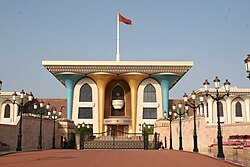
- Capital: Muscat, the largest city and political hub.
- Official Language: Arabic.
- Religion: Predominantly Islam (95%), with significant Sunni, Ibadhi, and Shia communities.
- Currency: Omani rial (OMR).
- Government: Absolute monarchy led by the Sultan.
- Economy: Driven by oil, gas, and a growing tourism sector.
A Legacy of Civilizations: Omani History
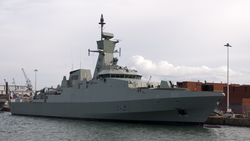
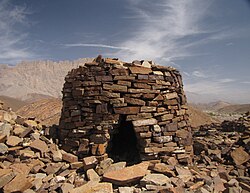
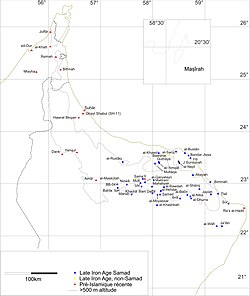
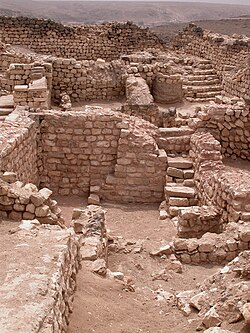
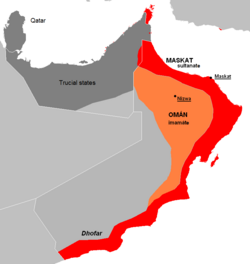
Oman's history is as deep as its wadis. The region's story begins with the Magan civilization around 3000 BCE, known for its copper production and trade. Over the millennia, the land saw the migration of the Azd tribe in 130 CE and the establishment of the Imamate in 751 CE.
The medieval period was marked by the Nabhani dynasty, followed by a period of European influence. The Portuguese Empire ruled Oman for 143 years, from 1507 to 1650, leaving a lasting architectural mark on coastal forts.
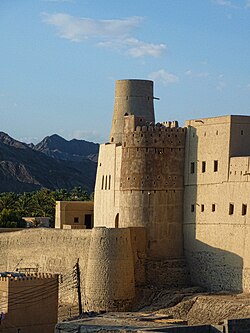
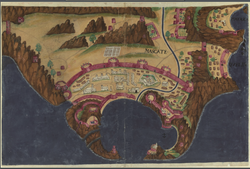
![Following the expulsion of the Portuguese Empire, Oman became one of the powers in the western Indian Ocean from 1698 onwards.[71]](/images/ac/bf/acbf991826c69716cbe7806ab482eafdde05670aec0a4c2674372ba226146b20.webp)
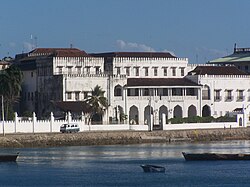
Following the expulsion of the Portuguese, Oman emerged as a dominant power in the western Indian Ocean from 1698 onwards. This era of expansion saw the Omani Empire extend its reach as far as Zanzibar, which served as the residence for Omani sultans.
The Modern Era and the Omani Renaissance
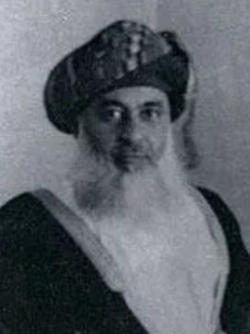
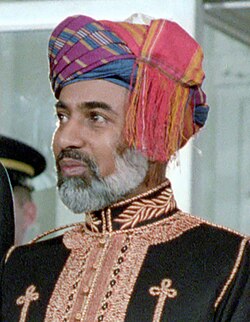
The 20th century brought significant political shifts. Sultan Said bin Taimur ruled from 1932 to 1970, but it was his son, Sultan Qaboos bin Said, who ushered in the "Omani Renaissance." His reign was characterized by the abolition of slavery, the end of the Dhofar Rebellion, the promulgation of a national constitution, and a dramatic rise in living standards.
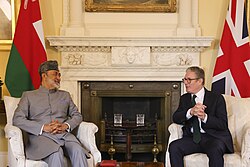
In January 2020, Sultan Haitham bin Tariq ascended to the throne, continuing the nation's path toward modernization and stability.
Geography and Natural Environment
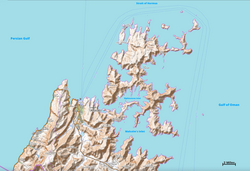
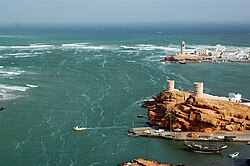
Oman's geography is varied, featuring the Musandam Peninsula near the Strait of Hormuz, the fertile Al Batinah region, and the southern Dhofar governorate. The landscape is dotted with wadis (seasonal riverbeds) and oases that have sustained life for centuries.
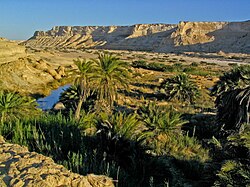
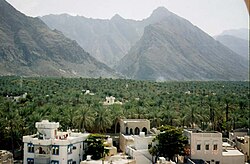
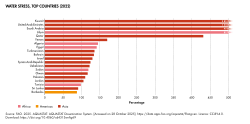
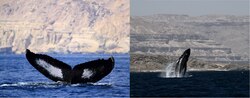
Despite its beauty, the nation faces environmental challenges. In 2022, Oman was ranked as the fifteenth most water-stressed country globally. However, the region remains a biodiversity hotspot, home to non-migratory Arabian Sea humpback whales off the coast of Dhofar.
Governance and Economy
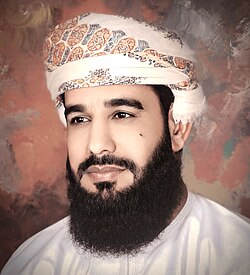
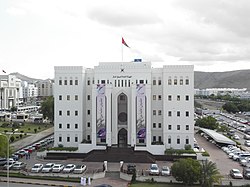
Oman is organized into several governorates, including Muscat, Dhofar, and Al Dakhiliyah. The legislative branch, the Council of Oman, consists of the Council of State (upper house) and the Consultative Assembly (lower house).
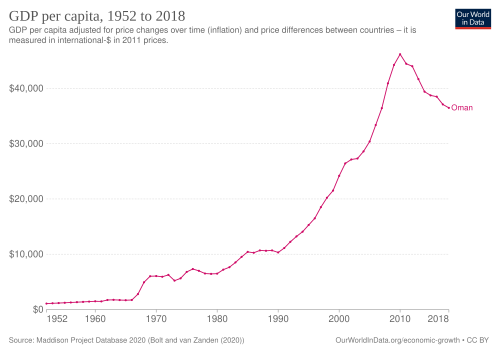
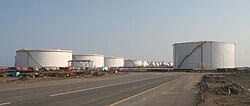
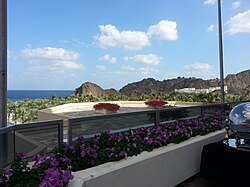
The economy is heavily influenced by the hydrocarbon sector, with petrochemical tanks in Sohar representing a key industrial pillar. To diversify, Oman has invested in tourism and infrastructure, as seen in the luxury Al-Bustan Palace Hotel.
Economic Indicators and Spending
| Metric | Value |
|---|---|
| GDP (PPP, 2025 Est.) | $231.16 billion |
| GDP Per Capita (PPP, 2025 Est.) | $42,010 |
| HDI (2023) | 0.858 (Very High) |
| Military Spending (% of GDP) | 13.73% |
| Education Spending (% of GDP) | 6.11% |
Culture and Society
![Mohammed Al-Fazari, an exiled Omani writer and journalist now living in the UK, is an author whose books are banned in Oman. He is also the founder and EIC of Muwatin.[182]](/images/eb/d0/ebd0d524807e79ec77e966b9db4bc73915668ab3aa0bf1c5d6dd55d2fe3d9658.jpg)
Omani culture is a blend of tradition and hospitality. The Khanjar, a traditional curved dagger, remains a potent symbol of national identity and is often worn by men alongside the dishdasha (a long robe) and musar (turban).
![The traditional dhow, an enduring symbol of Oman[273]](/images/1d/89/1d890ca9ad37a4017228d2f82defb5cf8fea0aef9adc8e80f89f93df8431b527.jpg)
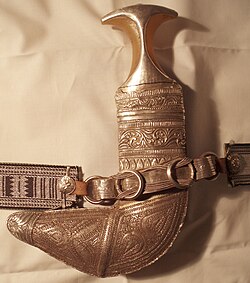
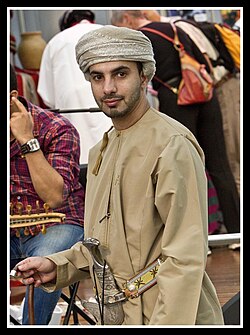
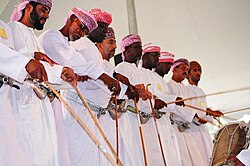
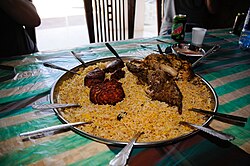
The nation's heritage is also preserved through its ancient aflaj—an intricate system of irrigation channels used to water palm farms and crops. Artistically, the Razfa dance and traditional Omani cuisine reflect the country's rich social fabric.
![Ancient irrigation system and water channels.[282] Aflaj Gallery, The National Museum of Oman.](/images/3b/72/3b72631d38579250507a233b7da442f9f5b46af54aed33fddbc83467503636fe.jpg)
Modern Life and Recreation
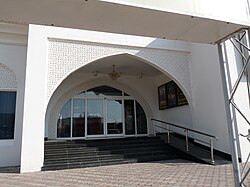
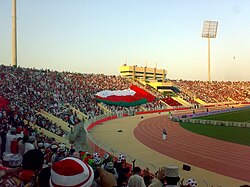
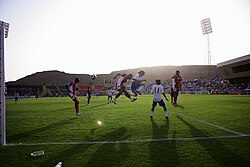
From the cinemas of Sur to the Royal Oman Police Stadium in Muscat, modern entertainment is integrated into daily life. Oman is also an active participant in regional sports, having hosted and won the 19th Arabian Gulf Cup.
Frequently Asked Questions
![Dhofar University [ar] in Salalah](/images/2a/10/2a1099ea3de993aed54dd8ba6ae9e64b1e065120a9377e50690244d2e23b31be.jpg)
What is the official religion of Oman?
Islam is the official religion, practiced by approximately 95% of the population, with the community divided among Ibadhi, Sunni, and Shia denominations.
Who is the current leader of Oman?
The current leader is Sultan Haitham bin Tariq, who became the Sultan in January 2020.
What are the main economic drivers of the country?
While oil and gas remain central to the economy, Oman is actively diversifying through petrochemicals, tourism, and infrastructure development.
What is the significance of the Khanjar?
The Khanjar is a traditional Omani dagger that serves as a symbol of heritage, masculinity, and national pride.
How does Oman manage its water scarcity?
Oman utilizes traditional irrigation systems known as aflaj, though it remains one of the more water-stressed countries in the world.