The Power and Precision of Olympic Weightlifting
Olympic weightlifting, often referred to as Olympic-style weightlifting, is a high-intensity power sport that demands a unique blend of explosive strength, mobility, and technical precision. Unlike other strength disciplines such as powerlifting or strongman, weightlifting focuses on moving a loaded barbell from the ground to an overhead position with maximum speed and control. This distinction makes it a true test of human power—the ability to exert force rapidly.

Understanding the Two Olympic Lifts
In modern competition, athletes perform two specific movements, known as the "Olympic lifts." Each athlete is granted three attempts for each lift, and their final score is determined by the combined total of their best successful snatch and their best successful clean and jerk.
The Snatch
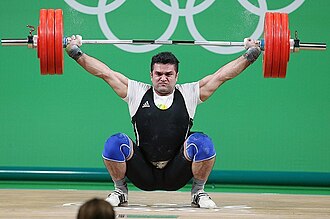
The snatch is a highly technical, wide-grip lift. The athlete must sweep the barbell from the floor to an overhead position in one single, fluid motion. This requires the lifter to pull the bar upward and then rapidly drop into a deep overhead squat to catch the weight with arms fully outstretched. Because the bar travels such a long distance in a split second, the snatch demands exceptional balance and coordination.
The Clean and Jerk
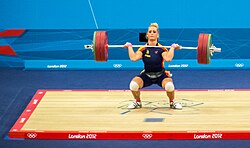
The clean and jerk is a two-stage combination lift. First, the athlete performs the clean, pulling the barbell from the ground to the front of the shoulders. Once stabilized, the athlete executes the jerk, driving the weight from the shoulders to an overhead position. This lift typically allows for heavier weights to be moved compared to the snatch.
The Evolution of the Sport
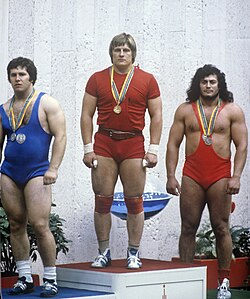
Weightlifting has deep roots, with origins tracing back to Ancient Greece. The sport has undergone significant changes since its inclusion in the inaugural 1896 Olympic Games. In the early years, competitions included "one-hand" lifts and lacked the standardized weight classes we see today.
A major historical shift occurred in 1972 when the clean and press was removed from Olympic competition. This third lift required athletes to press the bar overhead using only their upper body. However, it became increasingly difficult for judges to distinguish between a strict press and a lift aided by a "hip thrust" or excessive leaning (layback), leading to its discontinuation.
Women's weightlifting is a more recent addition to the Olympic program, making its debut at the 2000 Sydney Games. Since then, the sport has continued to evolve, including rule changes in 2011 that allowed women to wear full-body unitards, provided officials could still clearly see the joints to judge technical execution.
Essential Equipment and Gear
To perform these explosive movements safely and effectively, athletes use specialized equipment designed to handle extreme loads and rotational forces.
The Barbell and Plates
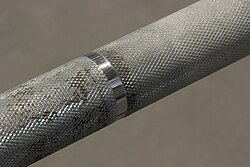
An Olympic barbell features rotating sleeves at each end. This rotation is critical; it reduces rotational inertia, allowing the plates to spin freely so the lifter does not have to fight the momentum of the spinning weights, which significantly reduces the risk of injury. The grip texture on the bar is known as knurling.
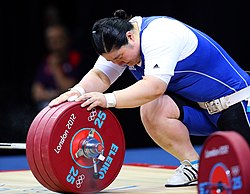
Weights are provided via bumper plates—rubber-coated plates designed to be dropped safely from overhead. These plates follow a standardized color code: 25 kg is red, 20 kg is blue, 15 kg is yellow, and 10 kg is green. For smaller weight increments, athletes use iron plates.
Personal Gear
Lifters use several items to enhance stability and protection:
- Weightlifting Shoes: These feature a raised, rigid heel (often made of TPU plastic or wood) to help maintain an upright torso and allow for deeper squats.
- Chalk: Used to keep hands dry and improve grip.
- Tape: Often applied to the thumbs to protect against friction during the "hook grip."
- Belts and Wraps: Belts increase intra-abdominal pressure for stability, while wrist wraps and knee sleeves provide joint support.
Weight Class Overview
Athletes compete in divisions based on their body mass. These classes are periodically updated by the International Weightlifting Federation (IWF). Below is a summary of the upcoming transitions.
| Period | Men's Categories (Examples) | Women's Categories (Examples) |
|---|---|---|
| Current (2025–2026) | 60kg, 71kg, 88kg, 110kg, +110kg | 48kg, 58kg, 69kg, 86kg, +86kg |
| Upcoming (From Aug 2026) | 60kg, 65kg, 70kg, 75kg, 85kg, 95kg, 110kg, +110kg | 49kg, 53kg, 57kg, 61kg, 69kg, 77kg, 86kg, +86kg |
Key Facts
- Governing Body: International Weightlifting Federation (IWF).
- Core Lifts: The Snatch and the Clean and Jerk.
- Olympic History: Men have competed since 1896; Women since 2000.
- Scoring: The total is the sum of the best successful snatch and clean and jerk.
- Equipment Standard: Men's bars weigh 20 kg; Women's bars weigh 15 kg.
Frequently Asked Questions
What is the difference between weightlifting and powerlifting?
Olympic weightlifting focuses on explosive power and speed through the snatch and clean and jerk. Powerlifting typically focuses on absolute strength through different movements like the squat, bench press, and deadlift.
Why do weightlifters wear shoes with raised heels?
The raised heel helps the athlete maintain a more upright torso and allows them to achieve a deeper, more stable squat position when catching the barbell overhead.
What happens if a lifter fails one of the lifts?
If an athlete fails to successfully complete at least one snatch and at least one clean and jerk, they receive an "incomplete" entry and fail to record a total score for the competition.
How are winners determined if two athletes lift the same weight?
If two athletes achieve the same total weight, the athlete who successfully lifted that weight first is awarded the higher placement.
Why was the "clean and press" removed from the Olympics?
It was discontinued after 1972 because it became too difficult for judges to determine if athletes were using a strict press or using their hips and legs to assist the movement.