Olivier Messiaen: The Visionary Composer of Color and Birdsong
Olivier Messiaen (1908–1992) stands as one of the most influential figures in 20th-century classical music. A French composer, virtuoso organist, and dedicated ornithologist, Messiaen bridged the gap between rigorous musical analysis and a profound, spiritual connection to nature. His work is celebrated for its unique harmonic language, its innovative approach to rhythm, and its meticulous transcription of birdsong.
Beyond his compositions, Messiaen was a revered teacher of musical analysis and composition, leaving an indelible mark on generations of musicians through his theoretical writings and his tenure at the Paris Conservatoire.
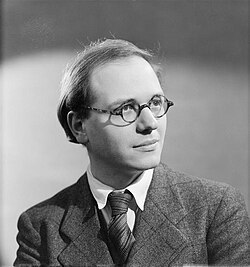
Key Facts
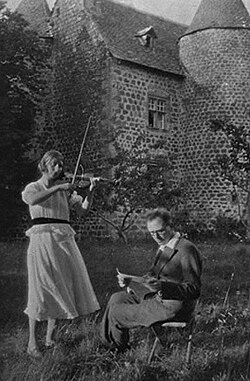
- Lifespan: December 10, 1908 – April 27, 1992.
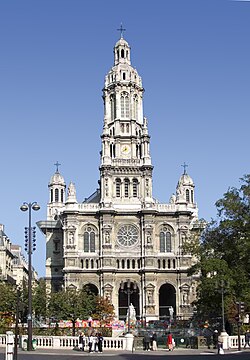
- Primary Role: Titular organist at the Église de la Sainte-Trinité for 61 years.
- Musical Innovation: Developed "non-retrogradable rhythms" (palindromic rhythms) and additive rhythms.
- Nature Influence: Integrated precise transcriptions of birdsong into major works like Catalogue d'oiseaux.
- Major Work: Composed the massive "spectacle" Saint François d'Assise.
- Honors: Awarded the Grand-Croix, the highest rank of the Légion d'honneur.
Early Life and Academic Excellence
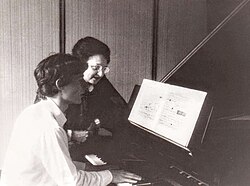
Born in Avignon, France, Messiaen's musical journey was accelerated by an early exposure to the works of Claude Debussy. He described the score of Pelléas et Mélisande as a "thunderbolt" that became a decisive influence on his artistic direction.
At the age of 11, Messiaen entered the Paris Conservatoire, where he displayed extraordinary versatility. He secured first prizes in piano accompaniment (1925), fugue (1926), and organ playing and improvisation (1929). His studies with Maurice Emmanuel sparked a lifelong fascination with exotic modes and ancient Greek rhythms, while his composition studies under Paul Dukas culminated in a first prize in 1930.
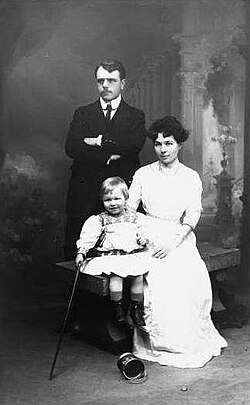
The Organist of La Trinité
Messiaen's relationship with the organ was both professional and spiritual. After studying under Marcel Dupré, he began deputizing at the Église de la Sainte-Trinité. In 1931, he was formally appointed as the titular organist, a position he held for over six decades. This environment provided the foundation for many of his sacred works, including the 1932 composition Apparition de l'église éternelle.
Musical Innovations and Theory
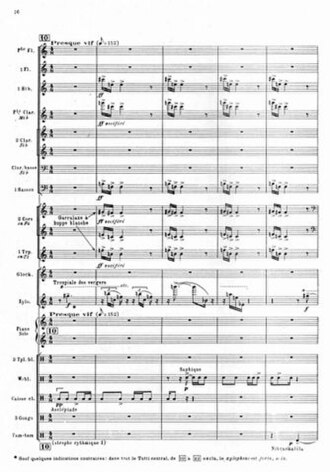
Messiaen's music is characterized by a departure from traditional Western concepts of time and harmony. He utilized non-retrogradable rhythms—rhythms that read the same forward and backward, similar to a palindrome—to create a sense of timelessness.
He also employed additive rhythms, where small units of time (such as sixteenth notes) are added to a basic pulse to shift the rhythmic feel. His interest in the intersection of sound and color led him to develop a complex harmonic language that he detailed in his theoretical writings, such as Technique de mon langage musical.


The Ornithologist Composer
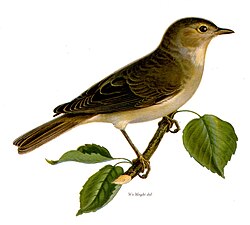
Messiaen's passion for birds was not merely a hobby but a core component of his musical identity. He viewed birds as the "greatest musicians" and spent years transcribing their songs with scientific precision. This culminated in works like Réveil des oiseaux (1953), which captures the dawn chorus of the Jura mountains, and the 13 piano pieces of Catalogue d'oiseaux (1958).
His approach was unique: he acted as both a conscientious ornithologist and a musical observer, ensuring that the timbre and rhythm of the birds were accurately represented in the score.

Later Works and the "Spectacle" of St. Francis
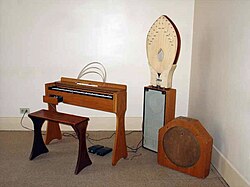
In his later years, Messiaen took on his most ambitious project: Saint François d'Assise. Commissioned for the Paris Opéra and encouraged by President Georges Pompidou, Messiaen spent years writing the libretto and orchestrating the piece. He preferred to call the work a "spectacle" rather than an opera. The production is notable for its use of the ondes Martenot, an early electronic instrument that adds a distinct, ethereal quality to the orchestration.
Messiaen continued to compose and publish until his final years, including the major organ collection Livre du Saint Sacrement (1984), before passing away in Clichy in 1992.
Summary of Messiaen's Profile
| Category | Details |
|---|---|
| Born/Died | 1908 (Avignon) – 1992 (Clichy) |
| Key Instruments | Organ, Piano, Ondes Martenot |
| Major Influence | Claude Debussy, Ancient Greek Rhythms, Birdsong |
| Notable Works | Saint François d'Assise, Catalogue d'oiseaux, Quatuor pour la fin du temps |
| Academic Legacy | Professor at Paris Conservatoire; Author of Traité de rythme, de couleur, et d'ornithologie |
Frequently Asked Questions
What are non-retrogradable rhythms?
Non-retrogradable rhythms are palindromic rhythmic patterns that remain identical whether they are played forward or backward. Messiaen used these to evoke a sense of eternity or the "beyond," as they exist outside the traditional linear progression of time.
How did birdsong influence Messiaen's music?
Messiaen meticulously transcribed the songs of various bird species, using them as melodic and rhythmic cells in his compositions. He treated birdsong as a divine musical language, integrating it into both solo piano works and large orchestral pieces.
What is an ondes Martenot?
The ondes Martenot is an early electronic instrument capable of producing gliding pitches and ethereal tones. Messiaen frequently included it in his orchestrations, most notably using three of them in his opera Saint François d'Assise.
What was Messiaen's role at the Église de la Sainte-Trinité?
Messiaen served as the titular organist at the church for 61 years, starting in 1931. This position allowed him to blend his deep religious faith with his musical explorations, making the church a central hub for his organ compositions.
Who were the most significant influences on his early style?
Claude Debussy's Pelléas et Mélisande was a primary influence, which Messiaen described as a "thunderbolt." Additionally, his studies with Maurice Emmanuel introduced him to exotic modes and ancient Greek rhythms.