Olimpia Award: Argentina's Most Prestigious Sporting Honor
In the heart of Buenos Aires every December, the sporting world gathers to celebrate excellence. The Olimpia Award stands as the highest recognition for athletes in Argentina, honoring those who have reached the pinnacle of their respective disciplines through skill, dedication, and triumph.
Presented by the Association of Sports Journalists of Argentina, these awards serve as a historical record of the nation's athletic prowess. From the roar of Formula One engines to the precision of tennis courts, the Olimpia celebrates the diverse spirit of Argentine sport.
Key Facts
- Established: 1954 (72 years ago).
- Governing Body: Association of Sports Journalists of Argentina.
- Top Honor: The Olimpia de Oro (Golden Olimpia).
- Location: Awarded annually in Buenos Aires, Argentina.
- Most Decorated: Lionel Messi holds the record with 4 wins.
- Unique Honor: Diego Maradona is the sole recipient of the Olimpia de Platino.
The Hierarchy of Awards
Olimpia de Oro
The Olimpia de Oro is the most coveted trophy, designed by Mario Chiérico. It is awarded to the single most outstanding sportsperson of the year across all disciplines. While typically an individual honor, it has been shared twice: in 2004 by Manu Ginóbili and Carlos Tevez, and in 2008 by cyclists Juan Curuchet and Walter Pérez.
Notably, the women's national field hockey team, Las Leonas, became the only collective team to win the gold award in 2000.
Olimpia de Plata
The Olimpia de Plata (Silver Olimpia) recognizes the top performer within specific sports. This category covers a vast array of disciplines, ensuring that excellence is recognized regardless of the sport's popularity. Categories include association football, athletics, boxing, tennis, rugby union, and many others, ranging from traditional sports like polo to specialized disciplines like Basque pelota and Pato.
Olimpia de Platino
The Olimpia de Platino (Platinum Olimpia) is a rare distinction. It was awarded only once, at the close of the 20th century, to Diego Maradona, designating him as the best sportsperson of the century.
A Legacy of Champions
The history of the Olimpia de Oro mirrors the history of Argentine sporting success. The very first award was presented on December 3, 1954, at the Luna Park stadium to legendary racing driver Juan Manuel Fangio.
Women first broke into the gold circle in 1962 with tennis player Norma Baylon. Since then, trailblazers such as Gabriela Sabatini, Luciana Aymar, and Paula Pareto have etched their names into the record books.
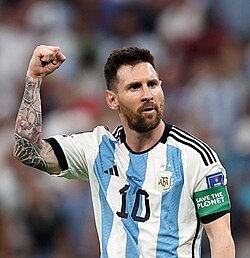
In recent years, the award has frequently recognized the global dominance of Lionel Messi, who has won a record four times, including a landmark 2022 victory following Argentina's FIFA World Cup triumph.
Summary of Award Details
| Award Level | Significance | Frequency | Notable Recipient |
|---|---|---|---|
| Olimpia de Oro | Best overall athlete of the year | Annual | Lionel Messi |
| Olimpia de Plata | Best in a specific sport | Annual (Multiple) | Various |
| Olimpia de Platino | Best of the century | Once (1999) | Diego Maradona |
Frequently Asked Questions
Who is the most successful winner of the Olimpia de Oro?
Lionel Messi holds the record for the most Olimpia de Oro awards, having won the honor 4 times.
Can a team win the Olimpia de Oro?
Yes, although it is rare. The women's national field hockey team, Las Leonas, is the only team to have won the award collectively, achieving this in 2000.
What is the difference between the Gold and Silver Olimpia?
The Olimpia de Plata is awarded to the best performer in each individual sport category, while the Olimpia de Oro is the ultimate prize given to the single most outstanding athlete of the entire year across all sports.
Who was the first person to receive the Olimpia de Oro?
The first recipient was the legendary Formula One racing driver Juan Manuel Fangio, who received the award on December 3, 1954.
Who presents the Olimpia Awards?
The awards are presented by the Association of Sports Journalists of Argentina (Círculo de Periodistas Deportivos).