Odesa Oblast: Ukraine's Premier Maritime and Agricultural Hub
Located along the northern coast of the Black Sea in southwestern Ukraine, Odesa Oblast (also known as Odeshchyna) serves as a vital gateway between Europe and the global maritime trade routes. With its administrative center in the vibrant city of Odesa, the region is defined by its strategic coastline, fertile plains, and a rich, multicultural history.
The oblast is characterized by a diverse landscape, featuring a 300 km coastline of sandy beaches, estuaries, and lagoons. It is the largest province in Ukraine by area, blending industrial port cities with vast agricultural heartlands.
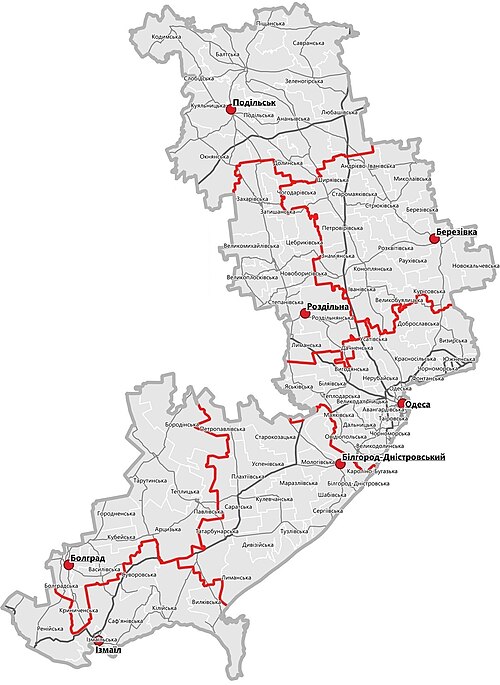
Key Facts
- Largest Area: Ranked 1st among all Ukrainian oblasts at 33,313.69 km².
- Maritime Power: Home to eight seaports and a 300 km coastline.
- Wine Capital: The largest wine-growing region in Ukraine, with over 80,000 hectares of vineyards.
- Strategic Location: Borders the Black Sea to the south and the Danube river.
- High HDI: Recorded a Human Development Index (HDI) of 0.740 (high) in 2022.
Geography and Natural Landscape
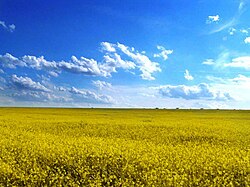
Odesa Oblast is situated within the Black Sea Lowland, a region dominated by flat steppes. The territory is naturally divided by the estuary of the Dniester river and is bordered to the south by the Danube. The region is world-renowned for its chernozems (rich, black soils), which provide exceptional fertility for intensive agriculture.
While arable crops are grown throughout the province, the southwestern areas are particularly noted for their orchards and vineyards. The region also hosts five of Ukraine's largest lakes, including Yalpuh Lake.
Historical Evolution
The history of Odesa Oblast is a tapestry of shifting empires. In 1593, the Ottoman Empire established the Dnieper Province (Özü Eyalet) in the area. By the late 18th century, the bulk of the territory passed to Russian control during the southern expansion toward the Black Sea, with the northern outskirts annexed during the Second Partition of Poland in 1793.
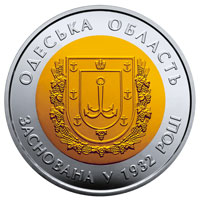
Following the 1917 February Revolution, the region was briefly part of the Ukrainian People's Republic before falling under Soviet control. The oblast was officially established on February 27, 1932. During the Soviet era, the region suffered through the Holodomor (1932–1933) and the NKVD's Polish Operation in 1937.
During World War II, the area was occupied by Axis forces and administered by Romania as part of the Transnistria Governorate from 1941 to 1944. In 1954, the oblast expanded significantly by absorbing the Izmail Oblast, also known as the Budjak region of Bessarabia.
Economy and Infrastructure
The economy of Odesa Oblast is driven by its unique geography. The most significant industrial branches include oil refining and chemical processing. However, the region's primary economic engine is transportation; its numerous sea and river ports, combined with extensive railway networks and oil pipelines, make it a critical logistics hub for Ukraine.
Agriculture remains a mainstay of the rural economy, leveraging the fertile soil to produce grain and wine for both domestic and international markets.
Demographics and Culture
As of 2022, the population was estimated at 2,351,392, with nearly 43% of the residents living in the city of Odesa. The region is a melting pot of ethnicities. According to the 2001 census, ethnic Ukrainians make up 62.8% of the population, followed by Russians (20.7%), Bulgarians (6.1%), and Moldovans (5.0%). The oblast also holds the highest proportion of Jews of any Ukrainian province.
Language trends have shifted recently. While the 2001 census showed a close split between Ukrainian (46.3%) and Russian (42.0%) as mother tongues, 2022 surveys indicate that 57.8% of respondents now identify Ukrainian as their native language.
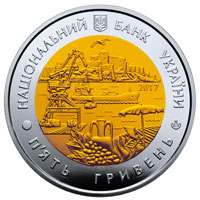
Points of Interest
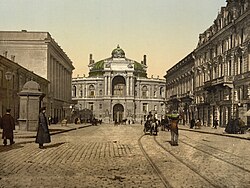
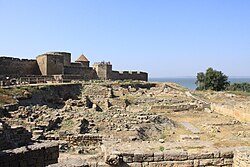
Visitors to the region often explore the Historic Centre of Odesa, a UNESCO World Heritage Site, and the iconic Potemkin Stairs. Other architectural highlights include the Odesa Opera and the historic Akkerman fortress.
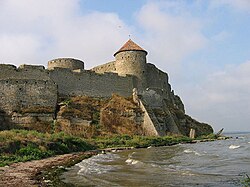
Regional Overview Summary
| Category | Detail |
|---|---|
| Administrative Center | Odesa |
| Total Area | 33,313.69 km² |
| Population (2022) | 2,351,392 |
| GDP (Total) | ₴ 272 billion (€7.0 billion) |
| Main Industries | Maritime Transport, Oil Refining, Agriculture |
| Dominant Religion | Eastern Orthodox Christianity (84%) |
Frequently Asked Questions
What is the significance of the Budjak region?
The Budjak region, located in the southwest of the oblast west of the Dniester River, was formerly part of the Izmail Oblast before merging with Odesa Oblast in 1954. It is known for its high ethnic diversity, including significant Bulgarian and Moldovan populations.
Why is Odesa Oblast important for Ukraine's economy?
It is critical due to its eight seaports and strategic location on the Black Sea, which facilitate the export of agricultural products and the import of goods, as well as its role in oil refining and chemical processing.
What are the primary languages spoken in the region?
Ukrainian and Russian are the primary languages. Recent sociological data shows an increasing trend in the use of Ukrainian, both as a native language and in the service sector.
What makes the agriculture in Odesa Oblast unique?
The region possesses highly fertile chernozem soils and is the largest wine-growing area in Ukraine, boasting over 80,000 hectares of vineyards.
Which landmarks are must-sees in Odesa Oblast?
Key attractions include the UNESCO-listed Historic Centre of Odesa, the Potemkin Stairs, the Odesa Opera, and the Akkerman fortress.