OceanGate: The Rise and Fall of a Deep-Sea Exploration Company
Founded with the ambitious goal of "opening the oceans for all of humanity," OceanGate began as a venture to make the deep sea accessible to more than just government agencies. By blending commercial leasing with a unique approach to "citizen science," the company transitioned from using repurposed vessels to designing custom submersibles intended for the most extreme depths of the ocean.
Key Facts
- Founders: Established in 2009 by Guillermo Söhnlein and Stockton Rush in Seattle.
- First Vessel: The Antipodes, a used 5-person steel-hulled submersible.
- Primary Goal: To create a fleet of commercial submersibles for lease to organizations and individuals.
- The Titan: A custom-built submersible designed to reach depths of 4,000 meters (13,000 ft).
- Final Outcome: All operations were suspended in July 2023 following the implosion of the Titan.
2009–2013: Founding and the Antipodes Era
OceanGate was launched in 2009 with the intent of building a small fleet of five-person commercial submersibles. The company's initial business model focused on renting vessels to researchers and hosting tourists, whom they termed citizen scientists—private individuals who pay to participate in scientific exploration. Between 2010 and 2013, passengers typically paid between $7,500 and $40,000 per excursion.
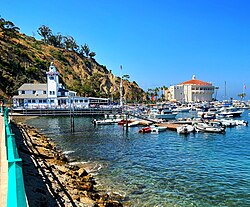
The company's first vessel, the Antipodes, featured a steel hull. During its tenure, it completed approximately 130 dives. Early tourist expeditions took groups to Catalina Island, where OceanGate eventually began hiring marine biologists as guides to enhance the educational value of the trips.
Beyond tourism, OceanGate engaged in several scientific and mapping projects. In 2010, they partnered with the University of Washington to test robotic arms and sonar equipment. In 2011, the Antipodes was used to map the wreckage of the SS Governor in Puget Sound. Later, in 2012 and 2013, the company operated out of Miami, Florida, collaborating with the Miami-Dade Artificial Reefs Program to study the spread of invasive lionfish.
2013–2016: Transition to Custom Engineering
In 2013, the company shifted its focus toward designing its own cost-effective submersibles. This transition marked a change in leadership priorities, leading co-founder Guillermo Söhnlein to leave the company, though he maintained a minority stake. The focus shifted heavily toward the engineering expertise of CEO Stockton Rush.
The first custom project, Cyclops 1, was developed in collaboration with Boeing and the University of Washington. While a carbon fiber hull was originally planned, OceanGate instead repurposed a cylindrical steel hull from a 12-year-old vessel named Lula. Cyclops 1 was officially unveiled in 2015, the same year the company moved its headquarters to the Port of Everett's Waterfront Center in Washington.
2016–2023: The Development of Titan and Titanic Expeditions
The company's ambitions grew with the development of Cyclops 2, which was renamed Titan in March 2018. Unlike its predecessors, Titan featured a cylindrical carbon fiber hull designed by Spencer Composites and titanium components. Between 2018 and 2019, the vessel underwent testing to reach its maximum intended depth of 4,000 meters (13,000 ft).
By 2019, OceanGate announced plans for Cyclops 3 and Cyclops 4, targeting depths of 6,000 meters (20,000 ft). In early 2020, the company announced a Space Act Agreement with NASA's Marshall Space Flight Center to improve materials and manufacturing. This project was funded by $18.1 million in insider investments. However, NASA later clarified in 2023 that while the agreement existed, the agency did not use its own workforce or facilities for testing and manufacturing.
During the COVID-19 pandemic in 2020, OceanGate received a Paycheck Protection Program (PPP) loan of approximately $450,000 to support 22 jobs. The company eventually achieved its most high-profile goal, conducting multiple dives to the wreckage of the Titanic in 2021 and 2022.
2023: The Titan Implosion and Closure
In June 2023, during an expedition to the Titanic, the Titan suffered a catastrophic implosion. All five people on board, including CEO Stockton Rush, were killed. An international search and rescue effort involving the U.S. Coast Guard, U.S. Navy, and Canadian Coast Guard eventually located a debris field approximately 500 meters from the bow of the Titanic.
Following the tragedy, OceanGate closed its Everett office indefinitely. Its subsidiary, OceanGate Expeditions, also ceased all activities.

| Vessel | Hull Material | Primary Use | Max Depth/Status |
|---|---|---|---|
| Antipodes | Steel | Tourism & Research | General Shallow/Mid-depth |
| Cyclops 1 | Steel (Repurposed) | Custom Prototype | Experimental |
| Titan | Carbon Fiber & Titanium | Titanic Expeditions | 4,000 meters (Imploded) |
Frequently Asked Questions
Who founded OceanGate?
OceanGate was founded in 2009 by Guillermo Söhnlein and Stockton Rush in Seattle, Washington.
What was the purpose of the "citizen scientist" program?
The program allowed paying tourists to join underwater excursions, effectively funding exploration while providing private individuals the opportunity to participate in marine research.
What materials were used to build the Titan?
The Titan utilized a cylindrical carbon fiber hull combined with titanium components.
Did NASA build the OceanGate submersibles?
No. While OceanGate had a Space Act Agreement with NASA's Marshall Space Flight Center to improve manufacturing and materials, NASA stated that it did not conduct testing or manufacturing using its own facilities or workforce.
What happened to OceanGate after the Titan implosion?
The company closed its headquarters in Everett, Washington, and suspended all commercial and exploration operations in July 2023.