Oats: History, Nutrition, and Global Production
Oats, scientifically known as Avena sativa, are a vital cereal grain utilized globally for human consumption and animal feed. Belonging to the Poaceae family, these wind-pollinated grasses have evolved from wild ancestors into a staple crop prized for its dense nutritional profile and versatility in the kitchen and the stable.
Key Facts
- Scientific Name: Avena sativa.
- Global Production: Approximately 22 million tonnes annually (2024).
- Top Producers: Canada (15%) and Russia (13%).
- Nutritional Powerhouse: Exceptionally high in manganese (213% DV per 100g).
- Key Component: Contains beta-glucans, a type of soluble fiber.
- Ancient Roots: Evidence of cultivation dates back over 11,000 years in the Middle East.
Origins and Domestication
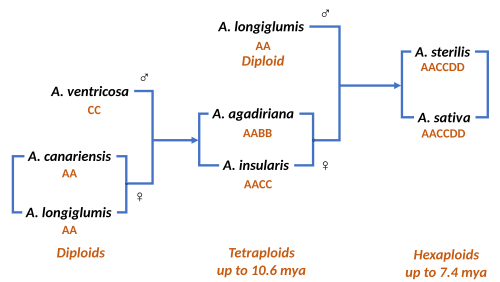
The journey of the oat from a wild grass to a domesticated crop spanned several millennia. Archaeological evidence suggests that intentional cultivation occurred long before formal domestication. In the Jordan Valley of the Middle East, a Pre-Pottery Neolithic granary dating back 11,200 to 11,400 years contained roughly 120,000 seeds of A. sterilis, indicating early human management of the species.
While early cultivation was widespread in the Middle East, domesticated oat grains did not appear in the European archaeological record until approximately 3,000 years ago.
Global Production and Agronomy
Oats are grown in diverse climates, with significant production hubs across the Northern Hemisphere and Australia. In 2024, world production reached 22 million tonnes. Canada leads the world in output, contributing 15% of the total, followed closely by Russia at 13%.
| Country | Production (Million Tonnes) |
|---|---|
| Canada | 3.4 |
| Russia | 3.0 |
| Poland | 1.6 |
| Australia | 1.3 |
| Finland | 1.2 |
| Brazil | 1.1 |
| World Total | 22.4 |
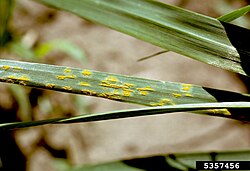
Despite their resilience, oat crops face threats from pests and diseases. One of the most significant challenges to global production is crown rust, a fungal infection caused by Puccinia coronata f. sp. avenae.
Nutritional Profile
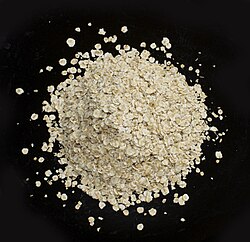
Oats are highly regarded for their nutrient density. Uncooked oats consist of 66% carbohydrates, 17% protein, 7% fat, and 8% water. They are particularly noted for their beta-glucans (4% of total weight), which are soluble fibers known for their health benefits.
A 100g serving provides 389 kcal and is a rich source of several essential minerals and vitamins. Most notably, oats provide 213% of the Daily Value (DV) for manganese, as well as significant amounts of phosphorus (42%), magnesium (42%), and zinc (36%).
Common Uses
Human Consumption
Oats are a staple breakfast food worldwide. In the late 1980s, the United States experienced an "oat bran fad" driven by claims of cholesterol-reducing benefits, though later studies provided more nuanced views on these effects.
Animal Feed and Agriculture
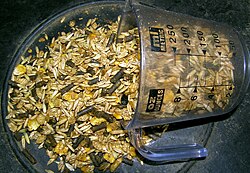
Beyond human diets, oats are a primary component of high-energy animal feed, particularly for horses. They are often mixed with other grains like maize and barley. Additionally, oats are used as ground cover to protect soil and provide grazing for livestock.
Frequently Asked Questions
Are oats gluten-free?
Oats contain proteins called avenins, which are similar to the gluten found in wheat, barley, and rye. While pure oats may be tolerated by some, they can trigger an immune response in individuals with coeliac disease.
What are beta-glucans?
Beta-glucans are a type of soluble dietary fiber found in the cell walls of oats. They are recognized for their role in supporting cardiovascular health.
Which country produces the most oats?
Canada is the world's leading producer of oats, accounting for approximately 15% of global production.
What is crown rust?
Crown rust is a fungal disease caused by Puccinia coronata f. sp. avenae that poses a significant threat to the health and yield of oat crops worldwide.