NYIT Computer Graphics Lab and the Ambition of The Works
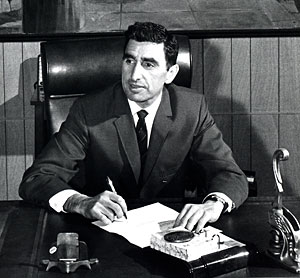
In the mid-1970s, the intersection of academic curiosity and entrepreneurial ambition led to the creation of one of the most influential research hubs in digital history: the New York Institute of Technology (NYIT) Computer Graphics Lab (CGL). Founded by Alexander Schure, a millionaire with a passion for animation and a desire to modernize education, the lab became a crucible for technologies that would eventually define the modern visual effects and animation industries.
Schure's vision was sparked by a visit to the University of Utah, where he witnessed the potential of Ivan Sutherland's Sketchpad. Determined to revolutionize the tedious process of hand-drawn animation, Schure sought to build a facility that could automate and accelerate production. This ambition culminated in the 1974 establishment of the CGL at the Old Westbury campus, where he recruited top minds in computer science and art with a mandate to develop major technology without financial constraints.
Key Facts
- Founder: Alexander Schure established the CGL in 1974 to modernize animation.
- Pioneering Talent: The lab hired industry legends including Ed Catmull, Alvy Ray Smith, and Lance Williams.
- Technological Firsts: The CGL developed the alpha channel, mipmapping, and early versions of the CAPS system used by Disney.
- The Works: An ambitious, never-completed 3D animated feature film that served as a testbed for cutting-edge CGI.
- Hardware: The lab utilized high-end equipment of the era, including VAX 11/780 mainframes and Evans & Sutherland framebuffers.
From Tubby the Tuba to 3D Innovation
The lab's early efforts were focused on 2D animation tools. This era saw the production of Tubby the Tuba (1975), a feature film that, despite the resources poured into it, was widely considered a failure during test screenings. The production was described by Ed Catmull as a "train wreck," signaling that traditional animation methods, even when assisted by computers, were not the path forward.
Following this failure, the CGL shifted its focus toward 3D computer graphics. The catalyst for this transition was a screenplay titled The Works, written by senior researcher Lance Williams. The story, set in a future where robots replaced humanity after a devastating war, provided the perfect excuse for the lab to push the boundaries of what was computationally possible.
Technological Breakthroughs of The Works
The Works was less a commercial movie project and more a massive research and development exercise. The goal was to create patentable tools and demonstrate the potential of CGI to the entertainment industry. Because the project was so ambitious, the staff developed a vast array of specialized software and techniques.
Rendering and Modeling Innovations
The lab produced a staggering number of technical milestones. Lance Williams experimented with z-buffering (a method to manage image depth) and facial animation. Other key developments included:
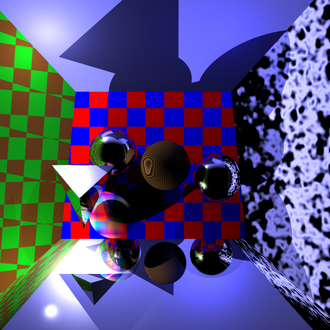
- Texture and Bump Mapping: Tom Duff and Jim Blinn worked on renderers like SOID, which incorporated texture and bump mapping to create realistic surfaces.
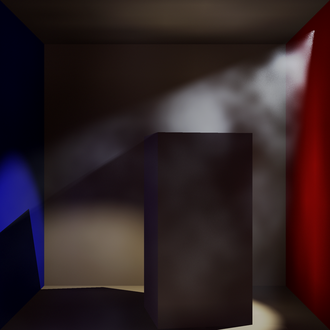
- Volume Rendering: Heckbert developed "splatting," an early form of volume rendering, and beam tracing.
- Fractal Modeling: John Lewis and Peter Oppenheimer created systems for fractal modeling, while others developed tools to recreate skies from photographs.
Hardware and Workflow Challenges
To maintain their edge, Schure constantly purchased the latest hardware, such as the VAX 11/780. However, this created a paradox: the frequent upgrades forced staff to constantly rewrite programs and convert tools, which significantly delayed the actual production of the film.
![A VAX 11/780, a mainframe model used by the CGL in the 1980s[1]](/images/33/11/331113d8affd35a4b117154e0de22146884c73336a20e1b6b198dc97292ec29d.jpg)
Character Design and Animation
The visual identity of The Works was led by art director Bill Maher. The film featured 25 robots, designed not through preliminary sketches but directly within 3D modeling software. The team focused on reflection mapping—using photographs to create realistic reflections on metallic surfaces—to make the robots appear tangible.
The most challenging character was T-Square, a human character who required fluid, emotional expressions. Unlike the robots, T-Square's design required twelve separate passes, with her glove alone being as complex to animate as an entire separate character. To achieve this fluidity, the team used Tween, a software developed by Ed Catmull that automatically generated the frames between two key positions.
Legacy and SIGGRAPH Presentations
While The Works was never finished as a full feature, its impact was felt through the SIGGRAPH conferences. The CGL presented groundbreaking clips and prints, such as Kick and Robot Ant, which showcased texture mapping and 3D character animation years before they became industry standards. These presentations attracted the attention of major media outlets and industry legends, cementing the CGL's role as a pioneer of the digital age.
| Contributor | Innovation | Purpose/Impact |
|---|---|---|
| Lance Williams | Mipmap | Optimized texture rendering at different distances |
| Ed Catmull | Alpha Channel & Tween | Transparency control and automated in-betweening |
| Alvy Ray Smith | Paint | First RGB drawing program |
| Garland Stern | Scanning-and-paint system | Basis for Disney's CAPS system |
| Heckbert & Hanrahan | Beam Tracing | Advanced light and reflection simulation |
Frequently Asked Questions
What was the primary purpose of The Works?
While intended as a 3D animated feature film, The Works served primarily as a vehicle for the NYIT Computer Graphics Lab to develop patentable tools and demonstrate the capabilities of 3D CGI to the entertainment industry.
Why was Tubby the Tuba considered a failure?
Despite the resources used, the film was viewed as amateurish and a "train wreck" during test screenings, leading the lab to pivot from 2D assistance to full 3D computer graphics.
What is "Tweening" in the context of the CGL?
Tweening, developed by Ed Catmull, is a process where software automatically generates the intermediate frames between two key positions, allowing for smoother and more efficient animation.
How did the CGL influence Disney Animation?
The scanning-and-paint system developed by Garland Stern at the CGL later became the foundation for the Computer Animation Production System (CAPS) used by Walt Disney Animation Studios.
What hardware did the CGL use for its research?
The lab utilized state-of-the-art equipment for the time, including PDP-11 and VAX 11/780 mainframes from Digital Equipment Corporation, and framebuffers from Evans & Sutherland.