Nottinghamshire Pride: A History of Celebration and Community
The journey of Pride in Nottingham is a story of resilience, growth, and evolving visibility. From its humble beginnings in the late 1990s to the large-scale celebrations of today, the event has served as a vital platform for the LGBTQ+ community to celebrate progress and advocate for equality within the city.
The Early Years: From Pink Lace to Nottingham Pride
The first pride festival in Nottingham took place in 1997 on Broad Street, located in the city's vibrant Hockley area. During its first three years, the event was known as Pink Lace, maintaining this identity through 1998 and 1999, when the festivities moved to Nottingham Castle.
By the year 2000, the festival rebranded as Nottingham Pride and relocated to the Victoria Embankment along the River Trent. However, the early 2000s saw some instability; in 2001, two separate festivals—Nottingham Pride and Pink Lace—were planned, but neither came to fruition, and no event was held in 2002.
Stability returned in 2003 when Nottingham Pride moved to the Arboretum. This venue hosted the festival until 2010, as the growing number of attendees eventually made the park too small to accommodate the crowds.
Growth and Financial Challenges in the 2010s
On July 31, 2010, the festival moved to the Forest Recreation Ground. The event was officially opened by the Lord Mayor of Nottingham, Brian Grocock, and featured performances by the Cheeky Girls, Lisa Scott-Lee, Betty, and Kenelis.
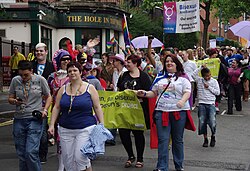
The 2012 celebration highlighted the progress of gay rights, with 2,000 people participating in a march from Old Market Square to the Forest Recreation Ground, followed by two days of music and speeches that were expected to attract 30,000 visitors.
Despite the visibility, the organization faced severe financial hardship. By 2013, while celebrating its 10th anniversary with 14,000 attendees, the charity fell into £17,000 of debt. With annual running costs of £30,000 and only a third of attendees providing the suggested £1 donation, volunteers voted to close the charity in October 2013. Chairman Ben Holmes noted that the event had struggled financially for three years despite attempts to scale down.
The spirit of the event persisted, and from 2014 until 2023, Nottinghamshire Pride returned to the Hockley area. The 2018 event featured a parade starting at Lister Gate and ending at Broad Street, while 2019 saw the introduction of rainbow crossings on Carlton Street and Broad Street.
Modern Era: Resilience and Expansion
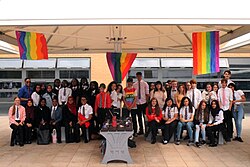
The global COVID-19 pandemic forced the cancellation of the 2020 event. Pride returned in a scaled-back capacity in September 2021, drawing 9,000 people. By July 30, 2022, the festival returned to full scale under the theme "We See You," attracting 15,000 attendees. The march featured samba dancers, carnival bands, and a Nottinghamshire Fire and Rescue Service engine, with performances including a DJ set by YouTube star Charity Shop Sue.
The 2023 event saw over 10,000 attendees and a performance by the band Girlband!. This year was marked by controversy when Howard Donald of Take That was removed from the lineup after liking social media posts derogatory toward the LGBTQ community, for which he later apologized.
In 2024, the event embraced a theme of "the power of love." The rainbow crossings in Hockley were repainted to include black and brown (representing people of colour) and blue, pink, and white (representing the transgender community). Additionally, Alstom painted tram 213 in rainbow colours, earning it the nickname "trambow." The march route was relocated to end at Sneinton Market to accommodate larger crowds.
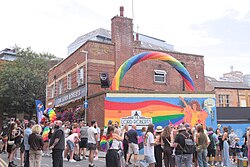
The 2025 event continued its presence in Sneinton, introducing a new acoustic stage hosted by the independent music venue, The Grove. Highlights included the return of Girlband! and a speech by Laquarn Lewis, associated with the series What It Feels Like for a Girl, based on the memoirs of Hucknall-born Paris Lees.
Key Facts
- First Event: Held in 1997 on Broad Street as "Pink Lace."
- Major Venues: Has transitioned through Nottingham Castle, Victoria Embankment, the Arboretum, Forest Recreation Ground, Hockley, and Sneinton Market.
- Peak Attendance: 15,000 people attended the 2022 "We See You" event.
- Inclusive Symbols: 2024 rainbow crossings were expanded to include colours representing people of colour and the transgender community.
- Transport Tribute: Tram 213 was nicknamed the "trambow" in 2024.
| Year/Period | Event Name/Theme | Key Location | Notable Detail |
|---|---|---|---|
| 1997-1999 | Pink Lace | Broad St / Nottingham Castle | The inaugural pride festivals. |
| 2003-2010 | Nottingham Pride | The Arboretum | Period of steady growth in attendance. |
| 2013 | 10th Anniversary | Various | Financial crisis led to temporary closure. |
| 2014-2023 | Nottinghamshire Pride | Hockley Area | Return to the city centre. |
| 2022 | "We See You" | City Centre | 15,000 attendees; full-scale return post-COVID. |
| 2024-2025 | "The Power of Love" | Sneinton Market | Relocated for capacity; expanded inclusivity. |
Frequently Asked Questions
What was the original name of Nottingham's Pride festival?
The festival was originally called Pink Lace when it first launched in 1997.
Why did the Pride charity close in 2013?
The charity closed due to a lack of funds and a debt of £17,000, largely because only a third of the 14,000 attendees at the 2013 event provided the suggested £1 donation.
What is the "trambow"?
The "trambow" is tram 213 in Nottingham, which was painted in rainbow colours by the firm Alstom for the 2024 celebrations.
Where is the Nottinghamshire Pride march currently held?
As of 2024 and 2025, the march begins at Lister Gate and ends at Sneinton Market to allow for higher attendance.
What changes were made to the rainbow crossings in 2024?
The crossings at Carlton Street and Broad Street were repainted to include black and brown to represent people of colour, as well as blue, pink, and white to represent the transgender community.