Norwich Pride: A History of Visibility and Community
Norwich Pride stands as a vibrant testament to the resilience and growth of the LGBTQ+ community in Norfolk. What began as a grassroots effort to combat austerity and foster a sense of belonging has evolved into a massive city-wide celebration of identity, diversity, and human rights. From its humble beginnings in 2009 to attracting tens of thousands of participants, the event has mirrored the broader societal shifts in acceptance and visibility across the United Kingdom.
Key Facts
- Founded: 2008 by Julie Bremner and Michelle Savage.
- First Event: July 24–26, 2009, with approximately 3,000 attendees.
- Growth: Attendance grew from a few thousand in 2009 to an expected 20,000 by 2025.
- Key Partnerships: Collaboration with Norwich City F.C. led to the creation of the Proud Canaries.
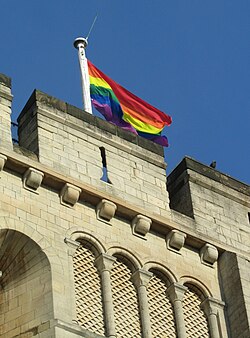
- Symbolism: Notable symbols include the 40-metre rainbow scarf and the rainbow flag at Norwich Castle.
Founding and the First Celebration (2008–2009)
The seeds of Norwich Pride were sown in 2008 when Julie Bremner—a long-time political activist and former member of ACT UP—reached out to Michelle Savage via email. Driven by a desire to harness the energy of frustration regarding the banking crisis and austerity, the duo sought to make Norwich a city where the LGBTQ+ community felt they truly belonged.
The inaugural event took place from July 24 to 26, 2009. While organizers initially expected only a few hundred people, approximately 3,000 attended. The festivities, funded largely by trade unions, featured the "Camp It Up Cabaret" and the first official parade from Chapelfield Gardens to the Forum. The event was launched by the Lord Mayor of Norwich and attended by renowned human rights campaigner Peter Tatchell.
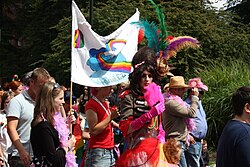
Despite the celebration, the first event faced opposition. Some anti-LGBTQ protesters distributed leaflets containing language that organizers described as "hateful" and "violently offensive," including biblical quotes regarding sin.
Growth and Cultural Impact in the 2010s
Throughout the 2010s, Norwich Pride focused on overcoming religious prejudice and increasing visibility. In 2010, an interfaith service titled "Coming Out as a Spiritual Practice" was held at the Octagon Chapel. Simultaneously, artist Helen Simpson coordinated the creation of a 40-metre rainbow scarf made from 1,500 knitted squares contributed by various churches.
The event's scale expanded rapidly. By 2013, under the chairmanship of Dean Simons, the organization introduced the "Pride 5 Festival," a five-day event focusing on love, health, identity, music, and youth. This period also saw the birth of the Proud Canaries in November 2013, a collaboration with Norwich City F.C. to promote inclusivity in sports.
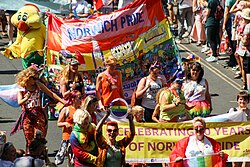
By 2018, the march saw approximately 10,000 attendees and featured a "rainbow river"—a 50-metre flag representing various identities, including pansexual and non-binary flags. The 2019 event was further highlighted by town crier Mike Wabe, whose spirited announcement of the march became a viral sensation online.
Navigating the 2020s: Pandemic and Politics
In 2020, Norwich Pride officially became a registered charity. However, the COVID-19 pandemic forced the cancellation of the physical parades in 2020 and 2021. During this time, the organization pivoted to digital celebrations and projected the Progress Pride flag—a version of the rainbow flag that includes colors representing marginalized trans and poc communities—onto the walls of Norwich Castle.
The return to in-person events in 2022 saw Aviva become the main sponsor. However, sponsorship became a point of contention by 2024. Following calls from Norwich Trans Pride for solidarity with Palestinians—citing Aviva's investments in Barclays and subsequent ties to Israeli defence firms—Aviva withdrew its sponsorship, citing safety concerns for its staff.
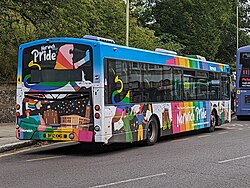
The 2024 event also faced challenges, including a ban on the Norwich Labour Group displaying their party flag due to political disagreements and an act of arson targeting Pride flags at Norwich Market.
The 2025 Milestone
Looking toward 2025, the event has secured Greater Anglia as its main sponsor. A poignant moment of restoration occurred when the original 2010 rainbow scarf, found damaged by mice in church storage, was restored by Helen Simpson and local faith groups. The restored scarf, now featuring a Progress flag panel, remains a central symbol of the city's journey.
| Year | Estimated Attendance | Key Milestone/Event |
|---|---|---|
| 2009 | 3,000 | Inaugural parade and "Camp It Up Cabaret" |
| 2013 | 5,000+ | Launch of Pride 5 Festival and Proud Canaries |
| 2018 | 10,000 | Introduction of the "rainbow river" flag |
| 2020 | Digital | Registered as a charity; digital march |
| 2025 | 20,000 (Expected) | Restoration of the 40m rainbow scarf |
Frequently Asked Questions
Who founded Norwich Pride?
Norwich Pride was founded in 2008 by Julie Bremner, a long-time activist, and Michelle Savage, a school counsellor.
What are the Proud Canaries?
The Proud Canaries is an LGBTQ+ support group formed in November 2013 through a collaboration between Norwich Pride and Norwich City F.C.
What is the significance of the rainbow scarf?
Created in 2010 by artist Helen Simpson, the 40-metre scarf consists of 1,500 squares knitted by various churches to counter religious prejudice and symbolize unity.
Why did Aviva stop sponsoring the event in 2024?
Aviva withdrew its sponsorship following calls for solidarity with Palestine due to the company's investments in Barclays, which has ties to Israeli defence and fossil fuel firms. Aviva cited the safety of its staff as the primary reason for the decision.
How has the event changed since its inception?
The event has grown from a small gathering of 3,000 people in 2009 to a major city-wide festival expected to draw 20,000 people by 2025, expanding from a single parade to include multiple stages, art exhibitions, and a registered charity status.