Northern Territory History: From Ancient Roots to Self-Government
The Northern Territory is a region of profound antiquity and complex colonial evolution. Long before it became a federal territory of Australia, the land was home to some of the oldest continuous cultures on Earth, later becoming a strategic frontier for European settlers and a focal point for civil rights struggles.
Pre-colonial Era and Early Trade
Human habitation in the Northern Territory dates back significantly, with evidence showing people lived in the area between 48,400 and 68,700 years ago. These Indigenous populations maintained a deep connection to the land long before European arrival.
Starting in the 17th or 18th century AD, the region engaged in international commerce. Traders from Sulawesi established seasonal trade links with Indigenous peoples in Arnhem Land, the modern-day Northern Territory, and the Kimberley region. These Makassan fishers collected trepang (sea cucumber) for Chinese markets and introduced new technologies and goods. This cultural exchange is still visible today in Indigenous rock art and bark paintings, which frequently depict the Makassan perahu (traditional sailing vessels).
Colonial Administration and Early Settlement
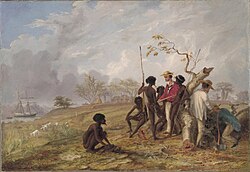
The British effort to settle the northern coast was fraught with difficulty; of the first four attempts, three ended in failure due to starvation and the harsh environment. Administratively, the region shifted hands several times: it was part of colonial New South Wales from 1825 to 1863, and briefly part of the colony of North Australia from February to December 1846.
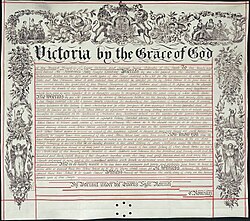
From 1863 to 1911, the Northern Territory was administered by South Australia. This era saw critical infrastructure development, most notably the construction of the Overland Telegraph Line between 1870 and 1872. Port Darwin, established in 1869, served as the primary supply hub for the region for many decades.
Economic Foundations
The late 19th century established the Territory's primary industries: mining and cattle raising. Between 1883 and 1889, the North Australia Railway was built, connecting Palmerston to Pine Creek. By 1911, the cattle industry had grown to 513,000 head, with the Victoria River Downs Station—located 686 kilometres west of Darwin—once ranking as the largest cattle station in the world.
Mining also played a pivotal role, with gold discovered at Pine Creek (1871) and Grove Hill (1872), as well as at Brocks Creek and Burundi. Additionally, copper was discovered at the Daly River.
Transition to Federal Control
On January 1, 1911, the Northern Territory was separated from South Australia and transferred to federal control. This move was driven by national security concerns; Alfred Deakin argued that Australia must populate the territory or risk it being transferred to another nation.
The region's identity continued to evolve. Between 1927 and 1931, it was split into North Australia and Central Australia at the 20th parallel south. There were even proposals to rename the region "Kingsland," "Centralia," or "Territoria," though the name Northern Territory ultimately remained.
Social Conflict and the "Last Frontier"
In the early 20th century, the southern region was viewed as the "last frontier." This period was marked by tension between white settlers and Indigenous peoples. Resource scarcity and the fragility of the cattle industry led to conflicts, with some Indigenous people acting as "bush bandits" by spearing cattle for food.
Tragedy struck during a severe drought from 1925 to 1929, which caused the deaths of 85% of the children at the Hermannsburg Mission. Violence also peaked during the 1928 Coniston massacre, where punitive expeditions led by Constable William George Murray resulted in the deaths of dozens to hundreds of people from the Warlpiri, Anmatyerre, and Kaytetye groups.
World War II and the Bombing of Darwin
World War II brought unprecedented change as most of the Top End was placed under military government—the only time since Federation that any part of an Australian state or territory has been under such control.
The most significant event occurred on February 19, 1942, with the Bombing of Darwin. This remains the largest single attack by a foreign power on Australian soil. While the port was heavily damaged, it was eventually restored. Today, the city preserves this history through museums, oil tunnels, airstrips, and ammunition bunkers.
Post-War Development and Civil Rights
The late 20th century was defined by a struggle for Indigenous rights and recovery from natural disasters. In 1963, the Yolngu people submitted the Yirrkala bark petitions to protest bauxite mining on their land without consultation. This was followed by the 1966 Gurindji people's strike and walk-off at Wave Hill Cattle Station.
These movements led to the Woodward Royal Commission in 1973, which recommended the creation of Central and Northern Land Councils. This culminated in the Aboriginal Land Rights (Northern Territory) Act 1976, which began operation in January 1977.
Cyclone Tracy
On Christmas Eve and Christmas Day of 1974, tropical Cyclone Tracy devastated Darwin. The storm killed 66 people and destroyed over 70% of the city's buildings, leaving 41,000 of the 47,000 residents homeless. The resulting damage was estimated at A$837 million (approximately A$8.38 billion in 2024). The city was subsequently rebuilt using modern construction codes.
Self-Government and Modern Era
The Northern Territory gained self-government via the Northern Territory (Self-Government) Act 1978. This established a Legislative Assembly led by a Chief Minister, with the Administrator acting as the King's representative.
In the 1980s, the region gained international recognition when Kakadu National Park and Uluru-Kata Tjuta National Park were added to the UNESCO World Heritage List for their natural beauty and Aboriginal cultural significance. The Territory also made headlines in 1995–96 as one of the few places globally to briefly legalize voluntary euthanasia, supported by Dr Philip Nitschke, before the Federal Parliament overturned the law.
Key Facts
- Ancient Habitation: Humans have lived in the region for 48,400 to 68,700 years.
- Early Trade: Makassan fishers from Sulawesi traded trepang and introduced new technologies to Indigenous peoples.
- Administrative Shifts: Controlled by NSW (1825–1863), South Australia (1863–1911), and then the Federal Government.
- WWII Impact: The 1942 Bombing of Darwin was the largest foreign attack on Australia.
- Land Rights: The Aboriginal Land Rights (Northern Territory) Act 1976 was a landmark piece of legislation.
- Natural Disaster: Cyclone Tracy (1974) destroyed 80% of Darwin's houses.
| Period/Year | Event/Status | Key Detail |
|---|---|---|
| 1825–1863 | NSW Administration | Part of colonial New South Wales |
| 1863–1911 | SA Administration | Construction of Overland Telegraph Line |
| 1911 | Federal Transfer | Separated from South Australia |
| 1942 | Bombing of Darwin | Largest foreign attack on Australia |
| 1974 | Cyclone Tracy | Destroyed 70% of Darwin's buildings |
| 1978 | Self-Government | Establishment of Legislative Assembly |
Frequently Asked Questions
Who were the Makassans and why were they important?
The Makassans were fishers from Sulawesi who established seasonal trade links with Indigenous Australians in the north. They collected trepang for Chinese markets and introduced new goods and technologies, leaving a lasting mark on Indigenous rock art.
What was the significance of the Aboriginal Land Rights Act 1976?
This Act was the result of years of struggle, including the Yirrkala bark petitions and the Wave Hill walk-off. It provided a legal framework for Aboriginal people to claim land rights in the Northern Territory.
How did Cyclone Tracy change Darwin?
Cyclone Tracy caused massive destruction in 1974, leaving the majority of the population homeless. However, it led to the city being rebuilt as a modern metropolis with significantly improved construction codes.
Was the Northern Territory always under federal control?
No. It was previously administered by New South Wales and South Australia before being transferred to the Commonwealth on January 1, 1911.
What happened during the Coniston massacre?
In 1928, punitive expeditions led by police constable William George Murray killed dozens to hundreds of people from the Warlpiri, Anmatyerre, and Kaytetye groups following the murder of a dingo hunter.