Non-Citizen Voting Rights: Global Practices and Regional Variations
The question of whether resident non-citizens should participate in the democratic process is a complex issue with widely varying answers across the globe. While some nations restrict the franchise (the right to vote) strictly to citizens, others allow foreign residents to influence local or even national governance based on residency duration, nationality, or international treaties.
Research by David C. Earnest highlights that the practice of granting voting rights to non-citizens is widespread, though the specific conditions vary considerably. These practices generally fall into categories ranging from total exclusion to full, non-discriminatory national voting rights.
Key Facts
- Local vs. National: Most countries that allow non-citizen voting limit those rights to local or municipal elections rather than national ones.
- Residency Requirements: Many nations require a minimum period of residence (e.g., 3, 5, or 10 years) before a non-citizen can register to vote.
- Reciprocity: Some countries grant voting rights only to citizens of other nations that offer similar rights to their own citizens.
- EU Influence: European Union directives have standardized local voting and eligibility rights for EU citizens residing in other member states.
- Grandfathering: Certain jurisdictions, like Australia, use "grandfathered" rights, allowing those registered before a specific date to keep their voting status.
Categorizing Non-Citizen Suffrage
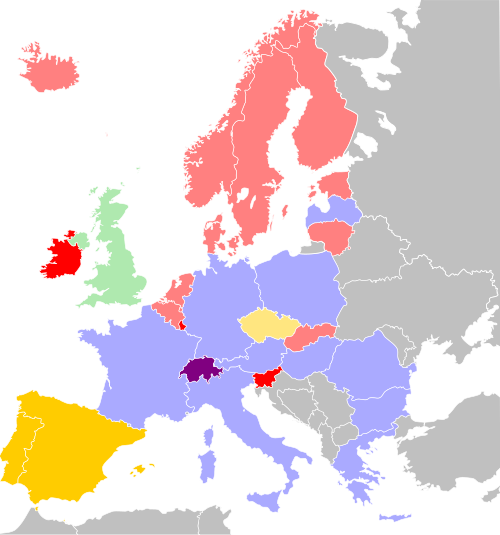
To understand the spectrum of voting rights, scholars often group democracies into categories based on the scope and fairness of their laws:
- No Rights: Countries like Japan, Italy, and France (historically or currently) do not grant voting rights to non-citizens.
- Discriminatory Local Rights: Rights granted only to specific groups of foreigners at the local level.
- Discriminatory National Rights: National voting rights limited to specific nationalities (e.g., the United Kingdom).
- Nondiscriminatory Local Rights: Local voting open to all foreign residents, often after a residency period (e.g., Sweden, Norway).
- Nondiscriminatory National Rights: Full national voting rights for all permanent residents (e.g., New Zealand since 1975).
Regional Analysis: Europe and the EU
In Europe, the movement toward inclusive local suffrage is supported by the Council of Europe and the European Parliament. The 1992 Convention on the Participation of Foreigners in Public Life at Local Level encourages member states to allow foreign residents to vote and run in local elections.
Within the EU, Council Directive 94/80/EC ensures that EU citizens living in another member state can vote and stand as candidates in municipal elections. For example, in Belgium, EU residents can vote in municipal elections and serve as aldermen, though they cannot become mayors due to police responsibilities. In Denmark and Finland, residence requirements were abolished for EU citizens to align with European legislation.
Outside the EU framework, some countries use reciprocity. Portugal has historically granted rights to Brazilian and Cape Verdean residents based on mutual agreements. Conversely, Slovenia recently moved to remove voting rights for "third-country nationals" (non-EU citizens), citing a lack of reciprocity from other non-EU nations.
The Commonwealth and Other Global Examples
The Commonwealth of Nations presents a unique case of inherited legal statuses. In Australia, British subjects enrolled to vote before January 26, 1984, retain their rights through a grandfathering process, meaning they can re-enroll even if their status lapsed.
In the United Kingdom, the landscape is fragmented. While national elections remain restricted, Wales became a pioneer in 2019 by extending the franchise for local and Senedd (Welsh Parliament) elections to all resident foreign nationals holding leave under the Immigration Act 1971, regardless of their origin.
Beyond Europe and the Commonwealth, other nations have adopted diverse models:
- South Korea: Permanent residents aged 19+ who have lived in the country for three years can vote in local elections.
- Colombia: Foreigners who have resided in the country for five years may vote for mayors and city councils.
- Venezuela: Foreigners with ten years of residency can vote in municipal, parish, and state elections.
- Uruguay: Residents of 15 years have been granted national voting rights since 1952.
Summary of Non-Citizen Voting Models
| Country | Level of Suffrage | Key Condition | Scope |
|---|---|---|---|
| New Zealand | National | Permanent Residency | Nondiscriminatory |
| Belgium | Local | EU Citizenship / Residency | EU-focused |
| South Korea | Local | 3 Years Residency + Perm. Visa | Nondiscriminatory |
| Australia | National/State | Enrolled before Jan 26, 1984 | Grandfathered British Subjects |
| Venezuela | Local/State | 10 Years Residency | Nondiscriminatory |
Frequently Asked Questions
What is the difference between local and national suffrage for non-citizens?
Local suffrage allows non-citizens to vote in municipal or regional elections (such as for mayors or city councils), whereas national suffrage allows them to vote in general elections for the country's primary legislative body or head of state.
How does the principle of reciprocity work in voting rights?
Reciprocity is a diplomatic arrangement where Country A grants voting rights to citizens of Country B only if Country B grants the same rights to citizens of Country A.
Can non-citizens run for office in these countries?
This varies. In some places, like Belgium, EU residents can be municipal councillors or aldermen but not mayors. In New Zealand, permanent residents can vote nationally but cannot be elected to Parliament unless they hold citizenship.
What is "grandfathered" voting rights?
Grandfathering occurs when a law changes to remove a right, but those who already possessed that right under the old law are allowed to keep it. An example is the treatment of British subjects in Australia.
Do all EU citizens have the same voting rights across Europe?
While EU directives standardize local voting rights for EU citizens in other member states, specific eligibility for certain offices (like mayor) and the exact registration process can still differ by country.